M
Love Poems Technology AI-Technology

Where Was Meeting at Night First Published? (Verified)

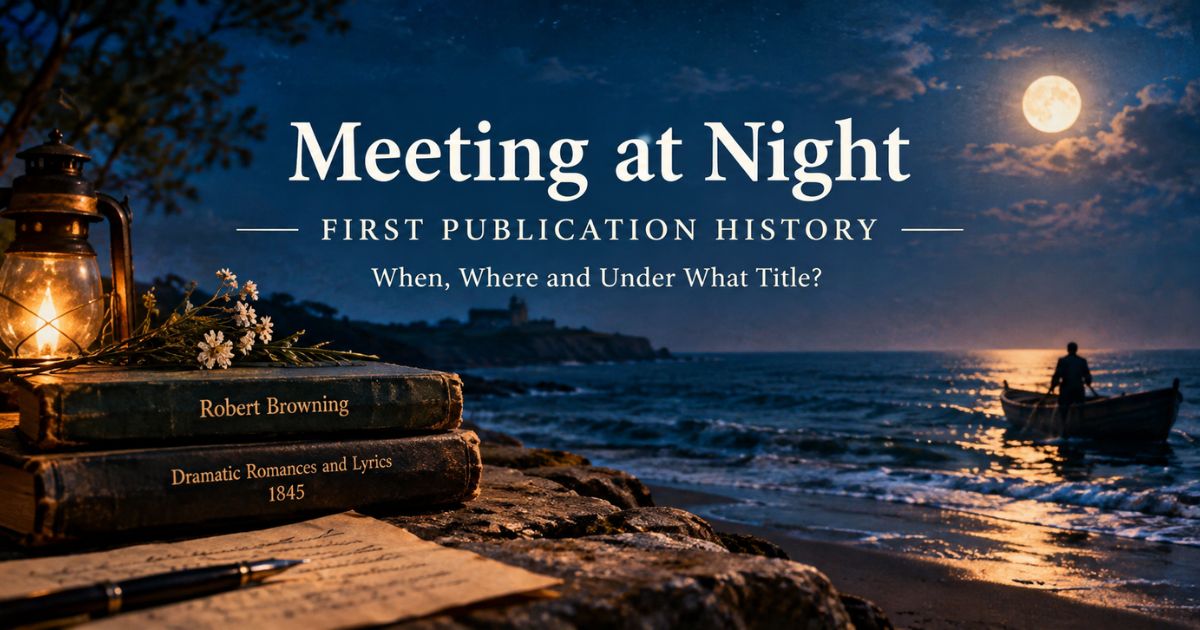
Where was Meeting at Night first published: Robert Browning's Dramatic Romances and Lyrics 1845 beside a moonlit sea,

Introduction Robert Browning’s poem “Meeting at Night” was first published in 1845 in Dramatic Romances and Lyrics. That book was No. VII of his Bells and Pomegranates pamphlet series, issued in London by Edward Moxon. However, the poem did not carry its familiar title. Browning printed it as the first half of a two-part poem … Read more

The Man Who Thinks He Can: Full Poem & True Author

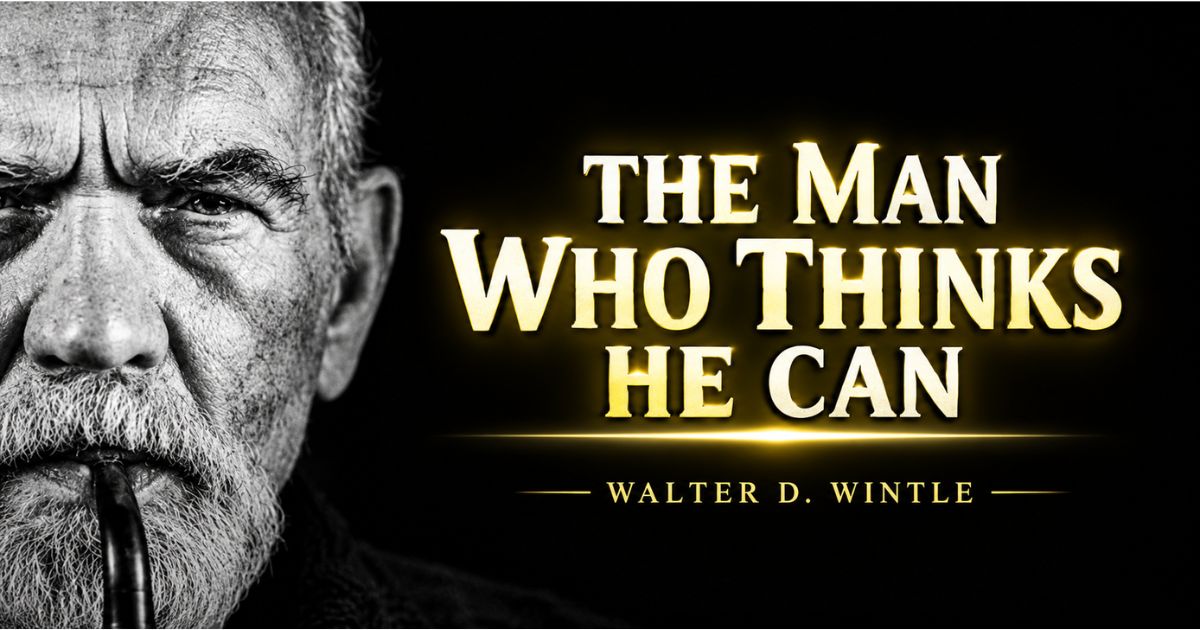
The Man Who Thinks He Can by Walter D. Wintle: portrait of a stern elderly man with a white beard and pipe.

Introduction The man who Thinks He can poem was written by Walter D. Wintle, and its original title was actually “Thinking” not “The Man Who Thinks He Can.” The earliest confirmed printing appeared in 1905 in Unity magazine, published by the Unity School of Christianity. Almost nothing else is documented about Wintle’s life, which is … Read more

Sada-e-Sarhad Bus Poem: What It Really Means

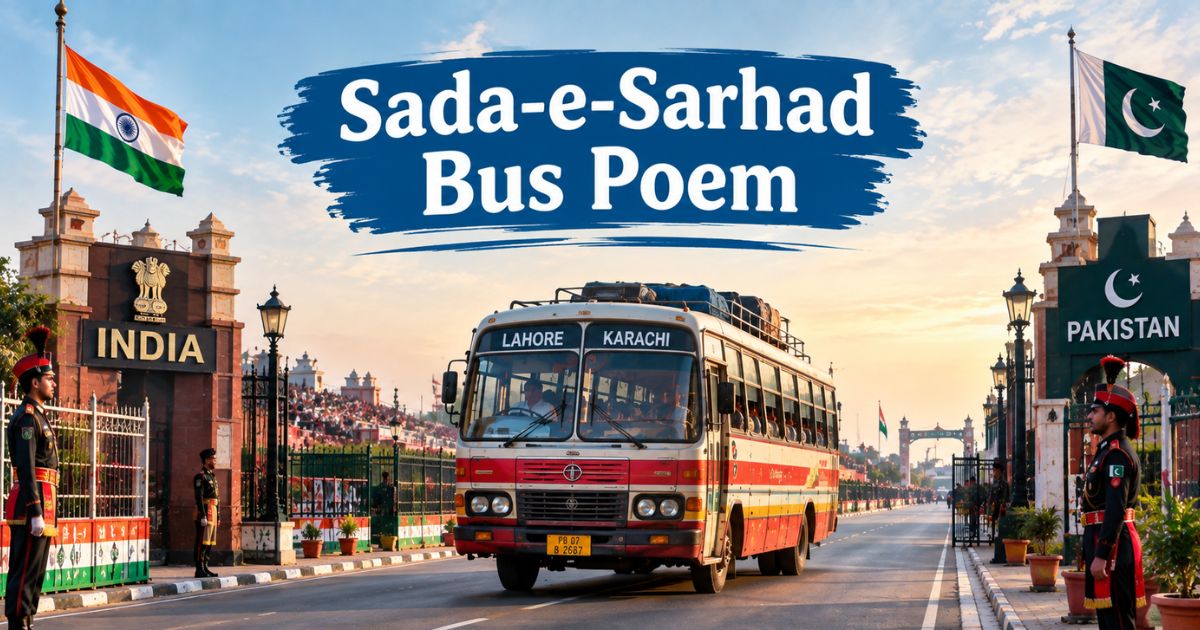
Sada-e-Sarhad bus poem illustration: a bus between the India and Pakistan border gates with flags at sunset.

Introduction If you searched for a “Sada-e-Sarhad bus poem,” here’s the direct answer: there is no single, widely recognized poem by that exact title. “Sada-e-Sarhad,” meaning “Call of the Frontier,” was the official name of the Delhi–Lahore peace bus that ran between India and Pakistan from 1999 to 2019. The phrase carries a poetic weight … Read more

Is ChatGPT Poetry Good? The Honest Verdict

Is ChatGPT Poetry Good — The Honest Verdict banner with robot mascot holding a poem.

Introduction Is ChatGPT Poetry Good? Yes, ChatGPT can write good poetry but it is not consistently great poetry. It is especially strong at following poetic forms, producing rhyme, organizing meter, and creating readable drafts. However, it can still struggle with genuinely fresh metaphor, meaningful ambiguity, distinctive voice, and the depth that can come from lived … Read more

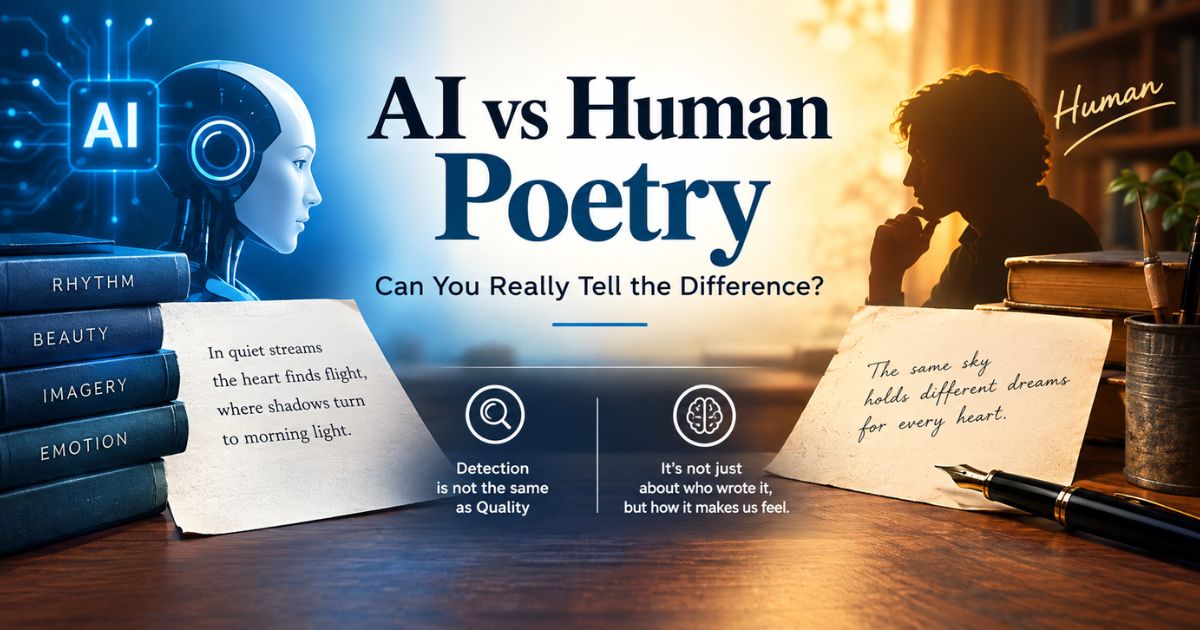
AI vs Human Poetry: What the Research Really Shows

AI vs Human Poetry banner comparing a robot and a person writing, sample verses on notes.

Introduction AI vs human poetry is no longer a simple question of whether readers can tell who wrote a poem. Recent research shows that people can struggle to distinguish AI-generated poetry from human poetry, but that does not prove AI poetry is objectively better. The most important evidence comes from a 2024 Scientific Reports study … Read more

Ekphrastic Poetry: Turning Art Into Living Words

Ekphrastic Poetry banner with paint-stained brushes, Turning Art Into Living Words.

Introduction Ekphrastic poetry is poetry written in response to a work of art, usually a painting or sculpture. The poet may describe the artwork, speak to it, or imagine the story behind it. As a result, the poem becomes a second way of seeing the same image. In simple terms, the poet looks first, then … Read more

Villanelle Examples: How Repetition Becomes Art

Villanelle Examples guide banner with quill icon, How Repetition Becomes Art

Introduction A villanelle is a 19-line poem made of five three-line stanzas and a closing four-line stanza, with two refrains and only two rhyme sounds. The best villanelle examples show how repetition can carry grief, love, or defiance without feeling mechanical. For instance, Dylan Thomas, Elizabeth Bishop, and Edwin Arlington Robinson bend the same rigid … Read more

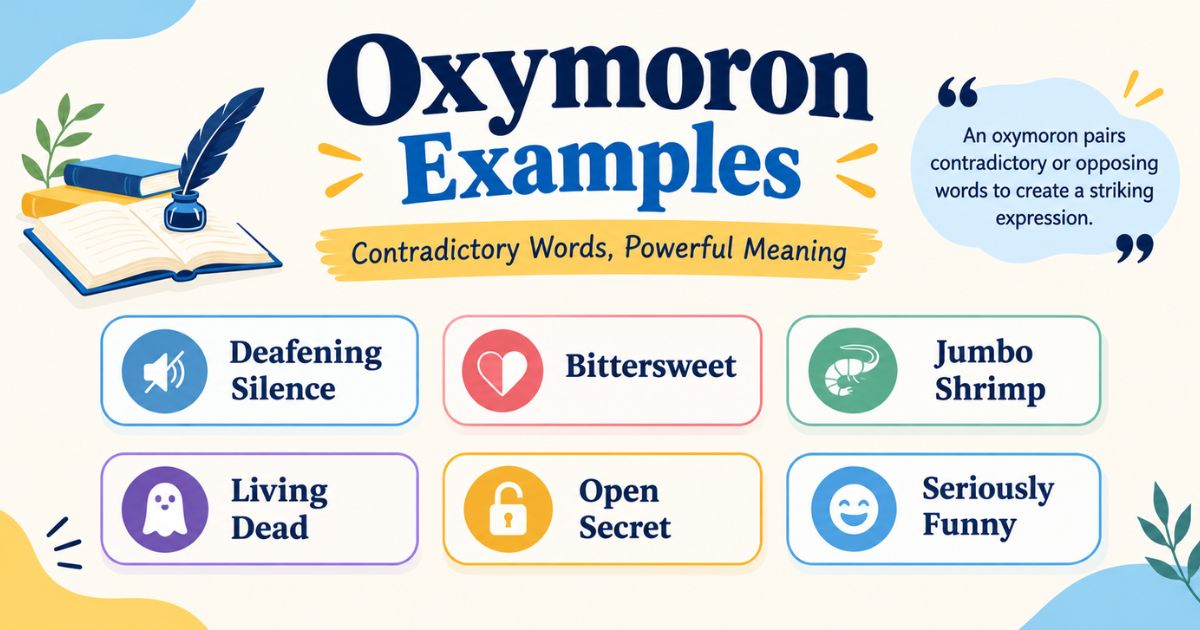
Oxymoron Examples: Contradictions That Actually Work

Oxymoron examples graphic listing deafening silence, bittersweet, jumbo shrimp, living dead.

Introduction An oxymoron is a figure of speech that pairs two contradictory words, usually an adjective and a noun to create a compressed, often striking new meaning, such as “deafening silence” or “bittersweet.” Unlike a paradox, which needs a full sentence or idea to build its contradiction, an oxymoron packs the tension into just two … Read more

Enjambment Examples: See the Line-Break Effect

Enjambment Examples guide graphic with quill pen illustrating a flowing line break.

Introduction Enjambment happens when a line of poetry ends before its sentence or clause is finished, so the meaning spills over into the next line without a pause. Its opposite is the end-stopped line, which closes on a natural stop such as a period or comma. The fastest way to understand enjambment examples is to … Read more