M
Love Poems Technology AI-Technology

The Duck and the Kangaroo: Summary, Theme & Meaning
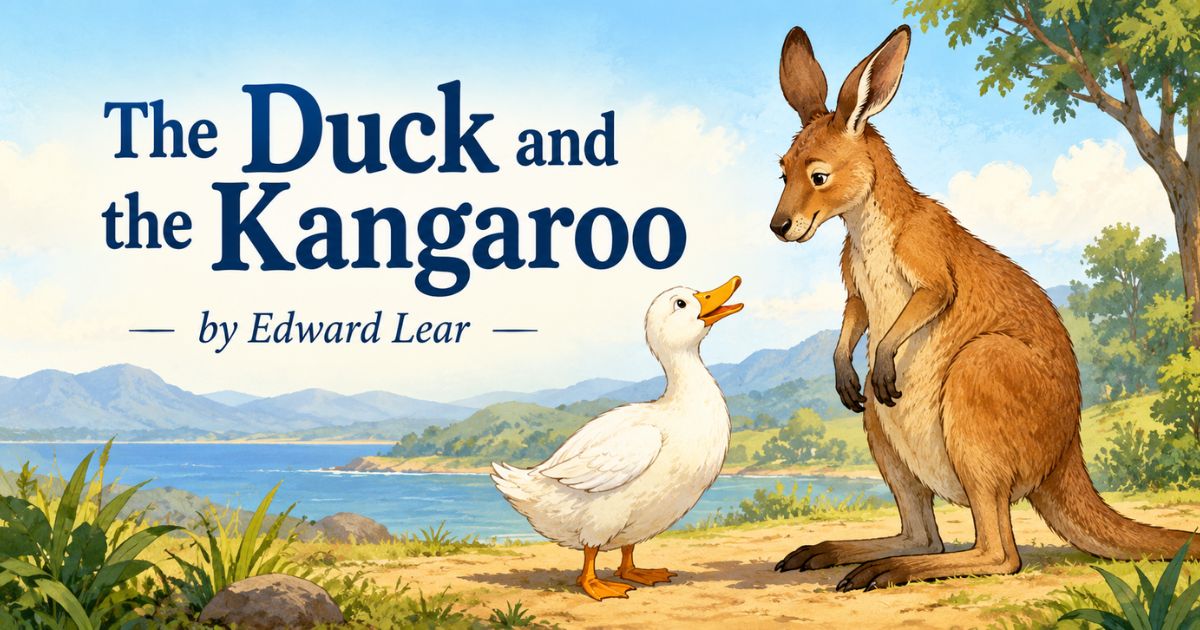
The Duck and the Kangaroo by Edward Lear: a white duck looks up at a standing kangaroo beside a bay and mountains.

Introduction “The Duck and the Kangaroo” is a nonsense poem by Edward Lear, first published in 1871 in his collection Nonsense Songs, Stories, Botany, and Alphabets. It tells the story of a duck who feels trapped in a “nasty pond” and asks a kangaroo for a ride so she can see the world beyond it. … Read more
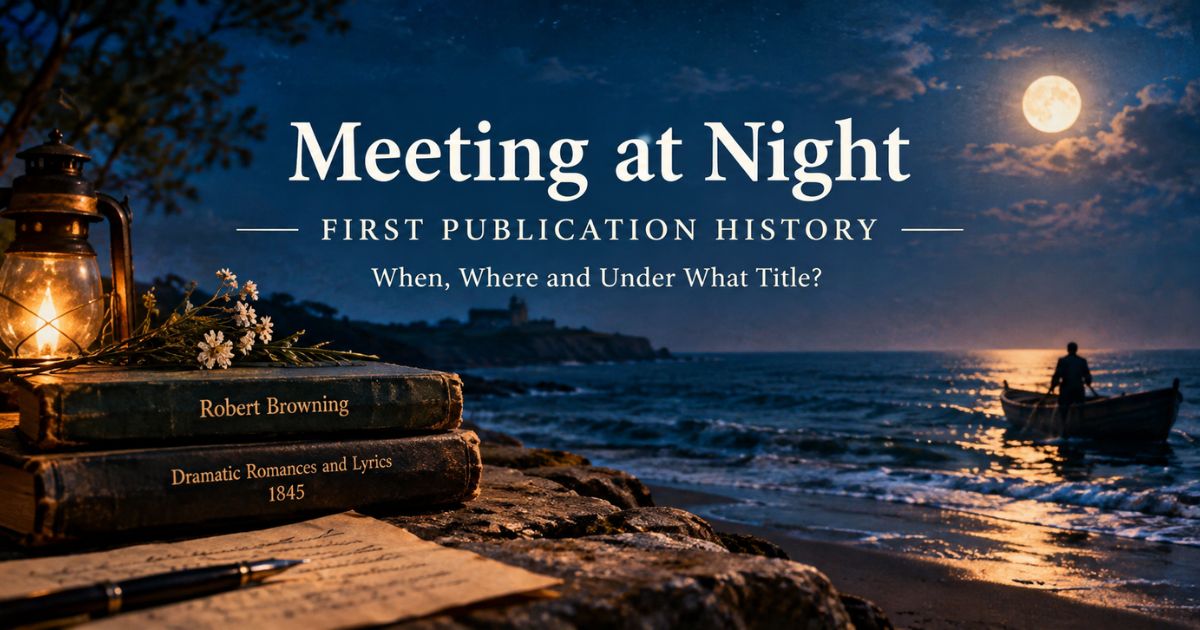

Where Was Meeting at Night First Published? (Verified)

Where was Meeting at Night first published: Robert Browning's Dramatic Romances and Lyrics 1845 beside a moonlit sea,

Introduction Robert Browning’s poem “Meeting at Night” was first published in 1845 in Dramatic Romances and Lyrics. That book was No. VII of his Bells and Pomegranates pamphlet series, issued in London by Edward Moxon. However, the poem did not carry its familiar title. Browning printed it as the first half of a two-part poem … Read more

Binsey Poplars Symbols: Complete List & Meanings

Binsey Poplars symbolism by Gerard Manley Hopkins — riverside poplar trees along a tranquil English river.

Introduction “Binsey Poplars” is Gerard Manley Hopkins’s short, aching response to a single afternoon: he returned to a stretch of river he loved and found the trees along it gone. Everything the poem symbolises grows out of that one moment the poplars themselves, the felled stumps where they once stood, the river that keeps flowing … Read more

Where Lies the Land Poem: Powerful Meaning Unpacked

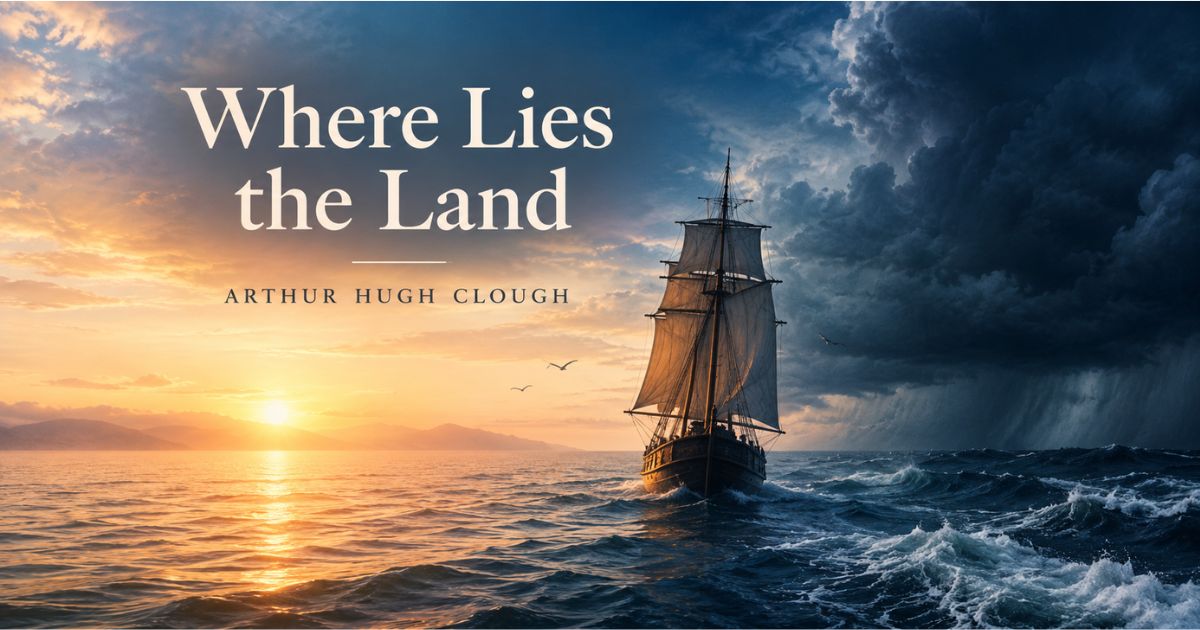
Where lies the land poem - ship sailing between calm and storm, Clough.

Introduction “Where lies the land to which the ship would go?” is a short poem by Arthur Hugh Clough (1819–1861), an English Victorian poet. Rather than describing an actual voyage, the poem uses a ship sailing toward an unknown destination as an extended metaphor for human life; no one truly knows where they are heading … Read more

Who Has Seen the Wind Poem: Beautiful Analysis

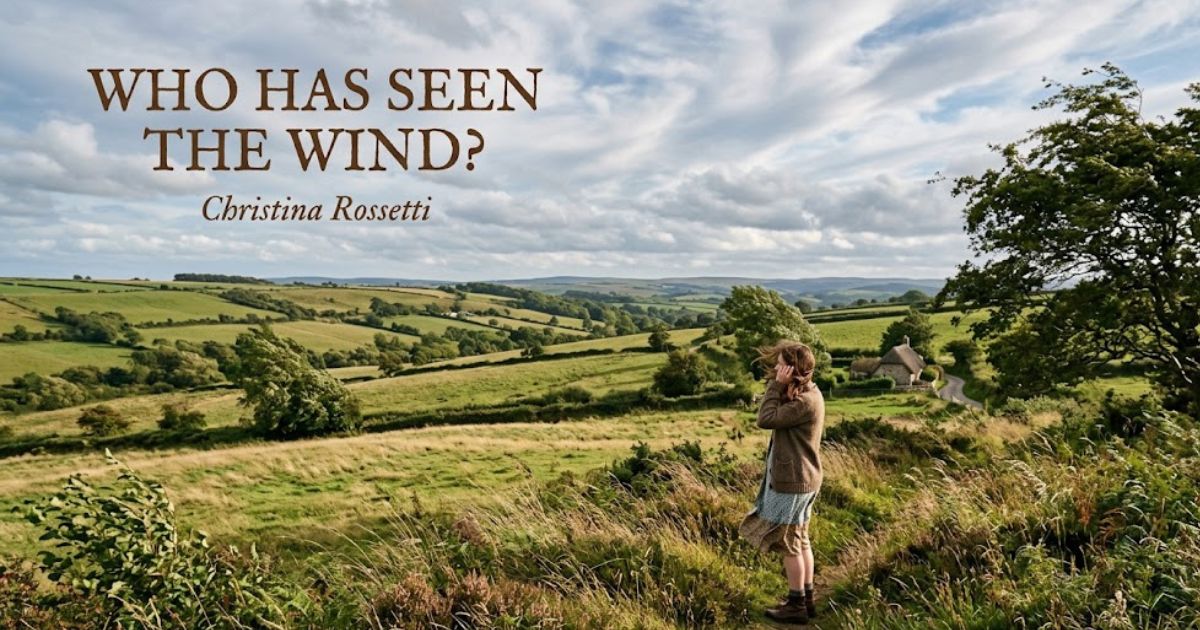
Who has seen the wind poem – windswept countryside, Christina Rossetti

Introduction Who Has Seen the Wind is a short nature poem by Christina Rossetti about something people can feel and observe but cannot directly see. The poem explains this idea through trembling leaves and bending trees, showing that invisible forces can be understood through their effects. Rossetti published the poem during the Victorian period, and … Read more

How Do I Love Thee Poem: Beautiful Meaning Explained

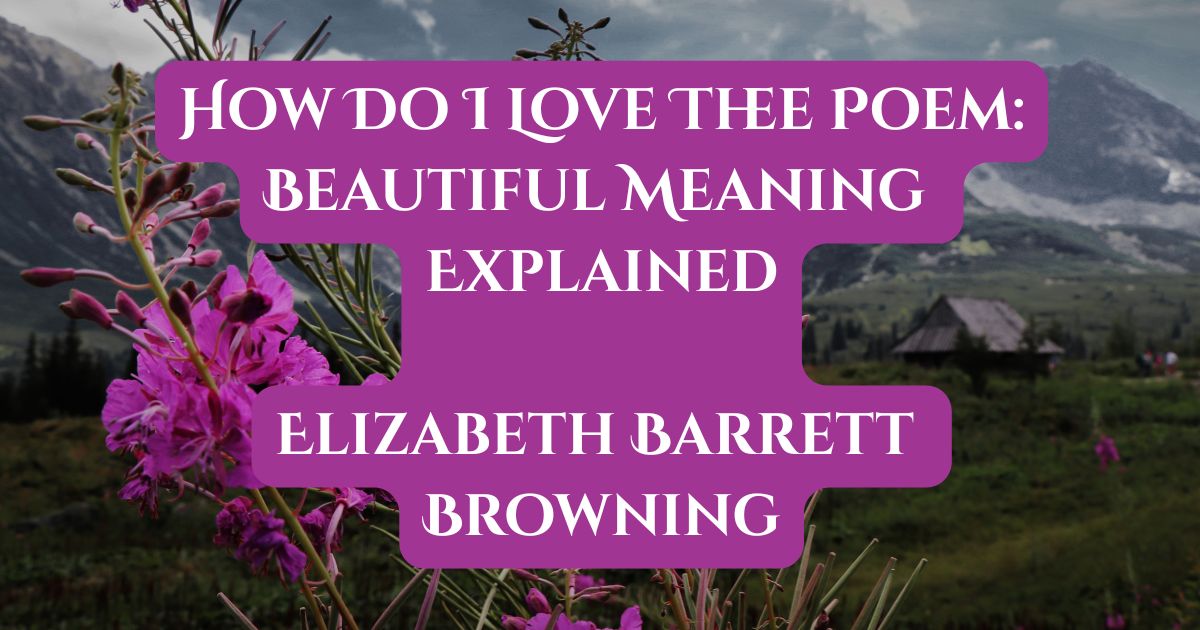
How do I love thee poem meaning explained – Elizabeth Barrett Browning.

Introduction “How do I love thee? Let me count the ways.” That single line, written by Elizabeth Barrett Browning in 1845 and published in 1850, has outlived its century. The how do i love thee poem, formally titled “Sonnet 43” from her collection Sonnets from the Portuguese, is a fourteen-line meditation on love so complete … Read more

Soccer Poems: Famous, Short, Funny & Original Verses for Every Fan

Soccer poems: player's hands placing a soccer ball on green grass turf.

Updated October 2026 · Facts checked against primary sources and publishers Introduction In 1896, A.E. Housman published a twelve-line poem about a young man standing in goal, discovering that football could keep sorrow at bay for a few hours each week. More than a century later, fans still reach for verse when a match leaves … Read more