M
Love Poems Technology AI-Technology

Sada-e-Sarhad Bus Poem: What It Really Means
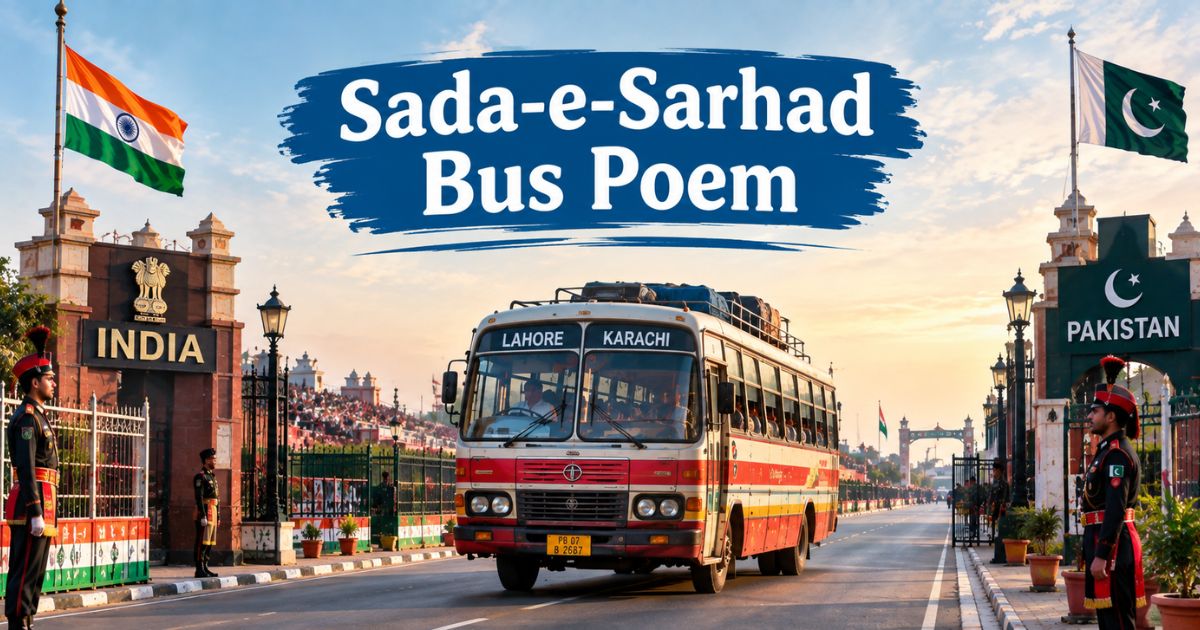
Sada-e-Sarhad bus poem illustration: a bus between the India and Pakistan border gates with flags at sunset.

Introduction If you searched for a “Sada-e-Sarhad bus poem,” here’s the direct answer: there is no single, widely recognized poem by that exact title. “Sada-e-Sarhad,” meaning “Call of the Frontier,” was the official name of the Delhi–Lahore peace bus that ran between India and Pakistan from 1999 to 2019. The phrase carries a poetic weight … Read more
Is ChatGPT Poetry Good? The Honest Verdict

Is ChatGPT Poetry Good — The Honest Verdict banner with robot mascot holding a poem.

Introduction Is ChatGPT Poetry Good? Yes, ChatGPT can write good poetry but it is not consistently great poetry. It is especially strong at following poetic forms, producing rhyme, organizing meter, and creating readable drafts. However, it can still struggle with genuinely fresh metaphor, meaningful ambiguity, distinctive voice, and the depth that can come from lived … Read more

AI vs Human Poetry: What the Research Really Shows

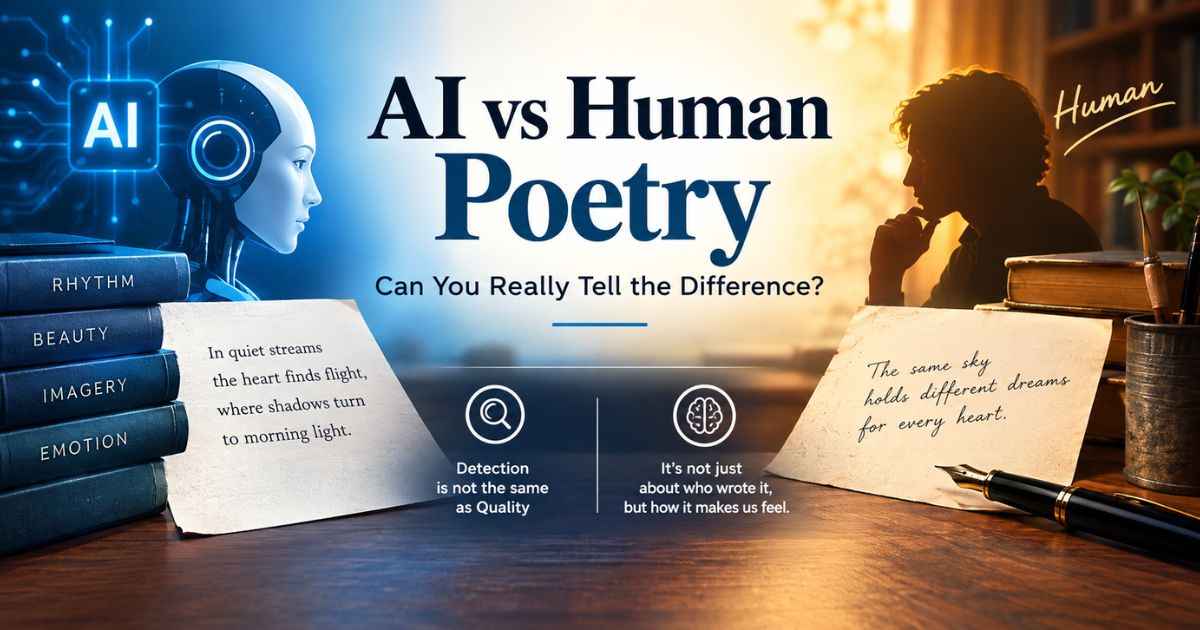
AI vs Human Poetry banner comparing a robot and a person writing, sample verses on notes.

Introduction AI vs human poetry is no longer a simple question of whether readers can tell who wrote a poem. Recent research shows that people can struggle to distinguish AI-generated poetry from human poetry, but that does not prove AI poetry is objectively better. The most important evidence comes from a 2024 Scientific Reports study … Read more

Ekphrastic Poetry: Turning Art Into Living Words

Ekphrastic Poetry banner with paint-stained brushes, Turning Art Into Living Words.

Introduction Ekphrastic poetry is poetry written in response to a work of art, usually a painting or sculpture. The poet may describe the artwork, speak to it, or imagine the story behind it. As a result, the poem becomes a second way of seeing the same image. In simple terms, the poet looks first, then … Read more

Villanelle Examples: How Repetition Becomes Art

Villanelle Examples guide banner with quill icon, How Repetition Becomes Art

Introduction A villanelle is a 19-line poem made of five three-line stanzas and a closing four-line stanza, with two refrains and only two rhyme sounds. The best villanelle examples show how repetition can carry grief, love, or defiance without feeling mechanical. For instance, Dylan Thomas, Elizabeth Bishop, and Edwin Arlington Robinson bend the same rigid … Read more

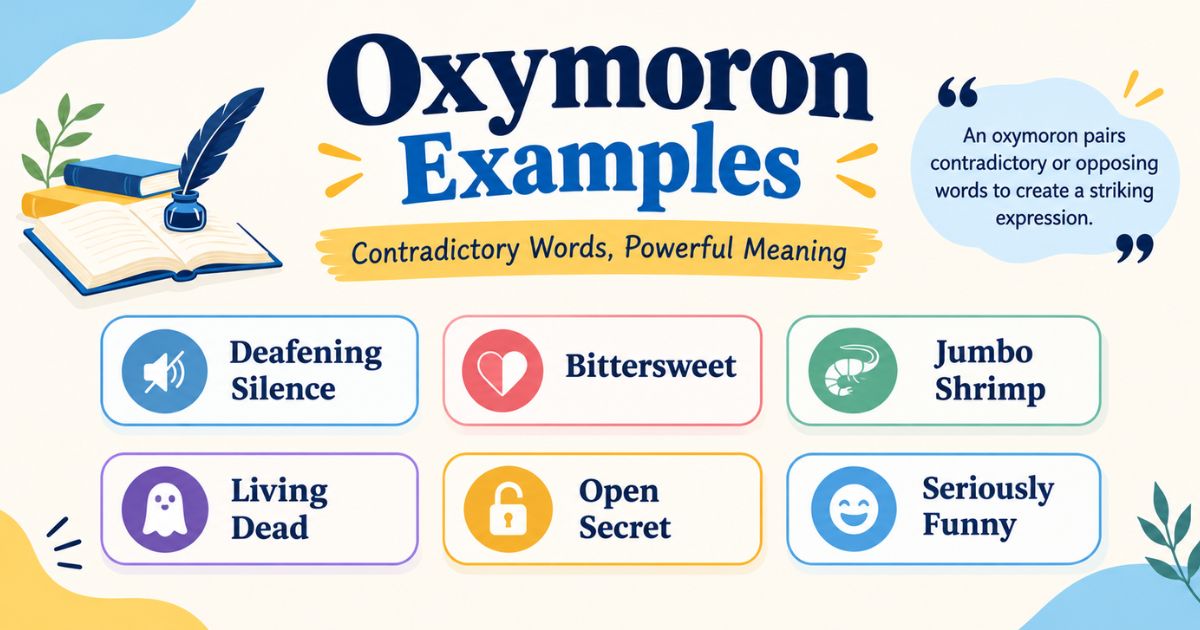
Oxymoron Examples: Contradictions That Actually Work

Oxymoron examples graphic listing deafening silence, bittersweet, jumbo shrimp, living dead.

Introduction An oxymoron is a figure of speech that pairs two contradictory words, usually an adjective and a noun to create a compressed, often striking new meaning, such as “deafening silence” or “bittersweet.” Unlike a paradox, which needs a full sentence or idea to build its contradiction, an oxymoron packs the tension into just two … Read more

Enjambment Examples: See the Line-Break Effect

Enjambment Examples guide graphic with quill pen illustrating a flowing line break.

Introduction Enjambment happens when a line of poetry ends before its sentence or clause is finished, so the meaning spills over into the next line without a pause. Its opposite is the end-stopped line, which closes on a natural stop such as a period or comma. The fastest way to understand enjambment examples is to … Read more

Who is the Pope’s Mouthpiece in the Poem? Clarissa Explained

Who is the Pope's mouthpiece in The poem Rape of the Lock — Clarissa's speech in Canto V explained.

Introduction Who is the Pope’s Mouthpiece in the Poem? In The Rape of the Lock, Clarissa is generally considered Pope’s mouthpiece, particularly through her speech in Canto V. In this speech, she argues that beauty is temporary and that good sense, good humour, and personal merit are more valuable than outward appearance. This is the … Read more

Brotherhood Poem: Beautiful Meaning of the Stars Revealed

Brotherhood by Octavio Paz poem graphic, silhouetted figure under starry sky with open book.

Introduction In Octavio Paz’s poem “Brotherhood,” the stars write the destiny or place of human beings within the vast universe. When the speaker looks at the night sky, he realizes that his own life is also part of this cosmic writing. The poem is very short, but its ideas are large. Paz connects human mortality, … Read more

Who Wrote Sare Jahan Se Achcha? The Truth Revealed

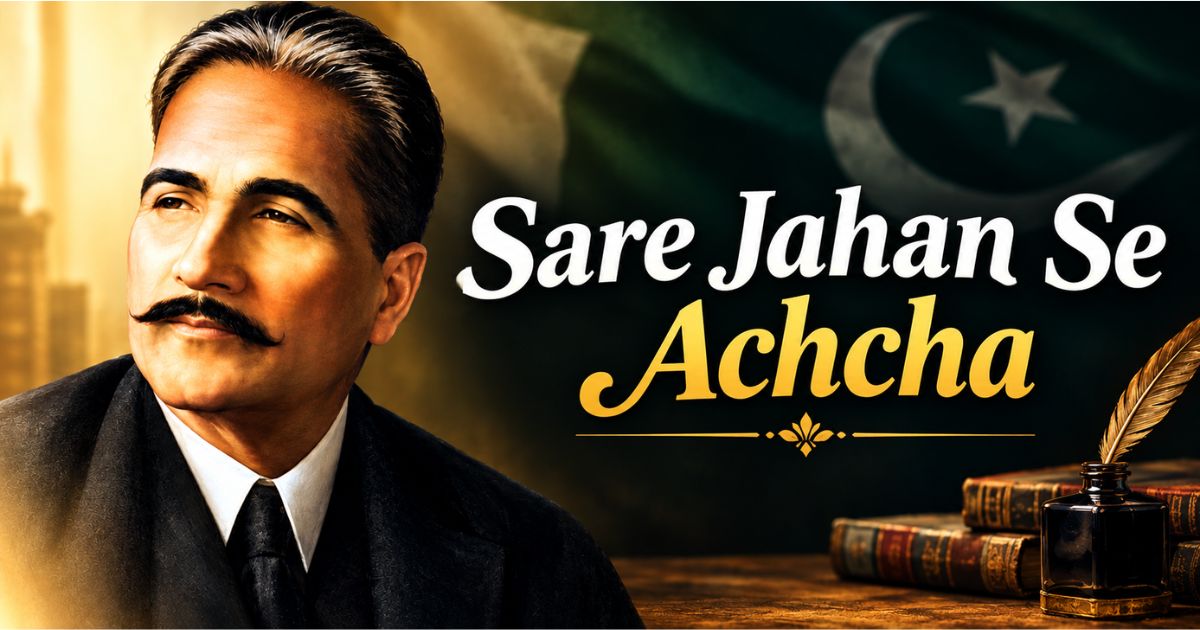
Allama Muhammad Iqbal portrait for Sare Jahan Se Achcha poem with books and quill pen.

Introduction Muhammad Iqbal wrote “Sare Jahan Se Achcha,” the famous patriotic poem also known as “Tarana-e-Hindi.” Iqbal wrote it in 1904, and it became one of the best-known patriotic compositions associated with the Indian subcontinent. The poem is often confused with India’s national anthem, “Jana Gana Mana,” which was written and composed by Rabindranath Tagore. … Read more