
Introduction
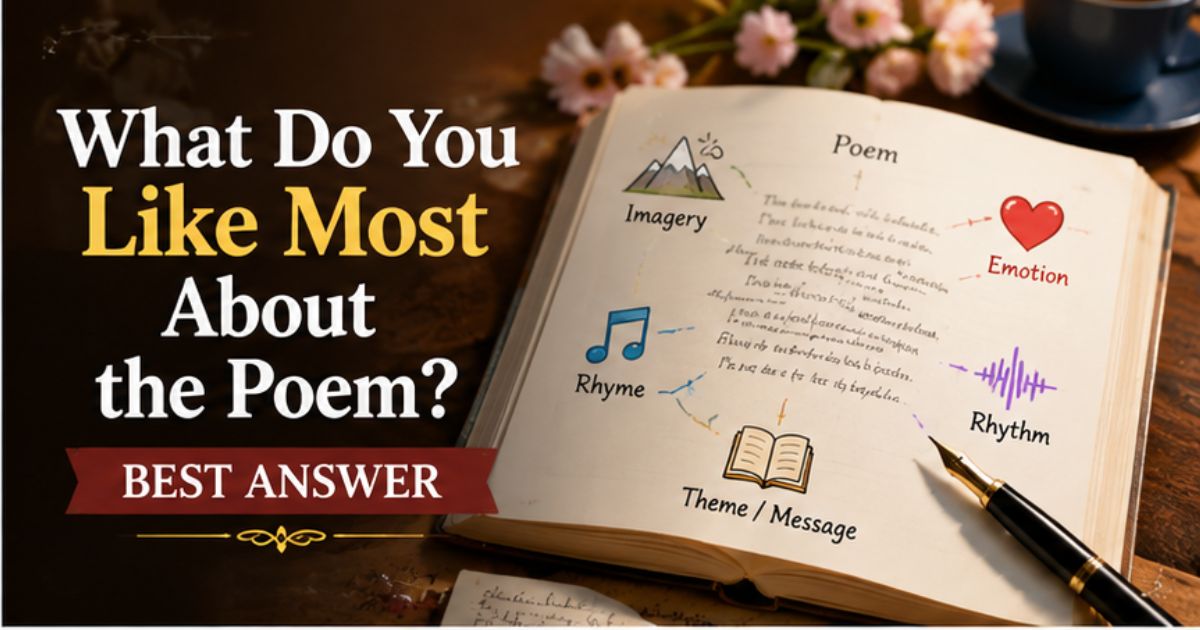
A strong answer to what do you like most about the poem should name one specific feature and explain why it appeals to you. You might like the poem’s imagery, message, emotional effect, rhyme, rhythm, language, or connection to real life.
The best answer is not simply “I like the poem because it is beautiful.” Instead, identify something specific and support your opinion with an example from the poem. This type of question tests more than your personal preference. It also checks whether you can read a poem carefully, identify important poetic elements, and explain your response clearly.
Key Takeaways
Choose one specific feature that genuinely stands out.

Explain why you like that feature.

Use a short example or reference from the poem.

Connect the feature to the poem's theme or message when appropriate.

Avoid vague answers such as “It is good” or “I enjoyed it.”

You can discuss imagery, rhyme, rhythm, tone, mood, language, or emotion.

A personal response becomes stronger when it includes textual evidence.

There is no single correct personal preference, but your explanation should be logical.
What Do You Like Most About the Poem?
A good response should sound personal while still showing that you understand the poem.
For example:
“What I like most about the poem is its vivid imagery. The poet uses clear descriptions to help me picture the scene and feel the emotion behind it. I especially like how the imagery makes the poem’s message easier to understand and more memorable.”
This answer works because it gives a specific preference, a reason, and an explanation.
Focus on the Poem’s Most Powerful Feature
Start by identifying the element that affects you most. It could be:
- Imagery that creates strong mental pictures
- Rhyme that makes the poem musical
- Rhythm that gives the poem movement
- Figurative language that creates deeper meaning
- Theme that connects with your experience
- Tone that creates a particular attitude
- Mood that makes you feel a certain emotion
- Message that teaches an important idea
- Word choice that makes the poem memorable
For example, if a poem describes nature in beautiful detail, you might say that its imagery is your favourite feature. If the poem discusses overcoming difficulties, you might prefer its inspiring message. The key is to choose something that you can explain.
Explain Why That Feature Stands Out
After identifying your favourite feature, explain its effect. Instead of writing:
“I like the imagery.”
Write:
“I like the imagery because the detailed descriptions make the natural setting feel real and peaceful.”
The second answer tells the reader why the imagery matters. In my own reading of poetry, specific explanations usually make personal responses much stronger. A reader does not need to agree with your preference, but they should understand your reasoning.
How to Write a Strong Answer About a Poem
You can build an effective response in three simple steps.
Step 1: Choose One Specific Element
Think about your first reaction to the poem.
Ask yourself:
- What line stayed in my mind?
- What image was most memorable?
- What emotion did the poem create?
- Did I enjoy its sound or rhythm?
- Did its message make me think?
- Did I connect with the speaker’s experience?
Your answer will usually point toward an important poetic feature.
Step 2: Give a Reason
Next, explain why you selected that feature. For example:
“I like the poem’s rhythm because it makes the lines flow naturally and gives the poem a musical quality.”
Or:
“I like the theme because it presents a familiar human experience in a thoughtful way.”
A reason transforms a personal opinion into a meaningful response.
Step 3: Support Your Answer With Evidence
Finally, mention a specific detail from the poem.
You do not always need a long quotation. You can refer to an image, repeated word, metaphor, rhyme pattern, or important moment.
A useful structure is:
Preference → Reason → Evidence → Effect
For example:
“What I like most about the poem is its imagery. The poet uses detailed descriptions of the natural world, which helps me visualize the setting. This imagery also creates a peaceful mood and supports the poem’s larger message about the importance of nature.”
This structure is short enough for a classroom answer but detailed enough to demonstrate understanding.
What Poetic Features Can You Mention?
You have many options when answering a personal-response question.
Imagery is useful when the poet creates vivid pictures through language. You can explain how those descriptions help you visualize a scene or experience.
Rhyme and rhythm work well when the poem has noticeable musical qualities. You might explain that the sound pattern makes certain lines memorable.
Tone and mood are useful when the poem creates a strong emotional atmosphere. For example, you might enjoy a hopeful tone because it makes the poem feel encouraging.
Figurative language can also provide a strong answer. Metaphors, similes, personification, and symbolism often make ordinary ideas more meaningful.
Theme and message are especially useful when the poem communicates an idea that connects with real life.
| Feature | Possible response |
| Imagery | “I like how the descriptions create vivid pictures.” |
| Rhyme | “The rhyme makes the poem memorable.” |
| Rhythm | “The rhythm gives the poem a natural flow.” |
| Theme | “The theme connects with real-life experiences.” |
| Tone | “The hopeful tone makes the poem encouraging.” |
| Language | “The simple language makes its message accessible.” |
The best choice depends on the particular poem.
FAQs
Q: What do you like most about the poem?
A: A strong answer should identify one specific feature and explain why you like it. For example, you might say that you like the poem’s imagery because the vivid descriptions help you visualize the setting. You can strengthen the response by mentioning a particular image or poetic technique. The best answer combines personal reaction with evidence from the poem instead of simply saying that the poem is beautiful or interesting.
Q: How should I answer what you like most about the poem?
A: Start by naming your favourite element, such as imagery, theme, rhyme, rhythm, tone, or message. Then explain why it appeals to you. Finally, mention a detail from the poem that supports your opinion. A simple structure is: “I like most because. The poet shows this through. This makes the poem.” This approach creates a clear and convincing personal response.
Q: What is the best part of a poem to discuss?
A: There is no universally best feature to discuss. Choose the element that has the strongest effect on you and that you can explain clearly. Imagery, figurative language, theme, tone, mood, rhyme, and rhythm are all useful choices. However, the best response is usually the one supported by a specific example rather than a vague statement about liking the poem.
Q: Can I mention the theme when answering this question?
A: Yes. The theme can be an excellent choice if it connects with your thoughts or experiences. For example, you might say that you like the poem’s theme of hope because it presents difficult situations in an encouraging way. Explain what the theme means and identify a detail that develops it. This shows that your personal opinion is based on careful reading.
Q: How can I make my poetry answer better?
A: Make your answer specific rather than general. Instead of saying “I like the poem because it is nice,” identify the exact feature you appreciate. Then explain its effect and provide evidence. For example, discuss a memorable image, metaphor, rhyme pattern, emotional moment, or message. A clear preference followed by reasoning and evidence will make your response much stronger.
Q: What if I do not like the poem?
A: You can still give a thoughtful answer. Explain which element you found least effective and why. For example, you might say that the poem’s repeated imagery felt unclear or that its tone made it difficult to connect with the speaker. Keep the response respectful and support your opinion with evidence. Literary analysis does not require you to personally enjoy every poem.
Final Thoughts
The best answer to what do you like most about the poem combines personal opinion with clear literary reasoning. Choose one feature, explain why it stands out, and connect your response to a specific detail from the poem.
You can discuss imagery, theme, language, rhyme, rhythm, tone, mood, or emotional impact. There is no requirement to choose the same feature as another reader. What matters is your ability to explain why that feature makes the poem meaningful, memorable, or enjoyable to you.
Recent Article : Father’s Helplessness in the Poem “Father to Son”

Jennifer Aston is a passionate poetry curator and writer with a deep love for the written word. She believes poetry has the power to heal, inspire, and connect people across all walks of life. Through PoemSteric, she brings together timeless and modern verses for every emotion and every moment.