
Introduction
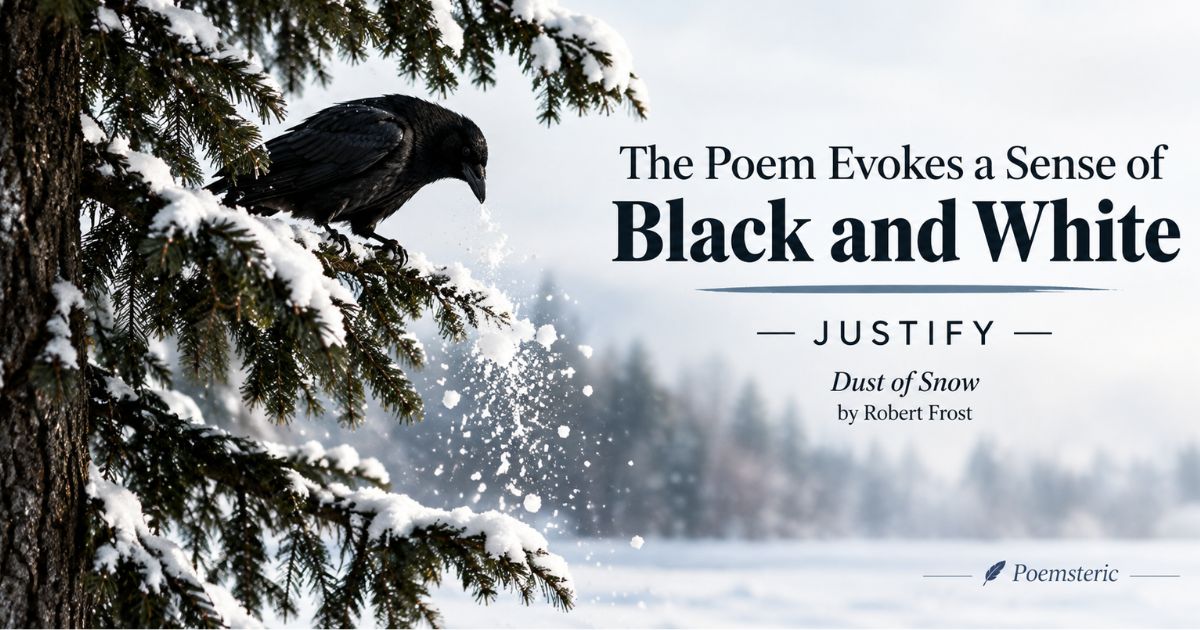
The poem evokes a sense of black and white through its central image of a black crow shaking down white snow dust from a dark hemlock tree. This visual contrast between the crow’s black feathers, the dark hemlock, and the pure white snow builds the poem’s entire mood, mirroring how something seemingly small and dark (the crow’s action) unexpectedly brings light and relief to the speaker’s day. Robert Frost uses this pairing to link color, nature, and emotion in just eight lines.
In my own reading of “Dust of Snow” with students, this is usually the question that trips people up most not because the imagery is hard to spot, but because they miss why the contrast matters beyond just “it has black and white things in it.”
Key Takeaways
- The poem’s black-and-white imagery comes from the crow (black) and the snow dust (white), set against the dark hemlock tree.
- Frost uses these opposing colors to represent opposing emotional states: gloom versus relief.
- The crow and hemlock are traditionally linked with bad omens, yet here they cause a positive shift in the speaker’s mood.
- The poem’s short length (two stanzas, eight lines) makes every visual detail carry extra symbolic weight.
- This exact question appears frequently in CBSE Class 10 English exams, and examiners expect the color imagery to be tied directly to the mood shift, not just described.
Understanding “Dust of Snow” by Robert Frost
About the Poet and the Poem
Robert Frost was an American poet, four-time Pulitzer Prize winner, widely known for nature-based poetry that carries deeper emotional or philosophical meaning beneath simple rural imagery. “Dust of Snow” was published in his 1923 collection New Hampshire, the same collection that included his more famous poem “Stopping by Woods on a Snowy Evening.” Like much of Frost’s work, “Dust of Snow” uses an everyday rural moment of snow falling from a tree to explore a much bigger idea: how small, unplanned events can shift our entire emotional state.
How the Poem Evokes a Sense of Black and White
The poem builds its black-and-white contrast through three connected images working together, not just one.
- The crow (black): Traditionally seen as a symbol of misfortune or gloom in Western literary tradition, the crow’s dark color visually anchors the poem’s “black” half.
- The hemlock tree (dark, poisonous association): Hemlock is a tree historically linked with poison and death, reinforcing the darker, heavier mood at the poem’s start.
- The dust of snow (white): The snow shaken loose from the tree is small, light, and pure white a literal and symbolic contrast to the crow and hemlock beneath it.
For example, if you imagine the scene as a photograph, it would genuinely look black and white: a dark bird against a dark tree, with pale snow drifting down between them. Frost doesn’t need to say “this is a sad or a happy moment” directly; the color imagery does that emotional work for him.
Why the Color Contrast Matters: Symbolism Explained
The reason examiners ask you to “justify” this claim, rather than just describe it, is that the real answer lies in what the contrast does, not just what it shows.
- The dark elements (crow, hemlock) initially represent the speaker’s low, regretful mood; he describes having “rued” part of his day before the snow falls.
- The white snow acts as an unexpected interruption, both visually and emotionally, shifting his mood for the better.
- As a result, the black-and-white imagery isn’t decorative, it’s structural. It maps directly onto the poem’s emotional arc, from gloom to relief.
This is also where many student answers fall short: they list the crow and the snow as proof of “black and white” but stop there, without connecting the colors back to the mood shift. A complete answer always ties the visual contrast to the emotional contrast Frost is building.
FAQs About the Poem Evokes a Sense of Black and White. Justify
Q: How does the poem evoke a sense of black and white?
A: The poem evokes a sense of black and white mainly through the crow, which is black, and the dust of snow, which is white, set against a dark hemlock tree. This visual contrast isn’t just decorative; it mirrors the poem’s emotional shift from a gloomy mood to a lighter, relieved one, which is the key point examiners look for in a complete answer.
Q: What is the significance of the crow and hemlock tree in the poem?
A: Both the crow and the hemlock tree are traditionally associated with bad omens, death, or gloom in literary symbolism. Frost uses that association deliberately, so that when these “negative” symbols end up causing something good, a shift in the speaker’s mood, the poem’s message about unexpected positivity lands with more contrast and impact.
Q: Why does Robert Frost use color imagery in Dust of Snow?
A: Frost uses color imagery because it lets him show an emotional change without stating it outright. The black crow and white snow create a visual before-and-after within a single short poem, letting readers feel the shift in mood through contrast rather than direct explanation.
Q: What is the central idea of Dust of Snow?
A: The central idea is that small, ordinary moments, even ones involving symbols of gloom, like a crow or a hemlock tree can unexpectedly change a person’s outlook for the better. The poem’s black-and-white imagery is the vehicle Frost uses to carry that larger idea about mood and perspective.
Q: How should I structure an answer to “the poem evokes a sense of black and white, justify”?
A: A strong answer names the specific images (crow, hemlock, snow), states their traditional symbolic associations, and then explicitly links the color contrast to the poem’s mood shift from regret to relief. Simply listing the black and white elements without connecting them to the emotional change is the most common reason marks are lost on this question.
Final Thoughts
The strongest answer to this classic textbook question does more than spot the crow and the snow; it explains why Frost paired darkness with light in the first place. The poem evokes a sense of black and white to carry its real subject: how quickly, and unexpectedly, a small moment can lift a heavy mood. Once you connect the visual contrast to that emotional shift, the “justify” part of the question answers itself.
Recent Article : Discuss the Theme of the Poem Poor Relations: Real Meaning

Jennifer Aston is a passionate poetry curator and writer with a deep love for the written word. She believes poetry has the power to heal, inspire, and connect people across all walks of life. Through PoemSteric, she brings together timeless and modern verses for every emotion and every moment.