
Introduction
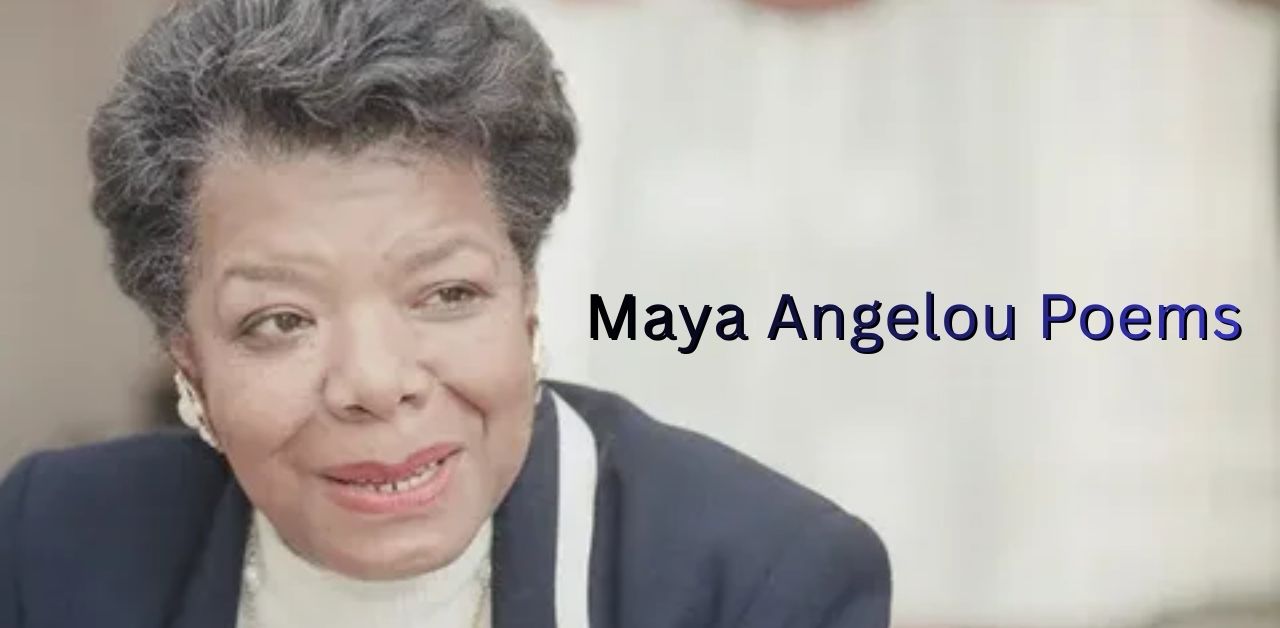
Maya Angelou is best known for her seven autobiographies, but many of her readers consider her a poet first. She has been called “the black woman’s poet laureate,” and her poems have been described as the anthems of African Americans. Her poems continue the themes of mild protest and survival also found in her autobiographies, and inject hope through humor.
This guide covers the best Maya Angelou poems, what each one means, and which collection it comes from. It also gives a full analysis of “Still I Rise,” her quotes, her awards, a short biography, poems for special occasions, and answers to the questions readers ask most.
Key Takeaways
- Her best-known poems are “Still I Rise,” “Phenomenal Woman,” “Caged Bird” and “On the Pulse of Morning.”
- She recited “On the Pulse of Morning” at Bill Clinton’s 1993 inauguration. She was the first poet to read at an inauguration since Robert Frost in 1961, and the first Black person and first woman to do so.
- Her poems draw on the blues, spirituals and everyday speech, and were written to be read aloud.
- Her main themes are resilience, racism, womanhood, love, loss and community.
- She won three Grammys for spoken word, the National Medal of Arts (2000) and the Presidential Medal of Freedom (2010).
- Critics have often rated her poetry below her prose, but her readership has always been huge.
- Some quotes widely credited to her, including one on a U.S. postage stamp, were not hers. Check before you cite (see the quotes section).
Quick Facts
| Fact | Details |
| Full name at birth | Marguerite Johnson |
| Born | April 4, 1928, St. Louis, Missouri |
| Raised in | Stamps, Arkansas (segregated rural South) |
| Died | May 28, 2014, Winston-Salem, North Carolina (age 86) |
| Known as | Poet, memoirist, actress, singer, dancer, playwright, director, civil rights activist |
| Most famous book | I Know Why the Caged Bird Sings (1969) |
| Most famous poems | “Still I Rise,” “Phenomenal Woman,” “Caged Bird,” “On the Pulse of Morning” |
| Academic post | Reynolds Professor of American Studies, Wake Forest University |
Who Was Maya Angelou? A Short Biography
She grew up in Stamps, Arkansas, where she fell in love with poetry. After a childhood trauma described in I Know Why the Caged Bird Sings, she coped by memorizing and reciting great literature, which helped bring her out of a period of silence.
As a young adult she worked as a singer, dancer and performer. She was a cast member of a European tour of Porgy and Bess in 1954 and 1955, and a nightclub singer in San Francisco and Los Angeles through the 1950s. Her stage name, Maya Angelou, was suggested by supporters and suited her calypso act. In 1957 she recorded the album Miss Calypso, and many songs from those years later became poems.
She published I Know Why the Caged Bird Sings in 1969, and the book was nominated for the National Book Award. She then published six more autobiographies, the last being Mom & Me & Mom in 2013. She joined the Wake Forest University faculty in 1982 as its first Reynolds Professor. She also worked with the civil rights movement, including work in New York for Martin Luther King Jr.’s Southern Christian Leadership Conference.
Her writing routine is famous. She would check into a hotel room with the pictures taken off the walls and write on legal pads, with only a bottle of sherry, a deck of cards, a thesaurus and the Bible, then edit her ten to twelve pages down to three or four.
What Makes Maya Angelou’s Poetry Special?
Written for the ear. Angelou told an interviewer in 1983 that she wrote poetry so that it would be read aloud. Rhythm, repetition and call-and-response are part of the meaning, so read her poems aloud.
The blues in verse. Critics compare her work with the blues, since like a blues singer she uses laughter or ridicule instead of tears to cope with irritation, sadness and great suffering.
Plain words, layered meanings. She uses everyday language and Black vernacular. Some of her metaphors act as coded references understood by Black readers, while the themes stay universal.
Personal pain turned public. A scholar quoted on Wikipedia says her particular gift is turning personal experience into political statement. A poem about one woman’s dignity becomes a poem about a community’s survival.
A community of healing. Scholars argue she creates a space of healing for readers who have known the same pain as the people in her poems.
𝕋𝕙𝕖 𝟙𝟝 𝔹𝕖𝕤𝕥 𝕄𝕒𝕪𝕒 𝔸𝕟𝕘𝕖𝕝𝕠𝕦 ℙ𝕠𝕖𝕞𝕤 𝔼𝕩𝕡𝕝𝕒𝕚𝕟𝕖𝕕
1. Still I Rise
Collection: And Still I Rise (1978). A confident, playful answer to oppression. The speaker faces people who want to see her broken and refuses. It was her favorite of her poems and is often compared to a spirit of hope. Full analysis below.
2. Phenomenal Woman
Collection: And Still I Rise (1978). A poem that redefines beauty as confidence, presence and inner power instead of size or fashion. It is one of her most widely quoted poems, and her recording of it won a Grammy. It is a good first poem for new readers.
3. Caged Bird
Collection: Shaker, Why Don’t You Sing? (1983). It sets a free bird against a caged one that sings of freedom. It works as a metaphor for racial oppression and the longing that will not go away. Its imagery links to her famous autobiography’s title.
4. On the Pulse of Morning
Recited in 1993. Her inaugural poem speaks through a rock, a river and a tree. It asks a divided nation to face its past and begin again, and it made her poetry known far beyond literary circles.
5. Alone
Written 1975. A meditation on loneliness and belonging: nobody gets through life without other people. Its message has resonated with readers who lived through the alone-together experience of the pandemic.
6. Life Doesn’t Frighten Me
A rhythmic poem about facing fear with courage. It is very popular with children and in classrooms because it is easy to recite.
7. A Brave and Startling Truth
She delivered it in 1995 to mark the 50th anniversary of the United Nations. It calls for compassion, peace and shared human responsibility.
8. Woman Work
A speaker worn down by daily chores dreams of rest in sun, rain and wind. It gives voice to the exhaustion of working women and their need for renewal.
9. Harlem Hopscotch
Scholars describe it as a celebration of survival, strength and energy with a lively, invincible beat. Read it aloud.
10. Human Family
The poem states her central belief that people are more alike than they are different. Critics see this as a recurring theme across all her writing. It is often quoted in talks about equality.
11. Momma Welfare Roll
It gives a voice to a group whose voices are often stifled, and it challenges stereotypes about welfare and the resilience of women in financial hardship.
12. Awaking in New York
Collection: Shaker, Why Don’t You Sing? (1983). An ironic, compact look at a city waking up, shaped by her own years in New York as a performer and activist.
13. On Aging
A witty, honest poem about growing older, finding humor and wisdom in a changing body.
14. Men
A frank, wry poem about desire and attraction that shows her willingness to write openly about women’s inner lives.
15. Just Like Job
A prayer-like poem drawing on the biblical Job to explore faith, endurance and hope through hardship.
Still I Rise: Full Analysis
Background. The poem appeared in And Still I Rise (1978), written in the years after the civil rights movement, when Black voices were gaining strength but still facing racism and sexism.
Structure. It is a poem of nine mostly short stanzas. Most of it uses short quatrains with an ABCB rhyme scheme, and the pattern shifts near the end as the poem builds to its climax.
Key literary devices
- Rhetorical questions. The speaker asks no fewer than eight rhetorical questions, each aimed at an unspecified “you.” They challenge the oppressors and show her confidence instead of expecting answers.
- Similes from nature. She compares her rising to dust, air, moons, suns, tides and hope. These are things that rise again whatever is done to them, which makes her triumph feel inevitable.
- Parallelism and repetition. Repeated phrasing sets up tension and resolution, and helps persuade the reader of her confidence in her own resilience.
- Metaphor. In the final stanzas she becomes a vast dark ocean, an image of power and history.
- Hyperbole and playful boasting. Images of wealth, such as oil wells and gold mines, express confident joy and pride.
- The refrain. The closing repetition of “I rise” turns the poem into a chant.
Tone. It moves from defiance to a confident, triumphant tone.
Themes. Resilience, dignity, self-respect, overcoming racism, and the legacy of slavery. In the closing stanzas she speaks as the hope and dream of her ancestors.
Quick Analysis of Two More Famous Poems
Phenomenal Woman. The speaker talks to women who wonder why she does not fit the standard image of beauty. Her answer is her confidence, her walk, her smile and her presence. The poem’s message is that self-worth is a quality you carry, not a measurement.
Caged Bird. Two birds represent freedom and captivity. One floats on the wind and claims the sky. The other is confined, with clipped wings and tied feet, yet still sings about freedom. The repeated refrain about the caged bird’s song is the poem’s heart: hope survives inside confinement, and song becomes protest.
Maya Angelou’s Poetry Collections
| Collection | Year | Notes |
| Just Give Me a Cool Drink of Water ‘fore I Diiie | 1971 | First collection; Pulitzer-nominated best-seller |
| Oh Pray My Wings Are Gonna Fit Me Well | 1975 | Includes “Alone” |
| And Still I Rise | 1978 | Includes “Still I Rise” and “Phenomenal Woman” |
| Shaker, Why Don’t You Sing? | 1983 | Includes “Caged Bird” |
| I Shall Not Be Moved | 1990 | |
| The Complete Collected Poems of Maya Angelou | 1994 | Random House collection |
| Maya Angelou: The Complete Poetry | 2015 | Adds a dozen later poems |
Early in her career she alternated a book of poetry with an autobiography.
Poems for Special Occasions
She wrote and recited poems for many major public moments:
- “On the Pulse of Morning” (1993): Clinton’s inauguration.
- “A Brave and Startling Truth” (1995): the 50th anniversary of the United Nations.
- Million Man March (1995): she was chosen to recite a poem.
- “We Had Him” (2009): written for Michael Jackson, read by Queen Latifah at his funeral.
- “His Day Is Done” (2013): honoring Nelson Mandela after his death.
Which Poem for Which Occasion?
| Occasion | Suggested poem |
| Graduation or new beginnings | “Still I Rise,” “On the Pulse of Morning” |
| Women’s Day or empowerment | “Phenomenal Woman,” “Woman Work” |
| Black History Month | “Still I Rise,” “Caged Bird,” “Harlem Hopscotch” |
| Courage for children | “Life Doesn’t Frighten Me” |
| Loneliness and community | “Alone,” “Human Family” |
| Aging or birthdays | “On Aging” |
| Memorials and tributes | “We Had Him,” “His Day Is Done” |
Maya Angelou Short Poems and Poems for Students
If you want shorter or more accessible poems, start with “Caged Bird,” “Human Family,” “Life Doesn’t Frighten Me” and “Alone.” Her poems are accessible to readers of all ages, so they suit classroom use. Teachers often pair readings with recordings of Angelou’s own delivery to add depth for students. For younger readers, look for the Poetry for Young People volume from Sterling, which collects 25 of her poems.
Classroom tips
- Have students read aloud in groups.
- Ask them to find similes and rhetorical questions in “Still I Rise.”
- Compare “Caged Bird” with the free-bird and caged-bird imagery in her autobiography.
- Discuss why her poems were written to be performed.
Maya Angelou Quotes (and Which Ones to Double-Check)
Short quotes widely credited to her:
- “Try to be a rainbow in someone’s cloud.”
- “Nothing will work unless you do.”
- “If you don’t like something, change it.”
Two things to know before you cite:
- A quote about how people will remember how you made them feel is often credited to her, but its origin is disputed. Verify it before publishing it as her exact words.
- The U.S. Postal Service’s Angelou stamp mistakenly carried a quote long associated with her that was actually first written by Joan Walsh Anglund. Misattributed quotes spread quickly, so cite carefully.
Her Awards and Honors
- Spingarn Medal (1994), from the NAACP.
- National Women’s Hall of Fame (1998).
- National Medal of Arts (2000), awarded by President Bill Clinton.
- Lincoln Medal (2008).
- Presidential Medal of Freedom (2010), the highest U.S. civilian honor, awarded by President Barack Obama. She received it at the White House in February 2011.
- Three Grammy Awards for spoken word recordings, including for her performance of “Phenomenal Woman” and for the audiobook of “A Song Flung Up to Heaven.
- More than 50 honorary degrees.
- A Pulitzer Prize nomination for her first poetry collection.
- American Women Quarters (2022): she was among the first women honored in the new coin series.
Angelou’s Poetry, Civil Rights and Women’s Empowerment
Her poems speak from inside the experience of racism without becoming only about anger. Poems such as “Still I Rise,” “Caged Bird” and “Harlem Hopscotch” give voice to survival and dignity. Poems such as “Phenomenal Woman,” “Woman Work” and “Men” put women’s bodies, labor, desire and pride at the center. Scholars consider her work a precursor to the Black women writers of the 1970s who used poetry to express liberation and empowerment.
Critical Reception: Loved by Readers, Debated by Critics
Critic Harold Bloom called her work “popular poetry” that makes few formal demands on the reader, and reviews have often ranked her poetry below her prose. Others say her purpose was to be representative and public rather than private and confessional. Scholar Joanne Braxton argues that her audience, largely women and Black readers, does not depend on literary critics and simply reads Maya Angelou. Both views help you read her work well.
Her Influence on Hip-Hop and Culture
Tupac Shakur named his 1999 album Still I Rise after her poem, and Common collaborated with her on “The Dreamer” in 2011. Her poetry also appeared in the film Poetic Justice. She believed rap could lead young people to poetry.
How to Read and Enjoy Maya Angelou’s Poems
- Read aloud. Rhythm carries the meaning.
- Listen to her recitations. Her performances add tone and timing.
- Follow the metaphor. Birds, tides, dust and mothers stand for freedom, endurance and community.
- Notice the humor. Her wit is a survival strategy.
- Read the collections in order. You will see her voice grow more confident.
To read complete texts legally, use the Poetry Foundation or a print edition of her collected poems.
FAQs
Q. Who was Maya Angelou?
A. An American poet, memoirist, actress, singer, dancer and civil rights activist, born in St. Louis in 1928 and raised in Stamps, Arkansas. She died in 2014 at age 86.
Q. What is Maya Angelou’s most famous poem?
A. “Still I Rise” is her best-known poem and her personal favorite. “On the Pulse of Morning” brought her a national audience, and “Phenomenal Woman” is her most widely quoted.
Q. What is “Still I Rise” about?
A. It is a statement of dignity and resilience against oppression. The speaker answers those who would break her with confidence, humor and hope.
Q. What is “Phenomenal Woman” about?
A. A woman’s beauty comes from confidence and inner strength, not from outside standards.
Q. What is “Caged Bird” about?
A. The contrast between freedom and captivity. It is a metaphor for racial oppression and unbreakable longing for freedom.
Q. What is Maya Angelou’s style of poetry?
A. Direct, conversational and musical, with rhythm, repetition, metaphor, simile and vernacular language rooted in the blues and spirituals.
Q. What are the main themes of her poetry?
A. Resilience, racism, womanhood, love and loss, music, and community.
Q. Which Maya Angelou poems are short?
A. “Caged Bird,” “Human Family” and “Life Doesn’t Frighten Me” are good, accessible choices.
Q. Which poems are best for students or kids?
A. “Life Doesn’t Frighten Me,” “Still I Rise,” “Caged Bird” and “Alone,” plus the Poetry for Young People collection.
Q. What poem did she recite at a presidential inauguration?
A. “On the Pulse of Morning,” at Bill Clinton’s inauguration in 1993.
Q. What are Maya Angelou’s poetry collections?
A. Five main volumes from 1971 to 1990, gathered in The Complete Collected Poems (1994), with an expanded Complete Poetry in 2015.
Q. Did she win a Pulitzer Prize?
A. No. Her first poetry collection was nominated but did not win.
Q. What awards did she win?
A. Three Grammys, the National Medal of Arts (2000), the Presidential Medal of Freedom (2010), and over 50 honorary degrees.
Q. What is her most popular book?
A. I Know Why the Caged Bird Sings (1969), the first of her seven autobiographies.
Q. Did she say people will never forget how you made them feel?
A. It is widely credited to her, but the origin is disputed. Verify before citing.
Q. What was her life motto?
A. She said her mission was not merely to survive but to thrive, with passion, compassion, humor and style.
Final Thoughts
Maya Angelou’s poems last because they combine honesty and hope in plain language that anyone can follow. Start with “Still I Rise” and “Phenomenal Woman,” move to “Caged Bird,” “Alone” and “Human Family,” and then read the collections in order. Read them aloud and you will hear what she meant by the poetry you feel.
Recent Article : Poems on mother death

Jennifer Aston is a passionate poetry curator and writer with a deep love for the written word. She believes poetry has the power to heal, inspire, and connect people across all walks of life. Through PoemSteric, she brings together timeless and modern verses for every emotion and every moment.