
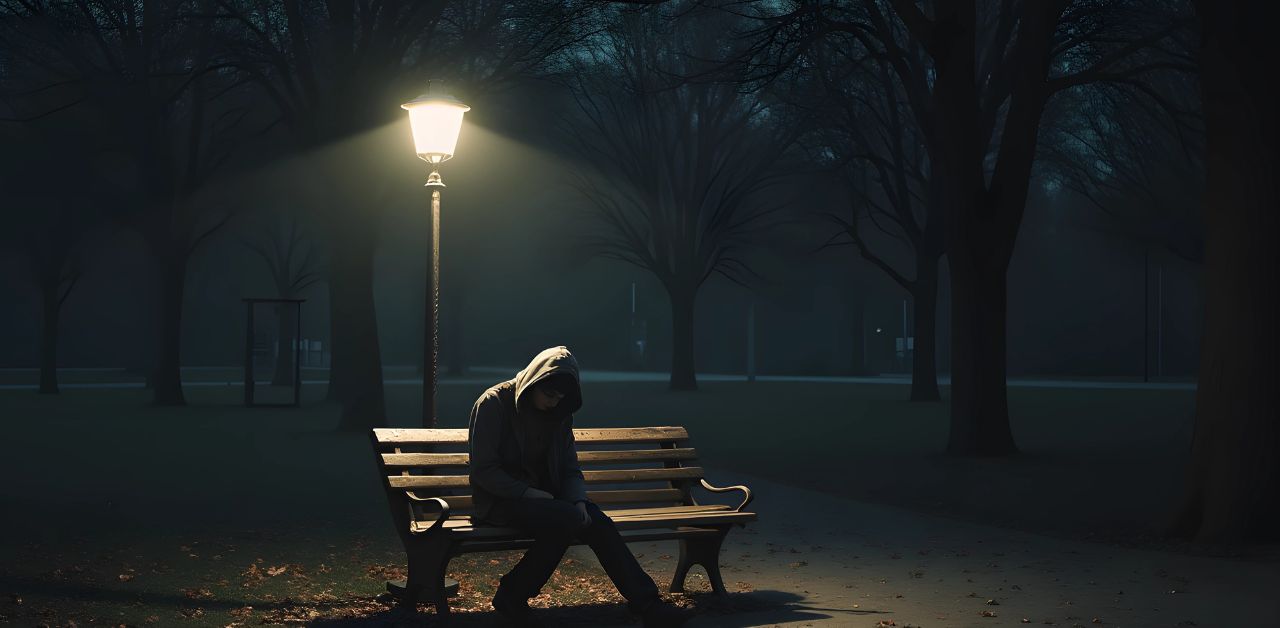
Introduction
Dark poems speak when ordinary words fail. They explore loneliness, grief and the weight of suffering, and they don’t rush to comfort. They say what many people hide. Through dark poetry, writers turn sorrow into meaning and help readers feel understood. This collection brings together 21 poems from different cultures and eras, united by emotional honesty.
Why Dark Poetry Matters
Dark poems don’t exist to depress the reader. They exist to tell the truth. Naming pain precisely can make it easier to carry, and recognising your own feelings in someone else’s lines is a way of feeling less alone. Many readers turn to this kind of poetry in hard seasons, and many writers use it as a safe distance from overwhelming emotion.
The Silence of Loneliness and Pain in Dark Poetry
Silence does heavy work in dark poems. What is left unsaid often hurts more than what is spoken. Poets use pauses, short lines and empty space to show isolation and inner struggle. Dark poetry also shows that loneliness can exist in a crowd. Common images include empty rooms, barren landscapes and starless nights, all standing in for the “void” of being alone.
Darkness by Lord Byron: A Vision of Despair
Lord Byron wrote “Darkness” in 1816, a year of strange, cold, sunless weather across Europe that followed the eruption of Mount Tambora. The poem imagines the sun gone out and humanity collapsing into fear, panic and moral decay. Byron uses darkness as a symbol of despair and the loss of order. Its power lies in direct language and a vision so bleak that it still unsettles readers over two centuries later.
21 Dark Poems of Loneliness and Pain
Each poem approaches darkness differently: through grief, memory, identity, love, war or faith.
1. “Darkness” by Lord Byron. An apocalyptic vision of a world without light, hope or order.
2. “Nothing but Death” by Pablo Neruda. Death as an ever-present force around daily life. It carries an existential loneliness and confronts mortality directly.
3. “Forgetfulness” by Karinna Alves Gulias. Memory as both burden and relief. Forgetting protects the mind from pain while leaving emptiness behind.
4. “Bag of Bones” by Dunya Mikhail. Bones become an image for war, loss and survival, mixing historical pain with personal grief.
5. “For the City That Nearly Broke Me” by Reginald Dwayne Betts. The emotional weight of place and memory: a city that shaped and damaged him, and the resilience that followed.
6. “The Myth of Innocence” by Louise Glück. A challenge to idealised stories of purity, exposing emotional truth beneath them.
7. “If Death Is Kind” by Sara Teasdale. Death approached with softness and longing, as rest rather than terror. Quiet exhaustion makes it gently haunting.
8. “Old Photographs” by Gabeba Baderoon. Photographs as symbols of what time cannot return: nostalgia, loss and emotional distance.
9. “Test” by Sarya Abra. Identity under pressure, and how people are judged, measured and reduced. A modern voice in the tradition.
10. “Love Is Elastic” by Lebogang Mashile. Love as something that stretches, strains and reforms, and can itself be painful.
11. “Enlightenment” by Vijay Seshadri. A questioning of whether understanding brings peace, or whether knowledge deepens confusion.
12. “A Great Wagon” by Rumi. Though Rumi is often linked with light, this poem treats sorrow as part of spiritual growth. Darkness and wisdom coexist.
13. “Joy and Sorrow” by Kahlil Gibran. Joy and sorrow as inseparable. It reminds readers that darkness gives happiness deeper meaning.
14. “At the Gate” by Henrik Nordbrandt. The moment before change: waiting, fear and uncertainty. The tension comes from anticipation rather than action.
15. “Corpse Flower” by Vanessa Angélica Villarreal. A rare flower used to explore grief and beauty in decay, and the truth that pain can produce.
16. “Queer” by Frank Bidart. Identity, shame and self-acceptance, confronting inner conflict directly.
17. “Spilled Sugar” by Thylias Moss. Memory and emotion built from small details, where sweetness contrasts with underlying sadness.
18. “Lot’s Wife” by Wisława Szymborska. A biblical story retold from a human perspective, about regret, choice and consequence.
19. “On Pain” by Kahlil Gibran. Pain as a teacher rather than an enemy. Its calm tone gives suffering philosophical depth.
20. “The Bullet Was a Girl” by Danez Smith. A bold, sharp poem about violence, identity and injustice.
21. “All the Names We Will Not Know” by Naomi Shihab Nye. A tribute to unnamed lives lost to conflict. It shows how dark poetry can preserve memory and dignity.
Classic Dark Poetry Worth Adding
If you want more after the 21 above, three well-known voices are a good next step:
- Emily Dickinson, “After great pain, a formal feeling comes”: numbness after loss, observed with chilling precision.
- Edgar Allan Poe, “The Raven” and “Alone”: grief and isolation in sound-heavy, haunted verse.
- Sylvia Plath, “Mirror” and “Lady Lazarus”: identity, despair and survival in stark modern language.
How to Read Dark Poetry
- Find the speaker. Who is talking, and to whom? (See Article 4.)
- Notice what is missing. Silence, short lines and white space carry meaning.
- Track the images. Light, weather, rooms and bodies often hold the emotion.
- Look for the turn. Many dark poems end with a small shift toward acceptance, memory or defiance.
- Read it twice, once aloud. The second reading usually feels heavier or clearer.
A Note on Wellbeing
Dark poetry can comfort, but it can also stir up heavy feelings. If a poem leaves you feeling worse, or you are struggling with thoughts of harming yourself, please reach out to someone you trust or a local crisis service. You don’t have to carry it alone.
FAQs
Why write about such heavy themes?
Dark poetry can be a release, letting writers move turmoil onto the page and create a safe distance from overwhelming emotions like grief and isolation.
What are common symbols for loneliness?
Empty rooms, barren landscapes, starless nights, closed doors and unanswered letters.
Can reading these poems help?
Often, yes. They offer validation and connection, helping readers see that their pain is a shared human experience.
Who are the notable dark poets?
Classic voices include Edgar Allan Poe, Emily Dickinson and Sylvia Plath, alongside writers in this list such as Louise Glück, Wisława Szymborska and Naomi Shihab Nye.
What is the difference between dark poetry and gothic poetry?
Gothic poetry leans on supernatural or macabre settings. Dark poetry is broader and often more personal, covering grief, loneliness, despair and doubt in any setting.
Final Thoughts
Dark poems tell the truth. Through loneliness, pain and silence they create connection, and they remind us that suffering has meaning and that we are not alone in feeling it.
Recent Article : 18 Haiku Poems : That Will Take Your Breath Away

Jennifer Aston is a passionate poetry curator and writer with a deep love for the written word. She believes poetry has the power to heal, inspire, and connect people across all walks of life. Through PoemSteric, she brings together timeless and modern verses for every emotion and every moment.