M
Love Poems Technology AI-Technology

Who is the Speaker in the Poem? A Clear, Simple Guide
Who is the speaker in the poem spotlight title graphic with falling golden leaves.

Introduction Who is the speaker in the poem? The speaker is the voice that delivers the poem’s lines, and it is not automatically the poet. It is a separate presence: a version of the poet’s own voice, a fictional character, an imagined narrator, a historical figure, or even an animal or object. Asking who is … Read more

How to Write a Poem by Yourself: Easy Steps to Begin

How to write a poem by yourself with poetry writing tips and creative inspiration.

introduction How to write a poem by yourself in five simple stages: pick a small, honest idea, gather a few concrete details about it, shape those details into lines, revise the draft at least once, and read it aloud before calling it finished. You do not need a class, a rhyme dictionary, or special talent … Read more

Things of Beauty in the Poem: Complete List

Things of beauty in the poem flowers, books, and pen by a window.

Introduction The things of beauty mentioned in the poem “A Thing of Beauty” by John Keats include the sun, the moon, old and young trees, daffodils, clear streams (rills), the shaded clearing of a forest, fragrant musk-rose blooms, the grand stories imagined about “the mighty dead,” and lovely tales passed down through generations. Keats groups … Read more

The Sadness in the Poem: What the Poet Means

The sadness in the poem words traced on a rain-covered window.

Introduction The Sadness in the Poem is something Pablo Neruda names directly in “Keeping Quiet”: it is the sadness of “never understanding ourselves and of threatening ourselves with death.” So, what is the sadness that the poet refers to in the poem? It is not grief over a single event or loss, but a deeper, … Read more

What Is a Legend? The Amazing Truth Behind This Poem

What is a legend - misty forest mountains beside bold text.

Introduction  A legend is a traditional story, passed down through generations, that is often believed to be based on real people or events but has been shaped and exaggerated over time through retelling blending fact, folklore, and moral teaching rather than presenting verified history. So, what is a legend, why is this poem called a … Read more

Growing Up in the Poem: The Essential Truth Revealed

Growing up in the poem - misty mountains under a fading moon.

Introduction  According to Markus Natten’s poem “Childhood,” growing up involves a slow, three-part unfolding of self-awareness: losing the innocent, unquestioning belief in comforting childhood ideas, recognising the gap between what adults say and how they actually behave, and discovering the independence of one’s own mind. So, what according to the poem is involved in the … Read more

What Does ‘Cardboard’ Denote in the Poem? Explained

What does cardboard denote in the poem explained visual

Introduction  In Shirley Toulson’s poem “A Photograph,” the meaning of cardboard in a photograph is simple on the surface but rich underneath. The word refers to the stiff, thick paper mount or backing on which old photographs were traditionally pasted before framing a common household object in the mid-twentieth century. But cardboard also carries a … Read more

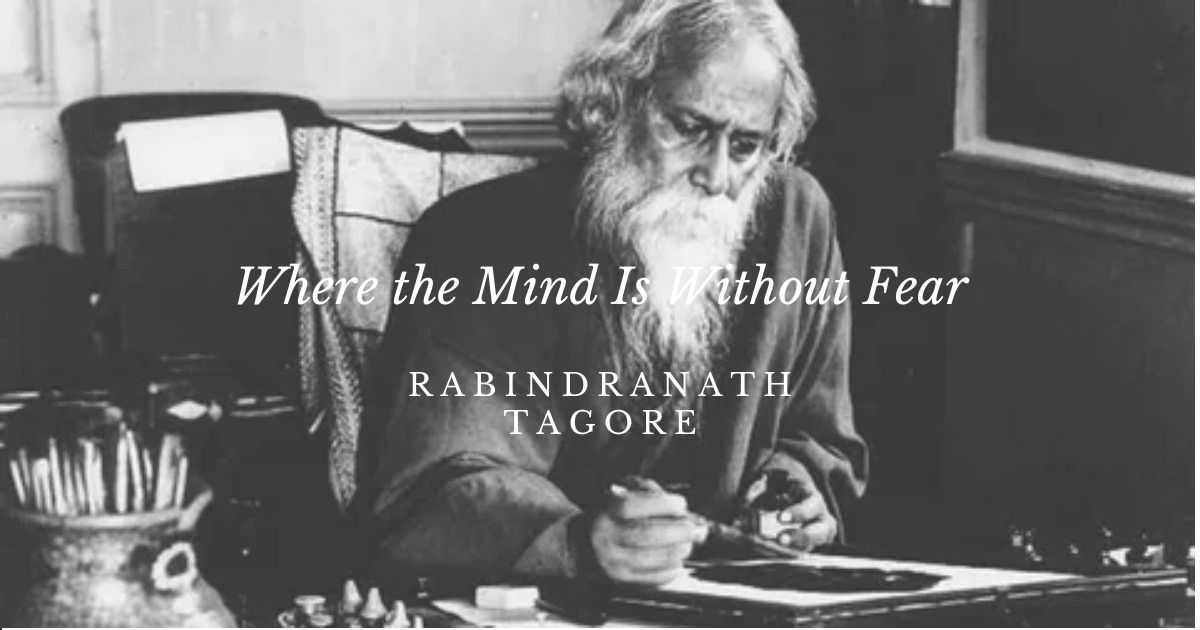
Where the Mind Is Without Fear: The Ultimate Poem Analysis

Where the mind is without fear poem portrait of Rabindranath Tagore.

Introduction The Where the mind is without fear poem is one of Rabindranath Tagore’s most celebrated works, written as a prayer for a free, fearless, and enlightened nation. Published as poem number 35 in his collection Gitanjali, it expresses a vision of a country where people can think freely, speak truthfully, and grow without the … Read more

Beginning and Ending of a Poem: Amazing Insights Revealed

Beginning and ending of a poem lined notebook page typography.

Introduction The beginning and ending of a poem often carry the poem’s real meaning, more than any single line in the middle. Poets frequently open and close a poem in contrasting or matching ways on purpose using stillness, movement, silence, or sound to frame an idea. A poem’s opening and closing lines can mirror each … Read more

Name the Poem and the Poet: Quick Reference Guide

Name the poem and the poet pens and pencils quick reference guide.

Introduction When a teacher hands you a single line and asks you to name the poem and the poet, the fastest path to the right answer is recognizing distinctive imagery, tone, and word choice rather than trying to recall an entire poem from memory. This guide breaks down exactly how to identify a poem and … Read more