
Introduction
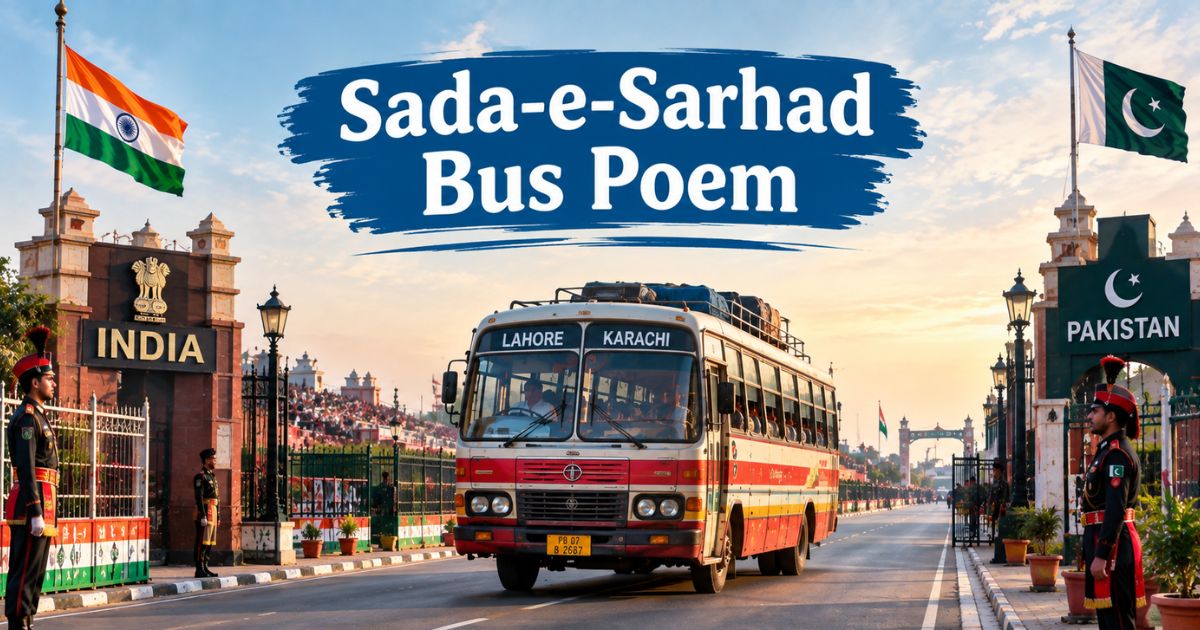
If you searched for a “Sada-e-Sarhad bus poem,” here’s the direct answer: there is no single, widely recognized poem by that exact title. “Sada-e-Sarhad,” meaning “Call of the Frontier,” was the official name of the Delhi–Lahore peace bus that ran between India and Pakistan from 1999 to 2019. The phrase carries a poetic weight of its own, and it connects to a real tradition of Urdu poetry about borders, which is likely why the two ideas the bus and “poem” show up together in searches.
In researching this topic, readers often ask whether they’re missing a famous verse somewhere. They’re not. What they’re picking up on is genuine: the name itself was chosen with poetic intention, and it sits inside a much larger, very real body of Urdu border poetry. This article untangles both threads so you leave with an accurate picture instead of a guess.
Key Takeaways
- “Sada-e-Sarhad” translates to “Call of the Frontier” or “Voice of the Border” in Urdu and Hindi.
- It was the official name of the Delhi–Lahore bus service, launched on February 19, 1999.
- The inaugural bus carried Indian Prime Minister Atal Bihari Vajpayee to a summit in Lahore, where he was received by Pakistani Prime Minister Nawaz Sharif.
- The service was suspended by Pakistan in August 2019, following India’s revocation of Jammu and Kashmir’s special status.
- No single canonical poem titled “Sada-e-Sarhad” exists, but “sarhad” (border) is a well-established theme in Urdu poetry by writers such as Sahir Ludhianvi and N.M. Rashid.
- If you want a poetic angle on this topic, the accurate framing is “the poetic name behind a real peace initiative,” not a specific literary work.
What Does “Sada-e-Sarhad” Actually Mean?
“Sada-e-Sarhad” is a compound Urdu-Hindi phrase. “Sada” means voice, call, or echo. “Sarhad” means border or frontier, the line that separates one country or territory from another. Put together, the phrase means “Call of the Frontier” or “Voice of the Border.” It’s a deliberately evocative name, chosen for a project meant to carry emotional and diplomatic weight, not just move passengers from one city to another.
This is worth understanding on its own terms, because the phrase is often mistaken for the title of a specific literary composition. It isn’t. It’s closer to a slogan or a symbolic name similar to how a ship or a space mission might be given a name that sounds like poetry without being drawn from an actual poem.
The Urdu and Persian Roots of “Sarhad”
The word “sarhad” comes from Persian, and it appears frequently across centuries of Urdu poetry, almost always tied to themes of separation, distance, and the emotional cost of dividing lines whether between people, nations, or states of mind. Classical and modern Urdu poets alike have used “sarhad” as a metaphor that goes beyond a literal geographic border. In love poetry, a “sarhad” might represent the emotional distance between two people. In political and patriotic poetry, it more directly refers to national boundaries, war, and the soldiers who guard them.
This dual use, literal and metaphorical, is part of why “sarhad” carries such a strong poetic charge in Urdu, even outside any single named poem.
Why the Peace Bus Was Named “Call of the Frontier”
When India and Pakistan launched the Delhi–Lahore bus service in 1999, the choice of “Sada-e-Sarhad” wasn’t accidental. The service was explicitly framed as a symbolic act of friendship between two nations that had fought three wars since 1947. Naming it “Call of the Frontier” positioned the bus as something that spoke across the border rather than simply crossing it, a voice reaching from one side to the other. That’s the poetic intention behind the name, even though no formal poem was written to accompany the launch.
The History Behind the Sada-e-Sarhad Bus Poem Phrase
The Sada-e-Sarhad bus poem phrase, as people often type it into search engines, actually traces back to a concrete historical event rather than a work of literature. The bus began service on February 19, 1999, when Indian Prime Minister Atal Bihari Vajpayee boarded the inaugural run from Delhi’s Kashmiri Gate. He crossed into Pakistan at the Wagah border, where Prime Minister Nawaz Sharif personally received him, a moment widely covered as a milestone in India-Pakistan diplomacy.
The route itself passed through Amritsar, Kartarpur near Jalandhar, Kurukshetra, and Sirhind-Fategarh before reaching the Wagah-Attari border crossing and continuing on to Lahore. The bus was jointly operated by the Delhi Transport Corporation on the Indian side and the Pakistan Tourism Development Corporation on the Pakistani side, a genuinely binational effort that matched the “call across the frontier” framing of its name.
The service wasn’t without incident. In June 2017, the bus met with an accident near Jahankhela village in Fatehgarh Sahib, Punjab, when wet roads from rain caused it to skid into its escort vehicle; the police riding in the escort received minor injuries. More significantly, in August 2019, Pakistan suspended the service entirely, a direct response to India’s decision to revoke the special constitutional status of Jammu and Kashmir. As a result, twenty years of continuous symbolic travel between the two capitals came to an abrupt stop.
Understanding this timeline matters because it shows exactly why the phrase carries emotional and even literary resonance for people who remember it; it wasn’t just a transport route, it was treated, from the very start, as a living symbol of peace.
Is There an Actual “Sada-e-Sarhad” Poem? Clearing Up the Confusion
This is the part most searchers actually want answered directly: no single, widely published poem titled “Sada-e-Sarhad” appears in Urdu, Hindi, or English literary records. If you’ve heard someone reference a “Sada-e-Sarhad poem,” they are almost certainly referring to one of two things the symbolic name of the bus itself, or the much broader genre of Urdu “sarhad shayari” (border poetry), which is a real and active poetic tradition but not tied to one specific title.
Border-themed Urdu poetry, often labeled “sarhad shayari,” spans generations of poets. As a result, we find poets such as Sahir Ludhianvi and N.M. Rashid returns repeatedly to the image of the border as both a physical and emotional wound, a place where nations, and sometimes hearts, are cut apart. This tradition is where the “poetic” feeling around the word “sarhad” genuinely comes from, even though it isn’t a single work you can look up by title.
If your goal is to explore this poetic angle further, the more accurate and useful path is searching specifically for “sarhad shayari” collections rather than a nonexistent single “Sada-e-Sarhad poem.” That search will connect you to a real, well-documented body of work instead of leading you toward information that doesn’t exist.
FAQs
Q: What does “Sada-e-Sarhad” mean in English?
A: “Sada-e-Sarhad” translates to “Call of the Frontier” or “Voice of the Border.” “Sada” means voice or call, and “sarhad” means border. The phrase was used as the official name of the Delhi–Lahore bus service launched in 1999, chosen specifically because it framed the bus as a symbolic voice reaching across the India-Pakistan border rather than just a transport route.
Q: Is there a real poem called “Sada-e-Sarhad”?
A: No single, widely recognized poem carries this exact title. The sada e sarhad bus poem search often comes from confusion between the symbolic name of the peace bus and the broader Urdu tradition of “sarhad shayari,” or border poetry, which includes many separate poems by different poets rather than one specific work.
Q: When did the Sada-e-Sarhad bus service start and stop?
A: The service began on February 19, 1999, with its inaugural run carrying Indian Prime Minister Atal Bihari Vajpayee to Lahore. It operated for two decades before Pakistan suspended it on August 9, 2019, in response to India’s revocation of Jammu and Kashmir’s special constitutional status.
Q: Who operated the Sada-e-Sarhad bus?
A: The bus was jointly operated by the Delhi Transport Corporation on the Indian side and the Pakistan Tourism Development Corporation on the Pakistani side, reflecting its status as a genuinely binational diplomatic and transport initiative between the two governments.
Q: What is “sarhad shayari” and how does it relate to this bus?
A: “Sarhad shayari” is a recognized category of Urdu poetry centered on borders, separation, patriotism, and sacrifice. It isn’t directly written about the bus, but it shares the same symbolic language — the border as a place of both division and longing that inspired the bus’s poetic name in the first place.
Q: Why does this bus route matter historically?
A: The Sada-e-Sarhad bus was one of the most visible symbols of India-Pakistan peace efforts after decades of conflict. Its 1999 launch, with the Indian Prime Minister crossing personally into Pakistan, marked a rare moment of direct diplomatic warmth between the two nations before relations deteriorated in later years.
Final Thoughts
The search for a “Sada-e-Sarhad bus poem” leads somewhere more interesting than a single missing verse: it leads to a genuine piece of India-Pakistan history and a real, living tradition of Urdu border poetry. The bus itself, named “Call of the Frontier,” carried Prime Ministers, ordinary travelers, and two decades of symbolic hope between Delhi and Lahore before it was suspended in 2019. That name was poetic by design, even without an accompanying poem to match it.
If you came here looking for literary inspiration around the word “sarhad,” the honest next step is exploring the established “sarhad shayari” tradition rather than searching for a poem that was never written. That path will actually satisfy the poetic curiosity this phrase tends to spark grounded in real Urdu literature instead of a search-engine misunderstanding.
Recent Article : Is ChatGPT Poetry Good? The Honest Verdict

Jennifer Aston is a passionate poetry curator and writer with a deep love for the written word. She believes poetry has the power to heal, inspire, and connect people across all walks of life. Through PoemSteric, she brings together timeless and modern verses for every emotion and every moment.