
Introduction
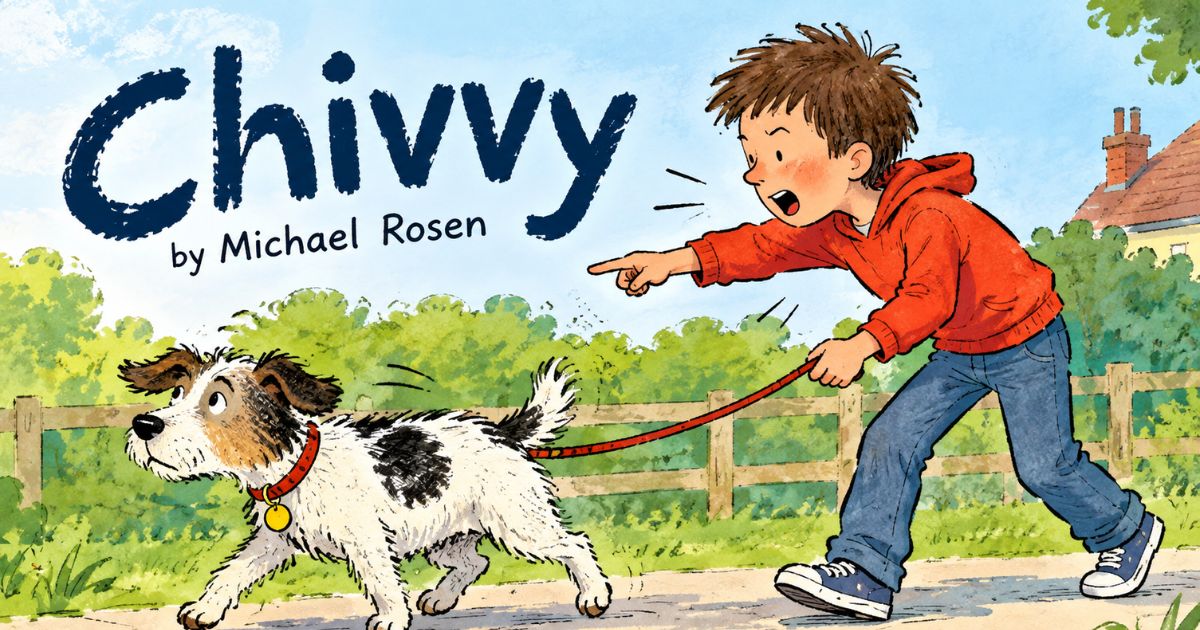
The poet of the poem “Chivvy” is Michael Rosen, a British author and poet best known for his work in children’s literature. He wrote “Chivvy” as part of his 1974 poetry collection “Mind Your Own Business,” his very first published book of poems for young readers. The poem lists the constant stream of instructions grown-ups give to children, and it remains a popular choice in school English textbooks today.
Many students first meet this poem in a classroom setting, often without knowing much about the person who wrote it. Below, we will look at who Michael Rosen is, what “Chivvy” actually says, and why it continues to appear in English lessons decades after it was first published.
The question of who is the poet of the poem chivvy comes up often because the poem itself never names its author within the text. It simply presents a list of instructions, without any introduction or byline. As a result, readers who encounter it in an anthology or textbook sometimes have to search separately to learn that Michael Rosen is behind the words. Understanding his background helps explain why the poem sounds so natural and unforced, almost like something overheard rather than carefully composed.
Key Takeaways
Here is a quick summary before we go into more detail:
- The poem “Chivvy” was written by Michael Rosen, a British poet and children’s author born in 1946.
- It first appeared in Rosen’s 1974 collection “Mind Your Own Business,” his debut poetry book.
- The word “chivvy” means to nag or continually urge someone to do something.
- The poem presents a list of common instructions adults give children, such as “sit up” and “say please.”
- Michael Rosen served as the UK’s Children’s Laureate from 2007 to 2009.
- “Chivvy” is widely taught in school English courses, including the NCERT Class 7 syllabus in India.
Who is the Poet of the Poem Chivvy? Meet Michael Rosen
The answer to who is the poet of the poem is Michael Wayne Rosen, born on 7 May 1946 in Harrow, Middlesex, England. Rosen grew up in a household that valued storytelling; both of his parents worked in education, and that background shaped his lifelong interest in how children experience language and rules. As a result, much of his poetry draws directly on his own memories of childhood.
Rosen published “Mind Your Own Business” in 1974, marking his debut as a children’s poet. “Chivvy” appeared in that same collection and quickly became one of his most recognized poems, largely because it captures a feeling almost every child understands: being told what to do at every turn. In my own reading of Rosen’s early work, “Chivvy” stands out because it uses no fancy language at all, just a plain list of commands, yet it still manages to say something true about growing up.
Michael Rosen’s Life and Writing Career
Michael Rosen studied at Wadham College, Oxford, before going on to build a long career as an author, broadcaster, and academic. He has written dozens of books for children, including well-known titles such as “We’re Going on a Bear Hunt,” and he has also worked extensively in radio and television. His writing style is known for using everyday language and real childhood experiences rather than complicated poetic devices.
In recognition of his contribution to children’s literature, Rosen was named the UK’s Children’s Laureate for the 2007 to 2009 term. He later received the PEN Pinter Prize in 2023 for his body of work. Readers often tell us that Rosen’s poems feel more like conversations than formal verse, and “Chivvy” is a clear example of that approachable, honest style.
Beyond his poetry, Rosen has spent decades campaigning for reading, literacy, and children’s rights in education. He regularly appears on radio and television discussing language, grammar, and the way children learn to read. Because of this public profile, many readers first discover his poetry after already knowing him as a broadcaster, which often adds an extra layer of surprise when they realize he also wrote a poem as widely studied as “Chivvy.” His academic work has included researching children’s literature at university level, giving his writing both a lived and a scholarly understanding of childhood.
What is the Poem Chivvy About?
“Chivvy” is built around a simple but effective idea: it lists the many small commands that adults give children throughout an ordinary day. The poem does not use a traditional story or plot. Instead, it strings together short, direct instructions, one after another, to show just how constant and repetitive this kind of nagging can feel from a child’s point of view.
The word “chivvy” itself means to urge or push someone repeatedly to do something, and the poem’s title sets up exactly what is coming. For example, the commands cover everything from table manners to posture to politeness, piling up until the effect feels almost overwhelming. However, the poem is not simply a complaint. Toward its ending, it raises a bigger question about whether children are ever trusted to think and decide things for themselves.
Step-by-Step Look at the Poem’s Structure
Breaking the poem down stanza by stanza makes its structure easier to follow:
- The opening list begins. The poem starts with commands about speaking and behavior, such as being told to speak up or stop staring.
- The list grows longer. More instructions follow, covering manners like saying please, making less noise, and closing doors properly.
- Physical posture joins the list. Commands shift toward posture and appearance, including standing up straight and taking hands out of pockets.
- The poem turns reflective. In the final section, the tone shifts, and the speaker questions why grown-ups expect children to suddenly know how to think for themselves once they are older.
This structure works almost like a mounting checklist, and that repetition is exactly the point. As a result, by the time a reader reaches the final lines, the sheer number of instructions makes the poem’s underlying frustration easy to understand.
It also helps to compare “Chivvy” with a more traditional narrative poem. Where many classic children’s poems tell a short story with characters and events, “Chivvy” skips narrative entirely and relies on a list format instead. This choice makes the poem faster to read aloud and easier to remember, which is likely one reason it remains popular in classrooms even though it breaks from more conventional poetic storytelling.
Consider a simple, real-world scenario that mirrors the poem’s message: a child sits down for dinner and is told to stop slouching, to say please, to stop talking with food in their mouth, and to take their elbows off the table, all within a single meal. Individually, each request seems reasonable. However, when they arrive one after another, the child can start to feel like every single action is being corrected. That build-up of small, well-meaning instructions is exactly the feeling Rosen captures in “Chivvy,” which is part of why the poem still resonates with readers of nearly any generation.
FAQs
Q: Who is the poet of the poem Chivvy?
A: If you are wondering who is the poet of the poem Chivvy, the answer is Michael Rosen, a British author and children’s poet born in 1946. He included the poem in his 1974 debut poetry collection, “Mind Your Own Business.” Rosen is widely known for writing in plain, everyday language and for drawing directly on his own childhood memories, which is exactly the approach he takes in “Chivvy.”
Q: What does the poem Chivvy mean?
A: “Chivvy” means to nag or repeatedly urge someone to do something, and the poem uses that idea as its foundation. It lists a stream of instructions that adults commonly give children, from table manners to posture. The poem highlights how repetitive and constant this kind of guidance can feel from a child’s perspective, ending with a question about trust and independence.
Q: Why is the poem Chivvy popular in schools?
A: “Chivvy” is popular in schools because its simple list format makes it easy to read, remember, and discuss. It also connects directly to something every student has experienced: being told what to do by adults. This relatability, combined with its inclusion in syllabuses such as the NCERT Class 7 English course, has kept teachers and students asking who is the poet of the poem chivvy for decades.
Q: What other books has the poet of the poem Chivvy written?
A: Once you know who is the poet of the poem chivvy, it is worth exploring his wider body of work. Michael Rosen has written many books beyond his poetry collections, including the widely loved children’s story “We’re Going on a Bear Hunt.” He has also published numerous other poetry collections, such as “Wouldn’t You Like to Know” and “Quick, Let’s Get Out of Here,” along with nonfiction and educational writing.
Q: Did Michael Rosen receive any major honors for his writing?
A: Yes, Michael Rosen, who is the poet of the poem chivvy, served as the UK’s Children’s Laureate from 2007 to 2009, a role recognizing his significant contribution to children’s literature. He later received the PEN Pinter Prize in 2023. These honors reflect his decades-long career writing accessible, honest poetry and stories for young readers, including works like “Chivvy.”
Final Thoughts
The poet of the poem Chivvy is Michael Rosen, and his simple, list-style approach is exactly why the poem has stayed relevant since 1974. By focusing on ordinary childhood moments instead of elaborate imagery, Rosen created a poem that students can instantly recognize and relate to.
Whether you are studying “Chivvy” for a class assignment or simply curious about its origins, knowing Rosen’s background adds real depth to the poem. His plain language and honest perspective on childhood continue to make his work a lasting part of children’s literature.
Recent Article : How to Publish a Poem in a Magazine: Proven Steps

Jennifer Aston is a passionate poetry curator and writer with a deep love for the written word. She believes poetry has the power to heal, inspire, and connect people across all walks of life. Through PoemSteric, she brings together timeless and modern verses for every emotion and every moment.