
Introduction
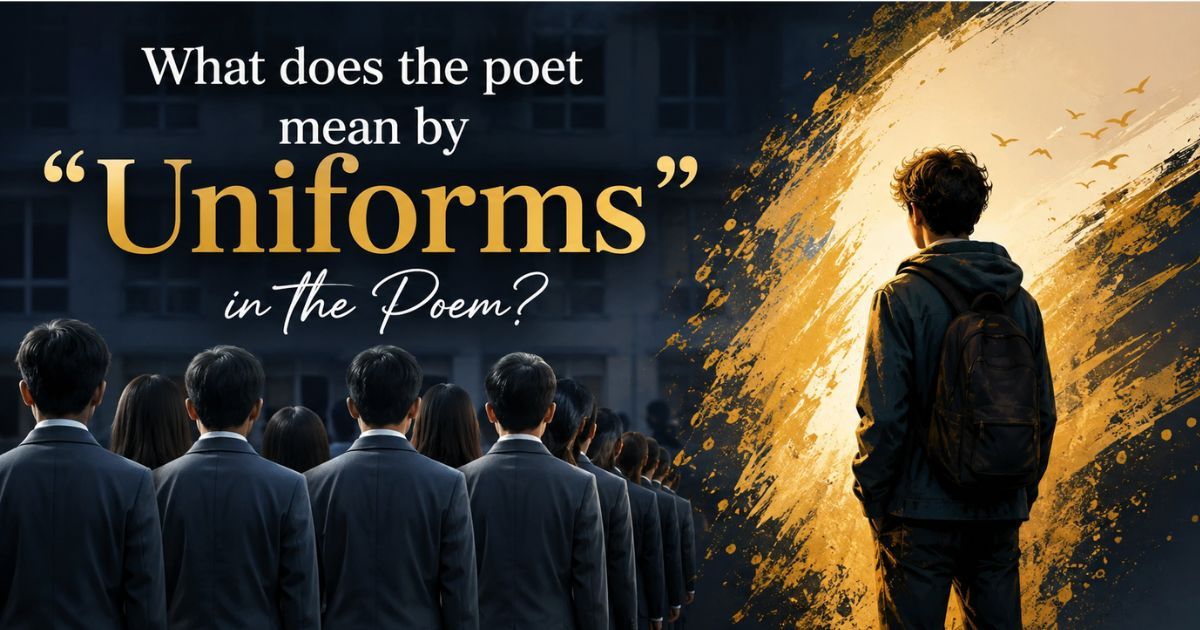
What does the poet mean by uniforms in the poem? He’s using “uniforms” as a symbol of conformity the pressure society places on people to look, think, and behave the same way as everyone else. When the poet describes people wearing uniforms, he isn’t only talking about literal clothing; he’s describing a mindset where individuality gets replaced by sameness.
The rebel figure in the poem responds to this pressure by deliberately standing apart, showing that resisting a “uniform” mentality is really about protecting personal identity. In my own reading of the poem, this single image of uniforms does more work than almost any other line; it captures the entire tension between fitting in and staying true to yourself.
Key Takeaways
- “Uniforms” in the poem symbolize conformity, sameness, and the loss of individual identity.
- The poet contrasts people who wear uniforms willingly with a rebel figure who refuses to dress like everyone else.
- The uniform image works on two levels: literal clothing and a broader metaphor for blending into a crowd.
- Readers often tell us this poem resonates because school, work, and social life all pressure people toward uniformity in different ways.
- The poem’s structure repeats this “when everyone does X, the rebel does Y” pattern to reinforce the contrast.
- Ultimately, the poem doesn’t argue that uniforms are bad, it argues that blindly following the crowd, without question, is the real problem.
What Does the Poet Mean by “Uniforms” in the Poem?
When the poet mentions uniforms, the reference works as a stand-in for any situation where people are expected to look and act identically, whether that’s a school uniform, a workplace dress code, or even unspoken social expectations about how to dress and behave. The poem doesn’t criticize uniforms as clothing items, it uses them as an easy, visual way to represent a much bigger idea: the pressure to disappear into a group instead of standing out as an individual.
This is a common technique in poetry called using a concrete image to represent an abstract idea. Instead of writing directly about “conformity” or “peer pressure,” which can feel vague and hard to picture, the poet gives readers something physical and familiar, a uniform that instantly communicates the idea of sameness. As a result, the image sticks with readers far more effectively than an abstract statement would.
Uniforms as a Symbol, Not Just Clothing
It’s worth being clear that the poem isn’t only describing literal uniforms like school outfits or military dress. The uniform becomes shorthand for any expected, unquestioned pattern of behavior the poet is really asking readers to notice all the small ways they might be “wearing a uniform” without realizing it, whether that’s in opinions, habits, or lifestyle choices.
Why the Poet Chose This Specific Image
Uniforms work particularly well as a symbol because they’re something almost every reader has personal experience with, whether from school, sports teams, or jobs. This shared experience means readers immediately understand what’s being represented, even before the poem explains its deeper meaning.
How the Uniform Image Fits Into the Poem’s Larger Message
The uniform reference doesn’t exist in isolation; it’s part of a repeated pattern throughout the poem where the poet describes what “everybody” does, followed immediately by what the rebel figure does differently. This structure helps readers see uniforms as just one example in a longer list of ways people conform without thinking.
Here’s how that pattern typically unfolds, step by step:
- The poet describes a common social behavior for example, everyone wearing the same style of clothing or uniform.
- The rebel figure is introduced as a contrast instead of following the same pattern, the rebel deliberately does something different.
- The pattern repeats with new example hairstyles, opinions, habits reinforcing that uniforms are just one instance of a much bigger theme.
- The reader is left to notice the pattern themselves; the poem doesn’t explicitly state “conformity is bad”; it lets the repeated contrast make the point.
This step-by-step repetition is what gives the poem its persuasive power. By the time readers reach the end, they’ve seen the “uniform vs. individuality” contrast applied to several different areas of life, which makes the poem’s message feel much bigger than just clothing.
Uniforms vs. Individuality: A Simple Comparison
To understand what the poet is really saying, it helps to compare what uniforms represent against what the rebel figure represents side by side.
| Uniforms (Conformity) | Rebel (Individuality) |
| Everyone dresses the same way | The rebel dresses differently, sometimes deliberately unusual |
| Following group expectations without question | Making a conscious, personal choice |
| Blending in to avoid standing out | Standing out, even at social cost |
| Comfort in sameness | Discomfort accepted in exchange for authenticity |
This comparison shows that the poem isn’t simply saying “uniforms are bad” ; plenty of situations genuinely need shared dress codes or rules. Instead, the poem is warning against unthinking conformity, where people follow the crowd automatically instead of making their own choices, even in small everyday matters like what they wear.
People Also Ask: Quick Answers About Uniforms in the Poem
Are uniforms in the poem meant literally or symbolically?
Both, but the symbolic meaning is the more important one. While the poet does describe literal uniforms, the real purpose of the image is to represent conformity and the loss of individual identity in a broader sense.
Does the poet think uniforms are always negative?
Not exactly. The poem critiques blind, unthinking conformity rather than uniforms themselves. The concern is with people following group behavior automatically, not with shared dress codes existing for practical reasons.
How does the rebel figure respond to uniforms?
The rebel deliberately dresses differently from everyone else, refusing to blend into the group. This response is presented as a form of self-expression and resistance to social pressure.
FAQs
Q: What does the poet mean by “uniforms” in the poem?
A: The poet uses “uniforms” as a symbol for conformity, the pressure to look, think, or act the same as everyone else. Rather than focusing on literal clothing, the image represents any situation where individuality gets replaced by group sameness, setting up a contrast with the rebel figure who resists that pressure.
Q: Why does the poet compare uniforms to individuality?
A: The comparison highlights the tension between fitting into a group and staying true to yourself. By placing uniforms (representing sameness) directly against the rebel’s choice to dress differently, the poet makes the contrast between conformity and individuality easy for readers to visualize and understand.
Q: Is the poem only about clothing?
A: No. While uniforms and clothing are the most visible examples used in the poem, the underlying theme extends to opinions, habits, and behavior in general. Clothing is simply the easiest, most relatable way to introduce the bigger idea of conformity.
Q: What is the rebel’s attitude toward uniforms?
A: The rebel actively resists uniforms and anything else associated with blending in. This resistance isn’t about rejecting rules for their own sake; it’s presented as a way of holding on to personal identity in a world that often rewards sameness.
Q: Why is the uniform symbol effective in this poem?
A: Uniforms are something almost every reader has personally experienced, whether through school, work, or sports. This shared familiarity makes the symbol instantly relatable, allowing the poet to communicate a complex idea about conformity without needing lengthy explanation.
Final Thoughts
When the poet writes about uniforms, he’s using a simple, familiar image to explore a much larger question: how much of our identity do we give up just to fit in? The uniform becomes a symbol for every quiet, unquestioned way people conform to group expectations, while the rebel figure stands in for the courage it takes to remain an individual. Readers connect with this poem because almost everyone has felt that same pull between fitting in and standing out whether at school, at work, or simply in daily life.
Recent Article : What is the Main Theme of the Poem Tintern Abbey?

Jennifer Aston is a passionate poetry curator and writer with a deep love for the written word. She believes poetry has the power to heal, inspire, and connect people across all walks of life. Through PoemSteric, she brings together timeless and modern verses for every emotion and every moment.