
Introduction
If you search online for Virginia Woolf poems, you will run into a strange mix of results. Some pages list “poems by Virginia Woolf” that are actually short passages lifted from her novels. Other pages feature poetry written by fans, inspired by her life and work. And in January 2025, researchers announced something genuinely new: two short, previously unknown poems written by Woolf herself, found tucked inside old family letters.
This mix of fact, fan tribute, and rediscovery makes the topic more interesting than a simple list of titles. Virginia Woolf is remembered as one of the most important novelists of the twentieth century, known for books like Mrs. Dalloway and To the Lighthouse. Poetry was never her main path. Yet her prose was so rhythmic, so carefully built around sound and image, that readers and poets alike have spent decades treating her sentences as if they were verse.
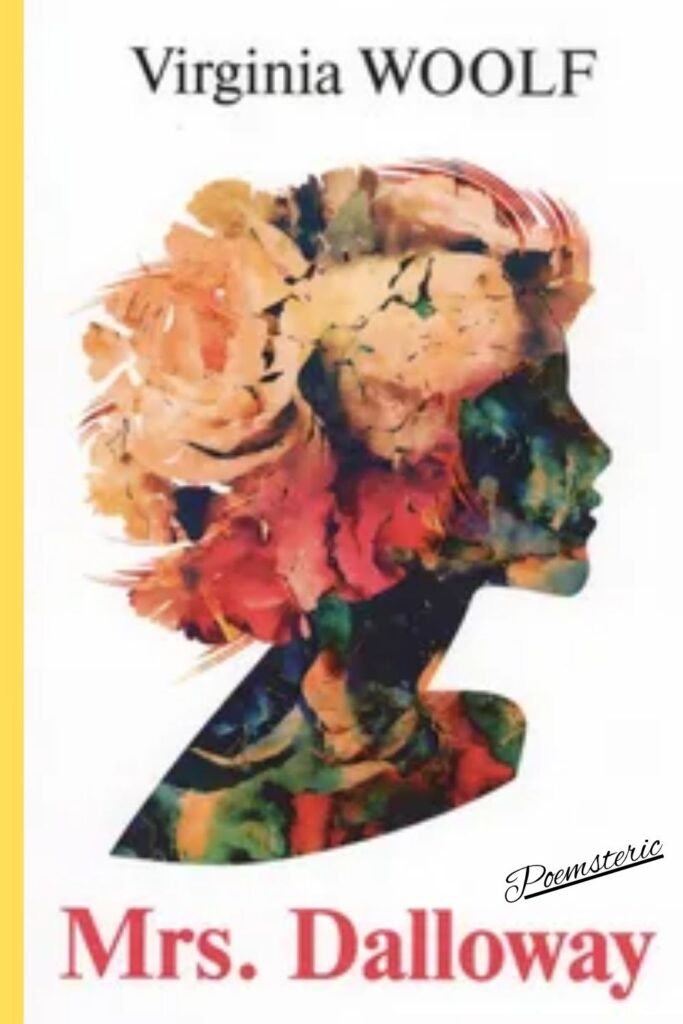
Mrs. Dalloway, published in 1925, is one of Virginia Woolf’s most celebrated novels and a landmark of modernist, stream-of-consciousness fiction. Set over a single day in London, it follows Clarissa Dalloway as she prepares for an evening party, blending her present thoughts with memories from her past. Running alongside her story is Septimus Warren Smith, a WWI veteran struggling with mental trauma, whose arc subtly connects with Clarissa’s and deepens the novel’s themes of time, memory, and mortality. Known for its poetic, rhythmic prose, Mrs. Dalloway remains a powerful exploration of identity, class, and mental health within the frame of just one day.
This guide sorts through the confusion. We will look at what Woolf actually wrote, what was recently discovered, what “found poems” really are, and why so many writers have turned her novels into poetry collections of their own. By the end, you will know exactly what counts as a genuine Virginia Woolf poem and what is really just beautifully written prose wearing a poem’s clothing.
Key Takeaways
• Virginia Woolf was primarily a novelist and essayist, not a published poet, and she rarely described herself as one.
• In January 2025, two short, handwritten poems by Woolf, titled “Hiccoughs” and “Angelica,” were discovered in a folder of personal letters at the Harry Ransom Center.
• Many so-called Virginia Woolf poems online are actually “found poems,” created by other writers using only the words from a single Woolf paragraph.
• Some poems are written about Woolf, not by her, including tribute pieces published in literary magazines.
• Her novel The Waves is often described as her most poetic work, built on rhythm, repetition, and imagery rather than traditional plot.
Was Virginia Woolf a Poet, or Just a Novelist Who Loved Language?
Virginia Woolf is remembered today for her fiction and her essays, not for poetry. Across her career, she wrote novels, short stories, diaries, letters, and literary criticism that reshaped how English fiction was written. Poetry sat at the edge of all of this, more like a private habit than a public pursuit.
Scholars who study Woolf’s relationship with poetry, including Emily Kopley in her book Virginia Woolf and Poetry, describe her career as shaped by a kind of rivalry between the novel and the poem. Woolf saw poetry as the older, more traditional form, often tied to male writers and rigid structure. The novel, by contrast, felt newer and more open to women’s experience. She leaned into fiction partly because it gave her room to experiment with interior thought in a way that formal verse, at the time, did not.
That does not mean she ignored poetry. Her diaries and letters are full of references to poets she admired, and her own prose borrows techniques directly from verse: repetition, rhythm, and carefully chosen sound. Many readers who later found poems from her novels were responding to exactly this quality. The line between her prose and poetry was never as solid as genre labels suggest.
Why Woolf Never Called Herself a Poet
Woolf’s own letters rarely mention poetry as something she practiced seriously. She wrote it occasionally, for private reasons, often connected to specific people in her life rather than for publication.
How Poetry Still Shaped Her Novels
Even without writing much formal poetry, Woolf used poetic tools constantly. The Waves, in particular, reads closer to a long prose poem than a conventional story.
Newly Discovered Virginia Woolf Poems: Hiccoughs and Angelica
In January 2025, news broke that genuinely changed what we know about Woolf as a writer. Sophie Oliver, a lecturer of modernism at the University of Liverpool, was researching an entirely different author at the Harry Ransom Center in Texas when she came across two folded pieces of paper tucked inside a folder of Woolf’s letters to her niece, Angelica.
The two poems were quick, handwritten pieces, dated to sometime after March 1927. The first, “Hiccoughs,” is a playful, punny poem written for her nephew Quentin, joking with sounds like “cough,” “cup,” and “hiccup.” The second, titled “Angelica,” is more substantial. It reflects on her niece’s identity beyond her name, touching gently on themes of appearance, family, and belonging.
What makes this discovery important is not literary brilliance. These are small, occasional poems, never intended for publication. What matters is what they reveal: a softer, more playful side of Woolf, writing for the children in her life rather than for critics or readers. Woolf had no children of her own, something researchers describe as a quiet sadness in her life. These two poems show her finding warmth and humor with her niece and nephew instead.
For fans of Virginia Woolf poems, this discovery is a reminder that literary archives still hold surprises, even for an author this thoroughly studied.
How the 2025 Discovery Happened
Oliver was not looking for poetry at all. She found the pages by chance while researching Gertrude Stein, and recognized immediately that the handwriting and paper did not match the surrounding letters.
What Are “Found Poems,” and Why Do Writers Create Them From Woolf’s Novels?
A found poem is created by taking existing text, usually prose, and rearranging or selecting from it to form something that reads as poetry. The original wording stays mostly intact, but the new structure, line breaks, and selection turn it into a different kind of piece entirely.
Virginia Woolf’s novels have become a favorite source for this technique. Poet Nazifa Islam, for example, built an entire collection called Forlorn Light: Virginia Woolf Found Poems, published by Shearsman Books. Her method is strict: she selects a single paragraph from a Woolf novel, usually The Waves or Mrs. Dalloway, and only uses words that already appear in that paragraph. No new words are added, and no repeats are allowed.
Other writers have taken similar approaches. A piece published in Gulf Coast Literary Journal, titled “Three Found Poems: Virginia Woolf’s The Waves,” works the same way, drawing entirely from Woolf’s original language to build something new.
Why Woolf specifically? Her prose is dense with imagery, color, and sound, which gives found-poetry writers rich material to work with. A single paragraph from The Waves can contain enough rhythm and metaphor to fill an entire short poem once it is reshaped.
This is worth understanding because it explains why search results for Virginia Woolf poems often include work that Woolf did not write herself. These found poems honor her writing style, but the words on the page are reorganized by someone else.
How to Read a Found Poem Made From Woolf’s Prose
If you come across a found poem built from Woolf’s novels, here is how to read it with the right context:
1. Identify the source novel. Most found poems based on Woolf draw from The Waves or Mrs. Dalloway, since both are rich in imagery and rhythm.
2. Look for the original passage. Many found-poetry collections, including Nazifa Islam’s, publish the source paragraph alongside the poem so readers can compare.
3. Notice what was removed. Found poems usually strip out connecting words and narrative explanation, leaving only the most vivid phrases.
4. Read it as a new work. Even though the words come from Woolf, the structure, rhythm, and meaning belong to the poet who created the found poem.
5. Credit both writers. A found poem reflects two creative minds: Woolf’s original language and the found-poet’s selection and arrangement.
Following these steps helps you appreciate found poetry as its own art form, rather than mistaking it for something Woolf wrote and titled herself.
Famous Passages From Woolf’s Novels That Read Like Poems
Certain passages in Woolf’s fiction are quoted so often as standalone pieces that readers sometimes assume they were written as separate poems. They were not. They are extracts from her novels, but their rhythm and imagery make them feel complete on their own.
One widely shared passage from Mrs. Dalloway describes the sound of Big Ben spreading across London in a way that feels almost alive, drifting through the city before settling like a quiet pulse. Pulled out of context, lines like this feel like finished verse. Inside the novel, they are part of Clarissa Dalloway’s stream of consciousness as she moves through her day.
The Waves contains some of the most quoted examples. Its structure alternates between short, poetic interludes describing the sea and sky, and longer sections following six characters through their lives. The interludes especially read like prose poems, written in a deliberately rhythmic, image-heavy style that has little in common with traditional narrative prose.
This is part of why Virginia Woolf poems are such a searched phrase in the first place. Readers encounter these passages, sense their poetic quality, and naturally wonder whether Woolf wrote actual poems with this same intensity. The honest answer is that her novels often did the work that poetry usually does, just inside a longer fictional frame.
The Waves and Its Poetic Rhythm
The Waves is frequently described by critics as Woolf’s most experimental and poetic novel, built almost entirely around mood, image, and rhythm rather than conventional plot.
Poems Written About Virginia Woolf by Other Poets
Separate from found poetry, some writers have created entirely original poems about Virginia Woolf, rather than using her own words as source material. These are tribute pieces, written in the poet’s own voice, reflecting on Woolf’s life, death, or legacy.
One example published by the Poetry Foundation, titled “Virginia Woolf, July 1902,” was written by poet Gerard Malanga. It imagines a moment from Woolf’s early life, addressing her directly in a reflective, almost conversational tone. The poem is entirely Malanga’s creation; Woolf is its subject, not its author.
Other tribute poems exist across literary blogs and poetry communities, often focusing on Woolf’s mental health struggles, her death in 1941, or her contributions to feminist literature. These poems vary widely in quality and approach, since anyone can write and publish a poem about a historical figure.
This distinction matters for anyone researching Virginia Woolf poems. A poem about Woolf tells you something about how later writers viewed her life and legacy. A poem by Woolf, or a found poem built from her own words, tells you something about her actual writing style. Confusing the two can lead to a misleading picture of what Woolf herself produced as a writer.
How Virginia Woolf Poems Differ From Her Essays and Fiction
Woolf’s essays, including A Room of One’s Own, are argumentative and direct, built to persuade readers on questions of gender, class, and creative freedom. Her novels are layered and interior, following characters’ thoughts as they shift moment to moment. Neither of these forms behaves like the small, occasional poems recently discovered, such as “Hiccoughs” and “Angelica.”
Those two poems are personal and playful, written for family rather than for an audience. They use simple rhyme and wordplay, closer to a private joke than a literary statement. This is a sharp contrast to the philosophical weight of her essays or the psychological depth of her fiction.
Understanding this difference helps explain why Woolf’s poetry, what little of it exists, has never been treated as central to her legacy. Her reputation rests on novels and essays that reshaped twentieth-century literature. The poems that have surfaced, by comparison, are minor, intimate, and occasional, written without any apparent intention of publication or recognition.
This does not make them unimportant. If anything, these small pieces add a more human dimension to a writer often discussed in serious, academic terms. They show Woolf relaxing into wordplay with people she loved, rather than wrestling with the bigger questions that defined her published work.
Where to Find Virginia Woolf Poems and Found-Poetry Tributes Online
If you want to explore Virginia Woolf poems and the found-poetry tradition built around her work, a few types of sources are worth knowing about.
Literary journals occasionally publish found poems based on her novels, often alongside the original passage for comparison. Independent poets sometimes maintain personal websites featuring full found-poetry collections built from specific Woolf novels, complete with explanations of their method.
Academic archives, including university special collections, are where genuine discoveries like “Hiccoughs” and “Angelica” tend to surface, usually announced through news coverage rather than casual searching. Poetry tribute sites and community poetry platforms also host original poems written about Woolf by amateur and hobbyist poets, though the quality and accuracy of biographical detail varies considerably on these sites.
When researching this topic, it helps to keep the source in mind. A poem published in an established literary journal has gone through editorial review. A poem posted on an open community platform has not. Neither is automatically more or less meaningful, but knowing the difference helps set expectations for accuracy and craft.
Why Virginia Woolf’s Relationship With Poetry Still Matters Today
Woolf’s complicated relationship with poetry says something larger about how literary forms were gendered in the early twentieth century. She associated poetry with tradition, formality, and a largely male literary establishment. Fiction, especially the kind of psychologically interior fiction she pioneered, felt like freer territory.
This is part of why her novels absorbed so many poetic techniques instead of standing as separate poems. Repetition, rhythm, color, and sound all appear constantly in her fiction, functioning the way they would in verse, just stretched across hundreds of pages instead of a few stanzas.
Today, the renewed interest in Virginia Woolf poems, fueled partly by the 2025 archival discovery, reflects a broader curiosity about overlooked or hidden sides of famous writers. Readers are drawn to the idea that even a writer as thoroughly documented as Woolf can still surprise us. It also reflects how found poetry has grown as its own respected literary practice, giving new life to prose that was never originally written as verse.
For modern readers and writers, Woolf’s example is a useful reminder that genre boundaries are often less fixed than they appear. A novelist can write with a poet’s ear, even while insisting, as Woolf did, that the novel and the poem are fundamentally different things.
Common Misunderstandings About Virginia Woolf Poems
Several mix-ups come up repeatedly when people search for Virginia Woolf poems online, and it helps to clear them up directly.
The first is assuming that quoted passages from her novels are standalone poems. They are not. They are excerpts, pulled from a longer fictional work, even when they read beautifully on their own.
The second is confusing found poems with poems Woolf actually wrote. Found poems use her words, but the selection and structure belong to another poet entirely, not to Woolf.
The third is assuming the newly discovered poems, “Hiccoughs” and “Angelica,” represent a larger hidden body of poetry. As far as researchers have found, these are isolated, occasional pieces, not part of a larger unpublished collection.
The fourth is mistaking poems written about Woolf, such as tribute pieces published in literary magazines, for poems written by her. These are entirely separate categories, created by different authors for different purposes.
Clearing up these points gives a much more accurate picture of where Virginia Woolf poems actually come from, and why so few genuine examples exist compared to her enormous body of fiction and essays.
FAQs
Q: Did Virginia Woolf actually write poems?
A: Yes, but very few. Virginia Woolf was primarily known for her novels and essays, not poetry. In January 2025, researchers discovered two short, handwritten Virginia Woolf poems, titled “Hiccoughs” and “Angelica,” written for her niece and nephew sometime after 1927. Outside of this discovery, Woolf rarely wrote or published poetry, and she did not consider herself a poet in any formal sense.
Q: What are the newly discovered Virginia Woolf poems about?
A: The two newly discovered Virginia Woolf poems are personal and playful. “Hiccoughs” is a punny poem written for her nephew Quentin, joking with sounds like “cough” and “hiccup.” “Angelica,” written for her niece, reflects gently on identity and belonging beyond a name. Both were found at the Harry Ransom Center, tucked inside letters rather than published works.
Q: What is a found poem, and is it the same as a poem Woolf wrote?
A: A found poem is created when a poet selects and rearranges existing text, often from prose, to form a new piece. Many Virginia Woolf poems found online are actually found poems built from her novels, such as The Waves, by other writers. The words may come from Woolf, but the structure and meaning belong to whoever created the found poem, not to Woolf herself.
Q: Why isn’t Virginia Woolf better known as a poet?
A: Woolf viewed poetry as a more traditional, male-dominated form, while the novel felt freer and better suited to exploring inner thought. She built her literary reputation almost entirely on fiction and essays. While her prose often reads like poetry in its rhythm and imagery, she rarely wrote or published formal poems during her lifetime, which is why she is remembered as a novelist rather than a poet.
Q: Are there poems written about Virginia Woolf, rather than by her?
A: Yes. Several poets have written original tribute poems about Virginia Woolf’s life and legacy, rather than using her own words. One example, “Virginia Woolf, July 1902” by Gerard Malanga, published by Poetry Foundation, imagines a moment from her early life. These poems are entirely written by other authors and should not be confused with Virginia Woolf poems she wrote herself.
Final Thoughts
Virginia Woolf’s connection to poetry is smaller and stranger than most search results suggest. She was not a published poet, and she rarely treated poetry as central to her work. What she left behind instead are a handful of private, occasional poems, recently expanded by the 2025 discovery of “Hiccoughs” and “Angelica,” alongside novels so rhythmic and image-driven that other poets have spent decades reshaping her sentences into found poetry of their own.
Understanding these distinctions, between Woolf’s own rare poems, found poems built from her prose, and tribute poems written about her, gives a far more honest picture of her legacy. It also makes her occasional playfulness, visible in those two small poems for her niece and nephew, feel even more meaningful against the backdrop of her serious, groundbreaking fiction.
If this exploration of Virginia Woolf poems has sparked an interest in her writing style more broadly, Poemsteric’s collection of poetry guides and literary deep dives offers more ways to explore how great writers use language, rhythm, and imagery across both prose and verse.
Recent Article : Imagery Poems Explained: 15 Examples That Bring Words to Life

Jennifer Aston is a passionate poetry curator and writer with a deep love for the written word. She believes poetry has the power to heal, inspire, and connect people across all walks of life. Through PoemSteric, she brings together timeless and modern verses for every emotion and every moment.