
Introduction
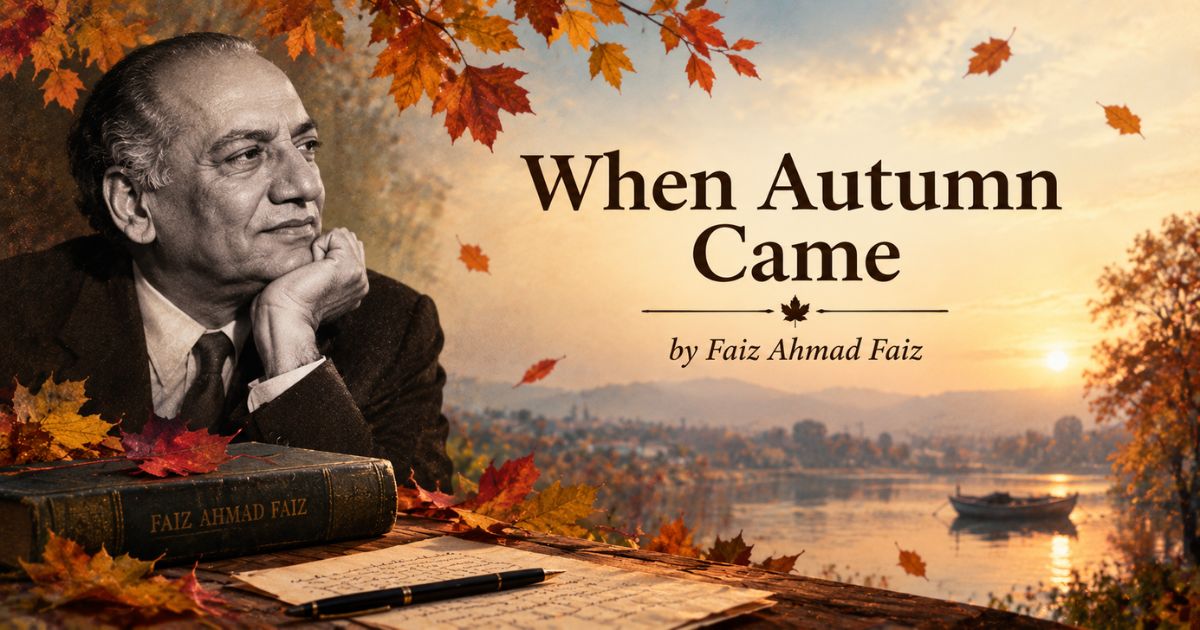
The poem represents the trees as human entities through personification in Faiz Ahmed Faiz’s “When Autumn Came.” Faiz gives the trees human-like bodies, hearts, vulnerability, and the ability to suffer silently. The trees are not presented merely as parts of the natural landscape; their suffering becomes a powerful image of human helplessness and oppression.
The poem’s description of autumn therefore works on two levels: it describes the physical effects of the season while also making the trees resemble suffering human beings.
Key Takeaways
- The poem is “When Autumn Came” by Faiz Ahmed Faiz, translated from Urdu by Naomi Lazard.
- Faiz uses personification to give trees human characteristics: a body, skin, and a heart.
- The birds in the poem are personified too, described as exiled with their voices “torn out.”
- The trees’ vulnerability and inability to protest make them resemble oppressed people.
- The fallen leaves become symbolic of loss and suffering.
- Many readers connect the poem to political oppression, given Faiz’s own history as a jailed political poet.
- The poem eventually introduces renewal and hope through the possibility of new greenery and birdsong.
Who Wrote the Poem, and What’s Its Background?
The poem in question is “When Autumn Came,” written by Faiz Ahmed Faiz (1911–1984), one of the most significant Urdu-language poets of the 20th century. Born in Sialkot, in what is now Pakistan, Faiz was a poet, journalist, and political activist who blended classical Urdu lyricism with progressive political thought. He was a leading figure in the Progressive Writers’ Movement, a literary movement that emerged in British India in the 1930s to promote social justice and anti-colonial ideas through literature.
This background matters directly for reading this poem: Faiz was imprisoned multiple times for opposing authoritarian rule, and much of his poetry — including work widely read as being about oppression and silenced dissent — grew out of that lived experience. It’s part of why many readers interpret the trees’ forced silence in this poem as more than a nature description.
The English translation used here, by poet Naomi Lazard, appears in The True Subject: Selected Poems of Faiz Ahmed Faiz (Princeton University Press, 1987). The Academy of American Poets identifies Faiz Ahmed Faiz as the poem’s author and publishes this translation. A widely accessible Urdu original of this specific piece is difficult to locate publicly, so most readers encounter the poem through Lazard’s English rendering.
Which Poem Represents the Trees as Human Entities?
The question refers to When Autumn Came by Faiz Ahmed Faiz. The poem describes the arrival of autumn and its devastating effect on trees and birds.
The trees are presented using language normally associated with human beings. Their trunks are described in terms of bodies, their leaves become hearts, and their inability to produce a protest gives them an almost human emotional presence.
This makes personification the central literary device behind their representation.
How Does Personification Make the Trees Human?
Faiz uses personification by transferring human physical and emotional qualities to the trees.
The trees are described as though they possess:
- A body
- Skin
- A heart
- Vulnerability
- Pain
- The potential for protest
- The need for restoration
The poem’s description of the trees as having “ebony bodies” and being stripped “to the skin” creates a direct comparison between trees and human bodies. Their yellow leaves are then presented as their hearts.
This language changes how readers see the trees. Instead of seeing autumn simply as a natural process in which leaves fall, readers are encouraged to imagine the trees as living figures being stripped, exposed, wounded, and left powerless.
What Human Qualities Are Given to the Trees?
The most important human qualities are physical vulnerability, emotional suffering, and helplessness.
The trees appear almost like people who have been stripped of their protection. Their bare trunks become exposed bodies, while their fallen leaves function as symbolic hearts.
Most importantly, the poem says that the trees can be trampled without a “moan of protest.” This gives the trees an implied capacity for suffering and protest even though they cannot literally speak.
The contrast between their apparent suffering and their silence makes them seem like powerless human beings whose voices have been taken away.
Are the Birds Personified Too?
Yes — and this is a detail worth pulling out separately, because the birds extend the poem’s human imagery beyond just the trees.
The poem describes the birds as “exiled from their song,” each voice “torn out of its throat.” This is a second, distinct act of personification: where the trees are stripped and silenced physically, the birds are described using the language of political exile and forced silencing as if their voices were violently removed rather than simply absent.
This matters for the poem’s overall meaning because it widens the scope of suffering from a single image (bare trees) into a broader picture of an entire natural world of trees and birds together that has been stripped of both protection and voice.
How Does the Poet Show the Trees Suffering?
Faiz presents the arrival of autumn as an aggressive process rather than a neutral seasonal change.
The trees are stripped of their leaves, exposed, and left vulnerable. Their yellow leaves are scattered across the ground, where they can be trampled.
This imagery creates a strong impression of loss and helplessness. The trees cannot defend themselves or verbally object to what is happening. Their silence becomes meaningful because the reader is encouraged to imagine the protest that they cannot express.
The Academy of American Poets’ presentation of the poem emphasizes this sequence: autumn strips the trees, scatters their leaves, and leaves them unable to protest.
What Do the Trees Symbolize?
The trees can be read as symbols of suffering, vulnerability, and oppressed human beings.
This interpretation comes from the poem’s deliberate use of human imagery. Once the trees are given bodies, hearts, and an implied capacity for suffering, their condition becomes more than a description of autumn; they can represent people who have been deprived of freedom, dignity, or the ability to protest.
A Political Reading Worth Knowing
Several readers and study guides connect this symbolism directly to political oppression and authoritarian rule, reading autumn as a stand-in for tyranny that strips people of voice and freedom, and the fallen leaves as the silenced victims of that rule. Given Faiz’s own history of imprisonment for political dissent, this reading isn’t a stretch; it’s consistent with the broader concerns of his work. Some interpretations go further and read the poem through the lens of Sufi mysticism, treating the trees’ destruction as the necessary precondition for renewal and death making way for rebirth.
This symbolic reading is especially powerful because the poem does not explicitly say that the trees are human beings, or explicitly name any political situation. Instead, Faiz allows the personification to create the connection, leaving the specific target of the allegory open.
The trees therefore become a bridge between nature and human experience general enough to be read as class oppression, political tyranny, or simply human vulnerability, depending on the reader.
Why Does Faiz Personify the Trees?
Faiz uses personification to make the destruction of nature emotionally understandable to human readers.
If the poem simply said that autumn caused leaves to fall, the scene would remain largely descriptive. By presenting the trees as vulnerable bodies with hearts and an implied capacity for protest, Faiz turns the seasonal transformation into an emotionally charged experience.
The technique also allows the poet to explore larger ideas about:
- Oppression
- Powerlessness
- Loss
- Suffering
- Silence
- Renewal
- Hope
The trees become more than scenery; they participate symbolically in the poem’s emotional argument.
How Does Personification Affect the Reader?
Personification encourages the reader to feel sympathy for the trees.
The reader is no longer simply observing autumn. Instead, the trees appear to be experiencing something painful. Their silence is particularly effective; a human being who cannot protest against suffering might be described as powerless, and Faiz transfers this idea to the trees. Their inability to make a protest makes their condition appear even more tragic.
The technique therefore creates an emotional connection between the reader and nature. It also encourages readers to think about how easily living or vulnerable beings can be damaged when they have no power to resist.
What Is the Relationship Between Humans and Nature?
The poem creates a close relationship between human experience and the natural world.
Faiz does not treat nature as completely separate from humanity. Instead, the condition of the trees reflects experiences that human beings can recognize: exposure, loss, suffering, silence, and the desire for renewal.
The birds deepen this connection further. As covered above, they too are described through human-like experiences, including exile and the loss of their voices.
As a result, the poem creates a shared emotional world in which trees, birds, and humans can be understood through similar ideas of suffering and hope.
Does the Poem Offer Hope?
Yes. Although the representation of the trees is initially bleak, the poem does not end entirely in despair.
The final section asks for the withered bodies to receive renewed life and calls for trees to become green again. It also asks for a bird to sing again.
This creates an important contrast:
Autumn → suffering → death-like stillness → renewal → hope
The trees therefore represent not only vulnerability but also the possibility of recovery. Their imagined restoration suggests that periods of suffering do not necessarily have to be permanent — a note that lands with extra weight given the political and historical suffering many readers connect to Faiz’s own life and work.
Exam-Ready Answer
The poem represents the trees as human entities through personification. In Faiz Ahmed Faiz’s “When Autumn Came,” the trees are described using human physical and emotional qualities: they have bodies, skin, and hearts, while their fallen leaves suggest suffering and loss. Their inability to protest makes them appear like helpless human beings whose voices have been silenced, an idea reinforced by the poem’s birds, who are described as exiled with their voices torn from their throats. Through this personification, Faiz connects the suffering of nature with human experiences of oppression, vulnerability, and loss. The later hope for the trees to become green again also introduces the idea of renewal and recovery.
FAQs
How does the poem represent the trees as human entities?
It uses personification, giving the trees human-like bodies, hearts, vulnerability, and an implied ability to suffer and protest.
Which poem is this question about?
The question is associated with “When Autumn Came” by Faiz Ahmed Faiz, translated by Naomi Lazard.
What literary device is used to make the trees human?
The main device is personification, which gives human characteristics to non-human things. The birds in the poem are personified in a similar way.
What do the trees symbolize in “When Autumn Came”?
The trees can symbolize vulnerable or oppressed human beings who experience suffering, loss, and powerlessness, a reading many connect to political oppression, given Faiz’s history as a jailed political poet.
Why does Faiz personify the trees?
Faiz personifies the trees to make their suffering emotionally powerful and to connect the natural world with human experiences of oppression, silence, and hope.
Where does this poem come from?
It appears in The True Subject: Selected Poems of Faiz Ahmed Faiz, translated by Naomi Lazard and published by Princeton University Press in 1987.
Final Thoughts
Faiz Ahmed Faiz represents the trees as human entities through powerful personification in “When Autumn Came.” By describing their bodies, skin, hearts, vulnerability, and silent suffering, he transforms the trees from passive elements of nature into symbolic figures with a deeply human emotional presence, an effect he extends further through the poem’s birds, silenced and exiled in their own right.
The technique makes the reader feel sympathy for the trees while encouraging a broader reflection on human suffering and powerlessness, one that gains extra resonance from Faiz’s own life as a poet repeatedly imprisoned for speaking out against authoritarian rule. At the same time, the poem’s closing movement toward greenery and birdsong introduces the possibility of renewal.
The trees therefore represent more than autumn’s physical effects. They become a powerful symbol of suffering, silence, resilience, and the hope of restoration.
Recent Article : The Good-Morrow is a Poem by Whom? Ultimate Guide

Jennifer Aston is a passionate poetry curator and writer with a deep love for the written word. She believes poetry has the power to heal, inspire, and connect people across all walks of life. Through PoemSteric, she brings together timeless and modern verses for every emotion and every moment.