
Introduction
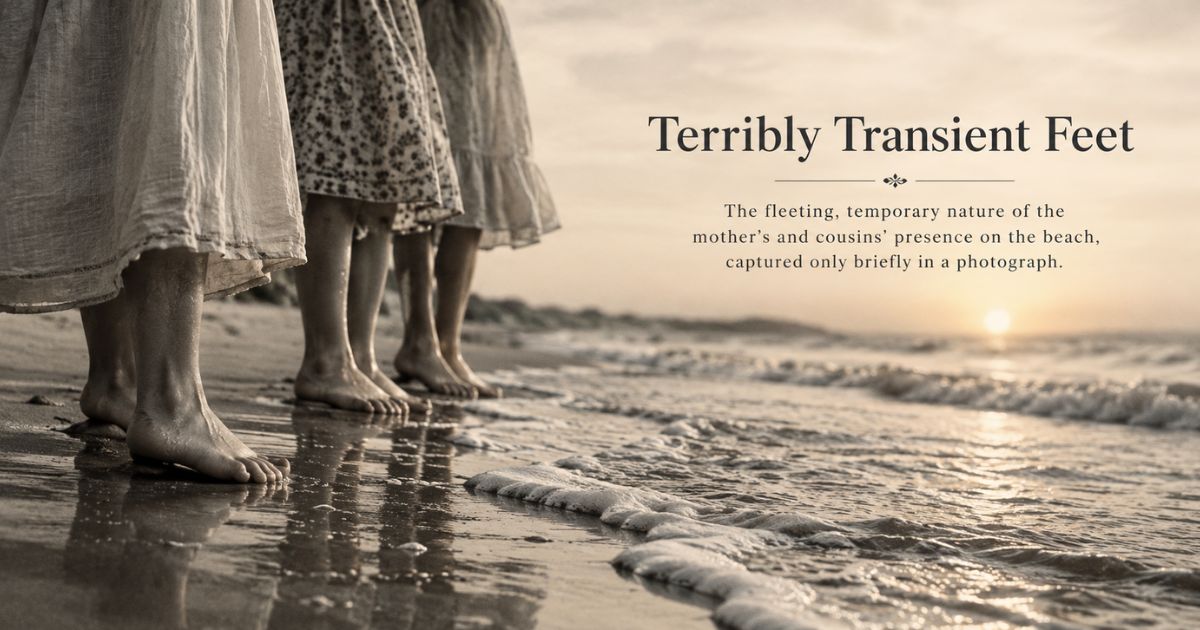
“Terribly transient feet” describes the feet of the poet’s mother and her two cousins as the sea washed over them in an old photograph. The phrase means their presence was temporary and fleeting, unlike the sea itself, which barely changes over time. In short, it highlights how short-lived human life is when set against something as constant as the ocean.
The line comes from “A Photograph” by Shirley Toulson, a poem included in the CBSE Class 11 English textbook Hornbill. In my own reading of this poem with students preparing for board exams, the phrase is one of the most commonly misunderstood lines, mainly because “transient” is an unfamiliar word and the imagery is easy to skim past. This guide breaks the line down clearly, covers the literary devices behind it, and shows exactly how to explain it in an exam answer.
Key Takeaways
- “Terribly transient feet” refers to the fleeting, temporary nature of the mother’s and cousins’ presence on the beach, captured only briefly in a photograph.
- The phrase contrasts human mortality with the sea’s near-permanence, a central theme of the poem.
- “Transient” means short-lived or temporary; “terribly” intensifies the sadness of that impermanence.
- The line uses a transferred epithet, where a quality of the humans (their mortality) is applied to their feet.
- Understanding this phrase helps explain the poem’s larger theme: memories outlast the people who created them.
Poem Background: Where Terribly Transient Feet Comes From
“A Photograph” was written by English poet Shirley Toulson and is structured as a single free-verse poem, without a fixed rhyme scheme, though it does use occasional half-rhymes for rhythm. The poem opens with the speaker looking at an old photograph showing her mother as a twelve-year-old girl, standing between her two young cousins on a beach. An uncle, referred to in the poem simply as “the uncle with the camera,” took the photograph decades earlier.
As a result, the image freezes a single, ordinary moment: three girls paddling at the edge of the sea, holding hands, while the water rolls over their feet. However, the poem quickly shifts focus from the photograph itself to the passage of time surrounding it. The speaker later describes her mother, years afterward, laughing at the same photograph and recalling the day fondly.
The final section of the poem takes a darker turn. The speaker reveals that her mother has since died, and that twelve years have passed in silence since she last heard her mother’s laugh. Readers often tell us that this shift, from a warm childhood beach scene to grief over a parent’s death, is what makes the poem so emotionally effective. Therefore, the phrase “terribly transient feet” isn’t just a description of wet sand; it’s an early hint of the mortality theme that defines the rest of the poem.
Literal and Poetic Meaning of Terribly Transient Feet
On a literal level, the phrase simply describes feet being washed by waves for a brief moment before the water recedes. “Transient” means temporary or passing quickly, and “terribly” adds emotional weight, turning a plain observation into something closer to sorrow. For example, the water covering their feet lasts only seconds, much like the fleeting nature of youth itself.
On a poetic level, the phrase does far more work. It sets up a direct contrast between the sea, which appears unchanged across decades, and the humans standing in it, who age, change, and eventually die. This is why so many students ask what terribly transient feet mean in the poem when they first encounter the line: the wording is simple, but the implication is much larger than the sentence itself suggests.
Consider a short comparison to make this clearer:
| Element | Sea | Human Feet |
| Change over decades | Minimal | Significant (aging, death) |
| Presence in the moment | Constant | Fleeting |
| Symbolic meaning | Permanence | Mortality |
This kind of contrast is a common technique in elegiac poetry, where nature’s stability is used to underline how brief a human life really is.
Poetic Devices Behind Terribly Transient Feet
Understanding the literary devices in this line makes it much easier to answer exam questions about it with confidence.
Transferred Epithet Explained
A transferred epithet happens when an adjective is technically describing one noun but is grammatically attached to another. Here, “transient” describes the shortness of human life and presence, but it’s grammatically attached to “feet.” The girls’ feet are not literally temporary; their time standing in that specific spot, on that specific day, is what’s temporary. This device lets the poet compress a large idea, mortality, into three words.
Imagery and Contrast With the Sea
The phrase also relies on visual imagery: readers can picture the shallow water sliding over bare feet on wet sand. As a result, the image feels immediate and physical, which makes the abstract idea of mortality easier to grasp. The sea’s motion, coming in and going out, mirrors the coming and going of human generations, tying the imagery directly to the poem’s theme.
Step-by-Step: How to Analyze the Line in an Exam Answer
- Identify the literal meaning first. State plainly that the sea briefly covered the girls’ feet as they stood at the water’s edge.
- Name the literary device. Point out that “terribly transient feet” is a transferred epithet, since the transience belongs to the moment and the people, not the feet themselves.
- Connect it to the poem’s theme. Explain that the phrase foreshadows the poem’s larger concern with time, aging, and loss.
- Reference the contrast with the sea. Mention that the sea’s unchanging nature makes human transience feel even sharper by comparison.
- Close with the emotional effect. Note that the word “terribly” adds sorrow, hinting at the grief that appears later in the poem after the mother’s death.
Common Misinterpretations to Avoid
Some students read “transient feet” as simply meaning the girls were walking or moving around, missing the deeper meaning entirely. However, the phrase isn’t about movement; it’s about the shortness of their presence in that single, captured moment. Confusing “transient” with “restless” or “playful” leads to a shallow answer that misses the poem’s real theme.
Another common mistake is ignoring the word “terribly.” Some answers treat it as filler, but it’s doing real emotional work, signaling that the poet finds this fleetingness painful rather than neutral. For example, replacing “terribly transient” with just “brief” removes the sorrow that colors the entire poem. A strong exam answer should always account for both words together, not just “transient” in isolation.
FAQs
Q: What does terribly transient feet mean in the poem “A Photograph”?
A: It describes how the sea briefly washed over the feet of the poet’s mother and her cousins while they stood on the beach as children. The phrase signals that their presence in that exact moment, and by extension their lives, was fleeting. It sets up the poem’s central contrast between the sea’s permanence and human mortality, a theme the poem returns to after the mother’s death is revealed.
Q: Why does the poet use the word “terribly” in this line?
A: “Terribly” adds emotional intensity to what could otherwise be a plain observation about wet sand. It signals sorrow and foreshadows the grief that appears later in the poem. Without this word, the line would simply describe a physical detail; with it, the phrase becomes an early clue to the poem’s deeper theme of loss.
Q: What literary device is used in terribly transient feet?
A: The line uses a transferred epithet, where the quality of impermanence technically belongs to the moment and the people, not literally to their feet. This device is common in poetry for compressing a large idea into a short, vivid phrase. Recognizing this device is often the difference between a surface-level and a strong exam answer.
Q: How does the sea contrast with the transient feet in the poem?
A: The sea remains largely unchanged across decades, while the humans standing in it age and eventually die. This contrast is central to understanding what terribly transient feet mean in the poem, since the sea’s permanence makes human transience feel even more striking. The comparison reinforces the poem’s larger meditation on time and memory.
Q: What is the overall theme connected to terribly transient feet?
A: The phrase connects directly to the poem’s central themes of memory, loss, and the passage of time. It appears early in the poem as a quiet warning before the speaker later reveals her mother’s death. Readers who understand this phrase early in the poem often find the ending’s emotional weight easier to appreciate fully.
Final Thoughts
The phrase “terribly transient feet” carries far more weight than its four simple words suggest. It captures a single childhood moment at the beach while quietly setting up the poem’s meditation on aging, memory, and loss. By recognizing the transferred epithet, the imagery of the sea, and the emotional charge of the word “terribly,” readers can see how Shirley Toulson compresses an entire theme into one short, powerful line. The next time this phrase comes up in a lesson or an exam, it’s worth remembering that the real subject isn’t the feet at all, it’s the fleeting nature of the people standing in the water.
Recent Article : Little Things Poem Questions and Answers: Easy Guide

Jennifer Aston is a passionate poetry curator and writer with a deep love for the written word. She believes poetry has the power to heal, inspire, and connect people across all walks of life. Through PoemSteric, she brings together timeless and modern verses for every emotion and every moment.