
Introduction
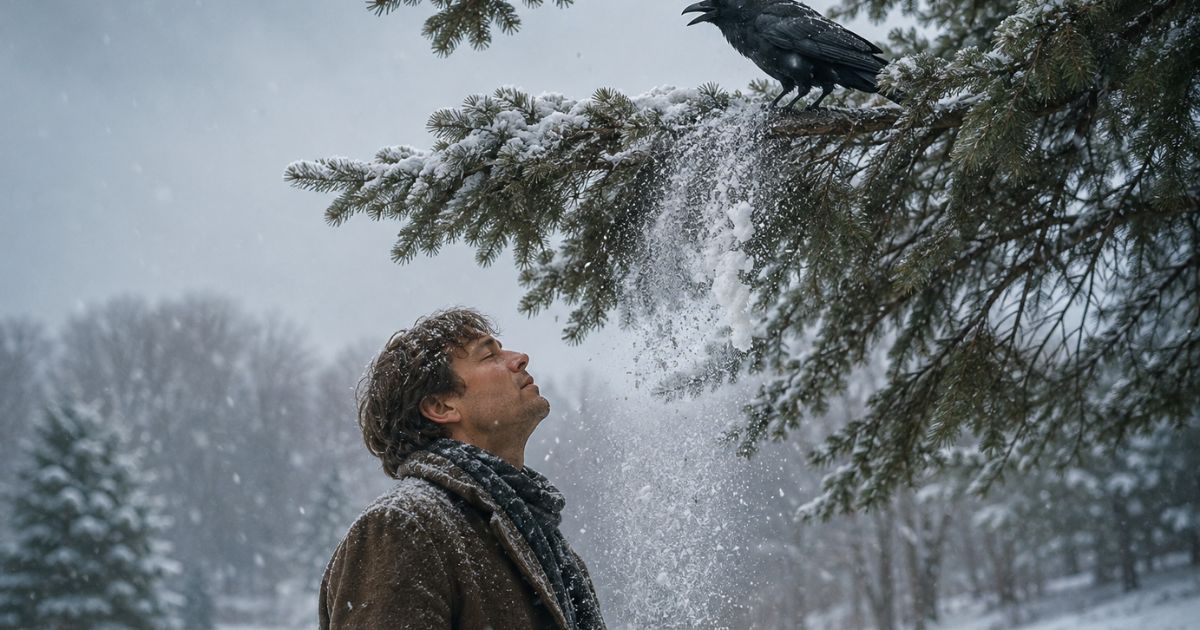
How the poet observed nature in the poem? In Robert Frost’s “Dust of Snow,” the poet observes nature not as a grand, dramatic force, but as a quiet, ordinary moment a crow shaking snow off a hemlock tree that unexpectedly lifts his gloomy mood. This small, almost forgettable event becomes proof that nature doesn’t need to be beautiful or rare to change how we feel. Below, we’ll break down exactly how this observation works, both literally and symbolically.
Key Takeaways
- Robert Frost wrote “Dust of Snow” as part of his 1923 collection New Hampshire, and it remains a staple of Class 10 English literature.
- The poet observes nature through one specific, everyday incident: a crow shaking snow from a hemlock tree onto him.
- This small act of nature shifts the poet’s mood from sorrowful to hopeful within just two short stanzas.
- The poem’s core idea is that healing doesn’t always come from grand gestures, sometimes it comes from something as small as falling snow.
- The hemlock tree, often associated with poison and sorrow, is deliberately chosen to contrast with the positive change it brings.
- Understanding how the poet observed nature in the poem is really about understanding how ordinary moments carry extraordinary meaning.
How Has the Poet Observed Nature in the Poem “Dust of Snow”?
Robert Frost’s approach to nature in this poem is deceptively simple. Rather than describing sweeping landscapes or dramatic weather, he zooms in on one tiny, specific moment a crow perched in a hemlock tree, shaking loose a small shower of snow that happens to land on the poet below.
However, what makes this observation powerful isn’t the event itself, but how the poet reacts to it. Before this moment, the poet describes himself as being in a low, regretful mood, having “rued” part of his day. The falling dust of snow interrupts that mood, almost by accident, and changes his entire emotional state. As a result, the poem becomes less about nature itself and more about how closely human emotion is tied to small, unplanned natural events.
In my own reading of this poem, what stands out is how deliberately unspectacular the moment is. Frost doesn’t choose a sunrise, a storm, or a blooming flower; he chooses a crow, a tree associated with poison, and a small dusting of snow. This choice tells us something important: nature’s power to heal doesn’t depend on beauty or grandeur. It can come from the most unremarkable places, if we’re paying attention.
The Literal Observation: A Crow, a Tree, and Falling Snow
On a literal level, the poet simply describes what happened to him physically. He was standing near or under a hemlock tree when a crow, perched above, shook the branch whether by movement, flight, or landing causing a small amount of snow to fall on him.
This is a genuinely ordinary occurrence. Crows shake trees, snow falls, people get slightly startled by cold on their skin. For example, most people would barely register such a moment, let alone write a poem about it. Frost’s choice to focus so tightly on this single, small action is itself a statement: he’s asking readers to slow down and notice things they’d normally overlook.
The Symbolic Reading: Nature as a Mood-Changer
Beyond the literal event, the poem carries a symbolic layer that gives it lasting meaning. The snow falling on the poet becomes a symbol of unexpected relief, proof that even small, uncontrollable moments can shift our internal state.
The hemlock tree adds another layer here. Hemlock is historically associated with poison and death, yet in this poem, it’s the source of something gentle and restorative. This contrast between the poison-associated tree, positive outcome reinforces the poem’s larger idea: nature holds contradictions, and even things linked to sorrow can, unexpectedly, bring comfort.
Nature Symbolism in the Poem: A Closer Look
To fully understand how the poet observed nature in the poem, it helps to break down each symbolic element individually. Readers often tell us this comparison-style breakdown makes the poem’s message click faster than reading stanza-by-stanza analysis alone.
| Element | Literal Meaning | Symbolic Meaning |
| Crow | A bird shaking snow from a branch | An ordinary, even unwelcome, messenger of change |
| Hemlock tree | A specific tree species | Sorrow, poison, or hardship |
| Dust of snow | Small snow particles falling | A small, unexpected moment of relief |
| The poet’s mood shift | Going from “rued” to “saved” part of the day | Nature’s quiet power to heal without effort |
This table makes something clear: nearly every image Frost uses carries double meaning. Nothing in the poem is accidental, even though the event it describes feels completely accidental to the poet himself. That tension between an event that feels random and a poem that feels carefully constructed is part of what makes “Dust of Snow” endure in classrooms decades after it was written.
How to Answer “How Has the Poet Observed Nature in the Poem” (Step by Step)
If you’re answering this question for a class assignment or exam, following a clear structure will help you cover everything examiners typically look for.
- Name the specific natural event. Start by identifying exactly what happened: a crow shaking snow from a hemlock tree onto the poet.
- Describe the poet’s mood before the event. Mention that the poet was in a low, regretful state, having felt the day was wasted.
- Explain the shift. State clearly that the small snow-shaking incident changed his mood, saving part of the day he had “rued.”
- Connect it to a broader theme. Explain that this shows nature’s ability to heal or comfort us through small, unplanned moments, not grand gestures.
- Mention the symbolism, if space allows. Briefly note the contrast between the hemlock tree’s association with poison and the positive outcome it brings.
Following these five steps ensures your answer covers both the literal event and its deeper meaning, exactly what most exam markers are looking for when they ask how the poet observed nature in the poem.
FAQs
Q: How has the poet observed nature in the poem “Dust of Snow”?
A: The poet observes nature through a single small event: a crow shaking snow off a hemlock tree onto him. This tiny, ordinary moment changes his mood from sorrowful to hopeful, showing that nature doesn’t need to be dramatic to have a real emotional effect. Frost uses this observation to suggest that healing often comes from unplanned, easily overlooked moments rather than grand natural events.
Q: What is the significance of the hemlock tree in the poem?
A: The hemlock tree is traditionally associated with poison and sorrow, which makes its role in the poem meaningful. Despite this negative association, the tree becomes the source of a positive, mood-lifting moment when the crow shakes snow from its branches. This contrast highlights one of the poem’s central ideas: comfort can come from unexpected, even seemingly negative, places in nature.
Q: Why does the poet’s mood change in the poem?
A: The poet’s mood changes because of a small, unplanned interaction with nature; the crow’s snow falling on him interrupts his gloomy state of mind. This sudden, minor event is enough to shift his emotional outlook, suggesting that even brief contact with the natural world can meaningfully affect how we feel, without requiring any deliberate effort on our part.
Q: What is the central theme of “Dust of Snow”?
A: The central theme is that small, ordinary moments in nature can have a powerful, positive effect on human emotion. Robert Frost uses a simple incident of snow falling from a tree to show that we don’t need major life events to feel better; sometimes, a brief, unexpected encounter with nature is enough to change our entire perspective on the day.
Q: Who wrote the poem “Dust of Snow” and when?
A: “Dust of Snow” was written by the American poet Robert Frost and published in 1923 as part of his poetry collection New Hampshire. Frost was known for using simple, everyday language and rural imagery to explore deep emotional and philosophical ideas, and this short poem is a clear example of that signature style.
Final Thoughts
Understanding how the poet observed nature in the poem ultimately comes down to recognizing one simple truth: Frost didn’t need a storm or a sunset to make his point. A crow, a tree, and a little falling snow were enough to turn a regretful day into a saved one.
That’s the real lesson worth carrying forward: nature’s impact on us isn’t always loud or obvious. Sometimes, as this poem beautifully shows, it’s the smallest, most unplanned moments that leave the deepest mark.
Recent Article : Tamil Poet on Shivaji Maharaj: The Real Answer

Jennifer Aston is a passionate poetry curator and writer with a deep love for the written word. She believes poetry has the power to heal, inspire, and connect people across all walks of life. Through PoemSteric, she brings together timeless and modern verses for every emotion and every moment.