
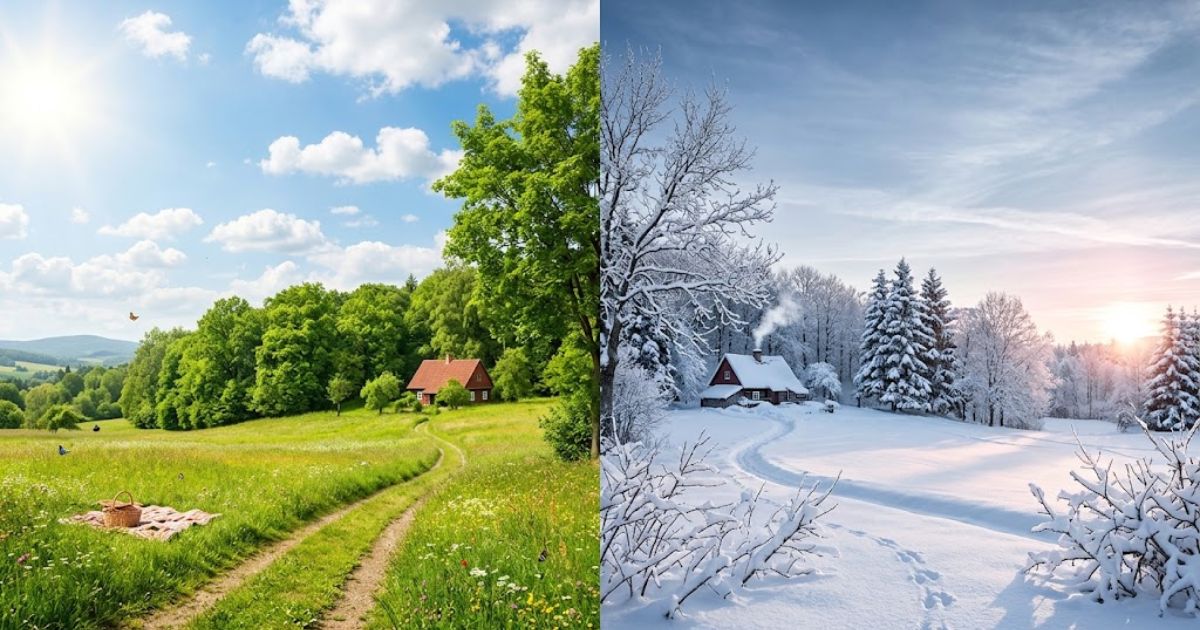
Introduction
How is winter described in the poem “Summer and Winter” by Percy Bysshe Shelley? Winter is described as harsh, lifeless, freezing, and cruel. Shelley presents a season in which birds die in the forest, fish lie frozen stiff in ice, the ground turns hard as brick, and even people gathered around blazing fires still cannot escape the cold. Positioned right after the poem’s bright, joyful picture of summer, this bleak winter section becomes far more powerful by contrast. Through vivid natural imagery, sensory detail, and symbolism, Shelley turns winter into more than just a season it becomes a representation of death, suffering, and lifelessness itself.
Key Takeaways
- The poem is “Summer and Winter” by Percy Bysshe Shelley, published posthumously in 1829.
- Winter is presented as harsh, freezing, lifeless, and cruel.
- Birds and fish are shown suffering and dying in the extreme cold.
- Ice transforms the landscape into something hard, frozen, and motionless.
- Even people with fires and comfortable homes still feel the cold.
- A homeless old beggar suffers most severely, adding a note of social sympathy.
- Winter is built as the direct opposite of the poem’s joyful, life-filled summer section.
Background: What Poem is This, and Who Wrote It?
“Summer and Winter” was written by Percy Bysshe Shelley (1792–1822), one of the major English Romantic poets, known for lyrical, emotionally intense verse exploring nature, freedom, and mortality. Shelley died at age 29 in a boating accident in 1822 meaning this poem, like much of his best-known work, was published posthumously.
His wife, Mary Shelley (author of Frankenstein), compiled and published the poem in The Keepsake literary annual for 1829, grouped under the title “Fragments.” Notably, the summer section and the winter section were originally two separate, unfinished fragments from Shelley’s notebooks — Mary Shelley joined them together into the single poem now known as “Summer and Winter.” This is worth knowing because it explains why the shift from summer to winter feels so abrupt and unblended: the two halves weren’t written as one continuous piece, and the harsh, sudden turn is partly a result of how the poem was assembled, not just a deliberate stylistic choice within a single draft.
How Is Winter Described in the Poem?
In “Summer and Winter,” Shelley describes winter as a severe season associated with death and lifelessness. The winter scene begins immediately after the poem’s cheerful description of summer, creating an abrupt, jarring change in atmosphere with no gradual transition.
Shelley describes a winter in which birds die in deep forests and fish lie stiffened in translucent ice. The mud and slime of lakes freeze into something hard, while even people who have comfortable homes gather around large fires and still feel cold.
The poet does not present winter as a beautiful, peaceful snowy season. Instead, he emphasizes its hardness, suffering, stillness, and danger right down to the final image of a homeless beggar left with nowhere to escape the cold.
What Winter Imagery Does Shelley Use?
Shelley uses strong visual and physical imagery to make the winter scene easy to imagine.
The poem presents:
- Birds dying in deep forests
- Fish stiffened inside ice
- Frozen water
- Hard, cracked mud and slime
- People gathered around fires, still cold
- A homeless old beggar exposed to the winter cold
The image of frozen fish is especially powerful because it transforms something normally associated with movement and life into something completely motionless.
Likewise, the description of the ground turning hard emphasizes the physical power of winter over the natural world; nothing resists it, not the animals, not the earth, and not even people indoors.
What Mood and Atmosphere Does Winter Create?
The winter section creates a dark, gloomy, cold, and sorrowful atmosphere, a sharp break from the mood of the opening summer section.
Summer, by contrast, is associated with brightness, joy, sunlight, greenery, and movement. Winter introduces death, stillness, coldness, and suffering in its place.
This contrast is intentional. Rather than letting the reader experience winter as peaceful or picturesque, Shelley makes the reader feel its severity: the freezing landscape, the desperate need for warmth, and finally the human cost of it. The closing reference to the homeless beggar pushes the mood further, from environmental description into genuine emotional and social weight.
What Does Winter Symbolize in the Poem?
Winter functions as a symbol of death, lifelessness, suffering, and inactivity, an interpretation reinforced by how directly Shelley sets it against the lively summer landscape earlier in the poem.
| Summer | Winter |
| Life | Death |
| Warmth | Cold |
| Joy | Suffering |
| Movement | Stillness |
| Growth | Lifelessness |
| Light | Gloom |
The poem doesn’t merely describe two seasons, it uses them to build a larger contrast between life and death, comfort and hardship.
How Does Shelley Contrast Winter With Summer?
The contrast between summer and winter is the structural backbone of the poem.
At the start, the summer landscape is bright, cheerful, and alive; the river, fields, reeds, willow leaves, and trees are all described as full of energy beneath the sun.
Winter produces the exact opposite effect: stillness instead of movement, freezing cold instead of warmth, death instead of life.
Because the reader has already experienced the beauty and energy of summer, the winter description lands with far more force. Shelley uses this juxtaposition deliberately, as a literary technique to sharpen the severity of the winter imagery that follows.
What Literary Devices Describe Winter?
Imagery
The frozen fish, deep forests, hardened ground, roaring fires, and homeless beggar all create vivid visual and sensory pictures of the season.
Simile
The frozen earth is compared to something as hard as brick, emphasizing just how completely the cold transforms the landscape.
Contrast (Juxtaposition)
The entire poem is structurally built around the opposition between the summer and winter sections; this is the poem’s central literary technique.
Symbolism
Winter comes to represent death, inactivity, hardship, and the darker, harsher side of natural change.
Emotional Appeal (Pathos)
The suffering of nature, combined with the image of the vulnerable homeless beggar, is designed to provoke an emotional, sympathetic response from the reader rather than a purely descriptive one.
Structural Note
Because the poem was assembled from two originally separate fragments, it does not carry a single unified rhyme scheme across both halves; the abruptness of the shift from summer to winter is partly a structural feature, not only a rhetorical one.
Why Does the Poet Present Winter This Way?
Shelley presents winter so harshly to emphasize both the power of natural forces and the stark contrast between vitality and death.
The winter section also introduces a distinctly human dimension. It isn’t only birds and fish that suffer, even people living in comfortable conditions feel the cold, while the homeless old beggar faces something far more serious.
This closing image invites sympathy and reminds the reader that natural hardship does not affect everyone equally; the poem shifts from describing nature to reflecting on human vulnerability and social inequality.
What Is the Effect of Winter on the Reader?
The winter description is built to produce a strong emotional response. Readers are likely to experience:
- A sense of coldness and physical discomfort
- Gloom and sorrow
- Sympathy, especially toward the beggar
- Unease at the harshness of natural conditions
- Awareness of death and suffering
- A sharper appreciation of the earlier summer imagery, by contrast
The description becomes especially powerful because Shelley gradually moves the reader from the natural world toward human suffering, ending the poem on its most emotionally exposed note rather than a purely descriptive one.
FAQs
How is winter described in the poem?
Winter is described as a harsh, cold, lifeless, and destructive season. Shelley shows birds dying, fish frozen in ice, hard ground, and people struggling to keep warm even by the fire.
Which poem describes winter as a lifeless season?
This refers to Percy Bysshe Shelley’s “Summer and Winter.” Educational study materials commonly describe its winter section as lifeless and closely associated with death.
Who wrote “Summer and Winter”?
Percy Bysshe Shelley wrote it. The poem was published posthumously by his wife, Mary Shelley, in The Keepsake literary annual for 1829.
Was the poem published during Shelley’s lifetime?
No. Shelley died in 1822; the poem was published seven years later, in 1829, after his death.
What does winter symbolize in “Summer and Winter”?
Winter symbolizes death, lifelessness, suffering, and inactivity, especially when contrasted with the joyful, energetic summer landscape earlier in the poem.
What is the main contrast in the poem?
The main contrast is between summer and winter, which Shelley uses to represent opposing conditions life and death, warmth and cold, joy and suffering, movement and stillness.
Final Thoughts
In “Summer and Winter,” Percy Bysshe Shelley paints winter as a harsh, freezing, lifeless, and sorrowful season birds die, fish freeze solid, the earth hardens, and even people seated by roaring fires cannot fully escape the cold. The description carries extra weight because it follows directly after the poem’s bright, joyful picture of summer, with no gentle transition between the two.
Through vivid imagery, deliberate contrast, symbolism, and emotional appeal, Shelley transforms winter from a simple seasonal description into a powerful representation of death, suffering, and lifelessness one that ultimately reaches beyond nature to touch on human vulnerability, through the poem’s final, quietly devastating image of the homeless beggar left out in the cold.
Recent Article : What is POEM in Digital Marketing? The Complete Guide

Jennifer Aston is a passionate poetry curator and writer with a deep love for the written word. She believes poetry has the power to heal, inspire, and connect people across all walks of life. Through PoemSteric, she brings together timeless and modern verses for every emotion and every moment.