
Introduction
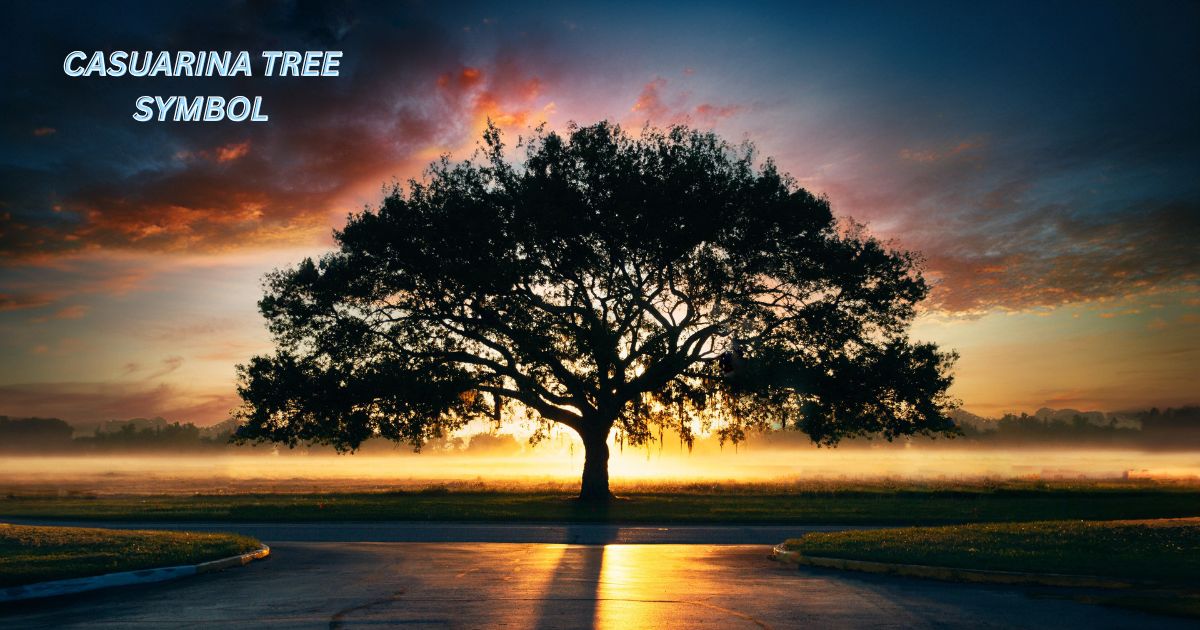
The casuarina tree symbol represents resilience, quiet strength, and remembrance, a meaning shaped by the tree’s ability to survive harsh coastal winds while its soft, drooping branches evoke mourning and reflection. Across Australia, South Asia, and parts of Southeast Asia, the casuarina carries different but related meanings: endurance in Aboriginal tradition, memorial symbolism in parts of India and Sri Lanka, and steadfastness in modern landscaping and folk belief. In my own reading of botanical folklore across these regions, the same tree keeps showing up wherever people need a symbol that is both tough and tender at once.
This guide breaks down where that meaning comes from, how different cultures use the casuarina tree symbol, and how you can interpret it in your own context whether you’re researching symbolism for writing, gardening, or personal reflection.
Key Takeaways
The casuarina tree symbol is not a single, fixed idea; it shifts depending on where you encounter it. However, a few consistent threads run through nearly every tradition that uses it.
Resilience: Casuarina trees anchor themselves in sandy, windswept coastlines, so the tree is widely used as a symbol of endurance and quiet strength.

Remembrance: In parts of India and Sri Lanka, casuarina groves are commonly planted near cemeteries and memorial grounds, linking the tree to mourning and reflection.

Protection: Because casuarinas act as windbreaks along coasts, they also symbolize shelter and guardianship in local folklore.

Duality: The tree's soft, needle-like foliage paired with its tough survival instincts gives it a symbolic duality: gentleness on the outside, strength underneath.

Regional variation: Meaning changes by geography; Aboriginal Australian symbolism differs from South Asian memorial symbolism, so context always matters.
As a result, when someone asks “what does the casuarina tree symbolize,” the honest answer depends on which cultural lens they’re asking from.
What Is the Casuarina Tree? A Quick Botanical Primer
Before diving into casuarina symbolism, it helps to understand the tree itself. Casuarina is a genus of flowering trees and shrubs, most commonly associated with the species Casuarina equisetifolia, often called the whistling pine, she-oak, or beefwood. Despite the nicknames, it is not a true pine or oak; its needle-like structures are actually jointed green branchlets, not true leaves.
The tree is fast-growing, tolerant of poor and salty soils, and known for the soft rustling or “whistling” sound its branches make in coastal wind. This sound is part of why so many cultures treat the casuarina as an atmospheric, almost reflective tree one people naturally associate with quiet thought rather than loud celebration.
Where the Casuarina Tree Grows Naturally
Casuarina trees are native to Australia, the Pacific Islands, and parts of Southeast Asia, though they’ve since been widely planted across coastal India, Sri Lanka, parts of Africa, and the southeastern United States for erosion control. Their deep root systems make them especially useful for stabilizing sandy or eroding coastlines, which is one practical reason the tree became so symbolically tied to endurance.
How to Identify a Casuarina Tree
For readers who want to recognize the tree in person, look for these features:
- Needle-like, jointed branchlets that resemble pine needles but are actually segmented stems.
- Small, cone-like fruit clusters that look similar to pinecones but are woody and rounded.
- Tall, slender growth habit, often 20–35 meters at maturity.
- A soft rustling sound in the wind, caused by air moving through the fine branchlets.
- Growth near coastlines, riverbanks, or sandy soil, since the tree favors well-drained, salt-tolerant conditions.
Casuarina Tree Symbol Meaning Across Cultures
The casuarina tree symbol takes on different shades of meaning depending on the culture examining it. However, endurance and quiet reflection appear again and again as the throughline.
Casuarina Tree Symbolism in Australian Aboriginal Culture
In parts of Aboriginal Australian tradition, native casuarina species (commonly called she-oaks) hold practical and cultural significance. The wood was historically used for tools and implements, and the tree’s presence along waterways and coastal dunes made it part of everyday life and local knowledge systems tied to land and Country. For many communities, the tree’s resilience in harsh, sandy environments reinforced its association with survival and adaptability.
Casuarina Tree Symbolism in South and Southeast Asia
In coastal India and Sri Lanka, casuarina plantations became common from the colonial period onward, largely for timber, windbreaks, and shoreline stabilization. Over time, because casuarina groves were frequently planted along cemetery boundaries, riverbanks used for cremation rites, and quiet institutional grounds, the tree picked up a strong cultural association with mourning, remembrance, and solemn spaces. Readers often tell us this is the meaning when they encounter first a tree they remember seeing lining the path to a cemetery or a riverside cremation ground rather than in a garden or park.
Why Is the Casuarina Tree Linked to Mourning and Memorial Sites?
This is one of the most commonly searched aspects of casuarina tree symbolism, so it deserves its own section. The connection isn’t mystical, it’s largely practical and historical. Casuarina trees grow quickly, tolerate poor soil, and require little maintenance, which made them a convenient, low-cost choice for planting along cemetery boundaries, hospital grounds, and riverside cremation sites during colonial-era and early modern landscaping in South Asia.
For example, in several Indian coastal towns, rows of casuarina were planted specifically as windbreaks around burial and cremation grounds. As a result, generations of local residents grew up associating the tree’s silhouette and sound with mourning, even though the tree itself carries no inherent connection to death in its native Australian context. This is a clear case of a symbol formed by repeated cultural association rather than by ancient myth and it’s a distinction worth understanding if you’re researching the topic seriously.
What Does the Casuarina Tree Symbolize in Spiritual and Folk Belief?
Beyond memorial symbolism, the casuarina tree also appears in regional folk belief as a marker of liminal or transitional spaces between land and sea, between the living world and the world of memory. In some coastal fishing communities, casuarina groves near the shoreline are treated as informal landmarks and, occasionally, as sites tied to local oral traditions about protective spirits or guardians of the coast. These beliefs vary significantly by village and region and are not part of any single organized religious doctrine, so they should be understood as folk custom rather than formal scripture.
In more modern, secular use such as landscaping, memorial gardens, and even personal tattoo or design symbolism the casuarina tree symbol has been adapted to represent quiet resilience: the idea of standing firm through difficulty while still being fine, adaptable, and soft in expression.
Casuarina Tree Symbol in Literature, Poetry, and Art
The casuarina tree has a notable literary legacy, most famously through the English-language poem “The Casuarina Tree” by Indian poet Toru Dutt, published posthumously in the late 19th century. In the poem, the tree becomes a vessel for memory, loss, and nostalgia, tied closely to the poet’s recollections of home and departed loved ones. This single work is often credited with cementing the casuarina’s literary association with remembrance in English-language poetry from the Indian subcontinent.
Beyond Dutt’s poem, casuarina trees appear frequently as atmospheric background elements in South Asian and Southeast Asian literature and film, typically used to signal coastal settings, quiet reflection, or scenes involving grief and departure. For example, a windswept casuarina grove is a common visual shorthand in regional cinema for a character processing loss.
How to Interpret the Casuarina Tree Symbol in Your Own Context: Step by Step
If you’re trying to work out what the casuarina tree symbol means for a specific piece of writing, artwork, or personal reflection, use this simple process:
- Identify the cultural lens you’re working in. Aboriginal Australian, South Asian, or general Western landscaping symbolism will each point you toward a different meaning.
- Consider the setting. A casuarina near a cemetery or riverside points toward remembrance; a casuarina on a windswept dune points toward resilience and protection.
- Look at accompanying imagery or context. Pair the tree with grief-related language and it reads as mourning; pair it with survival, coastlines, or hardship and it reads as endurance.
- Check for regional folk tradition. If your context involves a specific coastal community, local folklore may add a protective or guardian-spirit layer to the meaning.
- Decide the emotional tone you want. Because the casuarina symbol genuinely spans both grief and strength, you can lean into either meaning depending on the tone your project needs.
FAQs
Q: What does the casuarina tree symbolize?
A: The casuarina tree symbol generally represents resilience, quiet strength, and remembrance. In coastal regions, it’s associated with endurance because the tree withstands strong winds and poor soil. In parts of South Asia, the casuarina tree symbol is more closely tied to mourning, since the trees are commonly planted near cemeteries and memorial grounds. The exact meaning depends heavily on cultural and regional context.
Q: Why are casuarina trees planted near graves and cemeteries?
A: Casuarina trees are fast-growing, low-maintenance, and tolerant of poor soil, making them a practical choice for large memorial grounds historically. Over time, this practical use created a strong cultural link between the casuarina tree and mourning, particularly in coastal India and Sri Lanka, where the trees line many cemetery and cremation-ground boundaries.
Q: Is the casuarina tree sacred in any religion?
A: The casuarina tree is not formally sacred within any major world religion. However, it holds informal cultural and folk significance in some coastal communities, where local oral traditions occasionally treat casuarina groves as markers of protective or guardian presence, separate from organized religious doctrine.
Q: What is the casuarina tree’s connection to poetry and literature?
A: The casuarina tree symbol gained literary prominence through Toru Dutt’s 19th-century poem “The Casuarina Tree,” which used the tree as a symbol of memory, loss, and nostalgia. This poem is widely credited with strengthening the tree’s association with remembrance in English-language literature from the Indian subcontinent.
Q: How can I identify a casuarina tree?
A: Look for tall, slender trees with fine, needle-like jointed branchlets (not true leaves), small woody cone-like fruit, and a soft rustling or whistling sound in the wind. Casuarina trees typically grow near coastlines, riverbanks, or sandy soil and can reach 20–35 meters at maturity.
Q: Does the casuarina tree symbolize good or bad luck?
A: There’s no single answer, since the casuarina tree symbol carries different associations depending on region. Some households avoid planting it near homes due to its link with mourning, while others value it as a protective, resilient tree because of its role in stabilizing coastlines against wind and erosion.
Final Thoughts
The casuarina tree symbol isn’t a single, tidy idea; it’s a meaning built from practical history, regional folk belief, and one influential 19th-century poem, all layered on top of a tree that simply happens to be tough, fast-growing, and quietly musical in the wind. Understanding it means understanding where you’re encountering it: a windswept Australian coastline points toward endurance, while a cemetery-lined avenue in coastal India points toward memory and loss. However, both readings share the same emotional core: a tree that stays standing, and stays quiet, through difficulty.
Recent Article : Who Taught You This Poem Passive Voice: Easy Guide

Jennifer Aston is a passionate poetry curator and writer with a deep love for the written word. She believes poetry has the power to heal, inspire, and connect people across all walks of life. Through PoemSteric, she brings together timeless and modern verses for every emotion and every moment.