
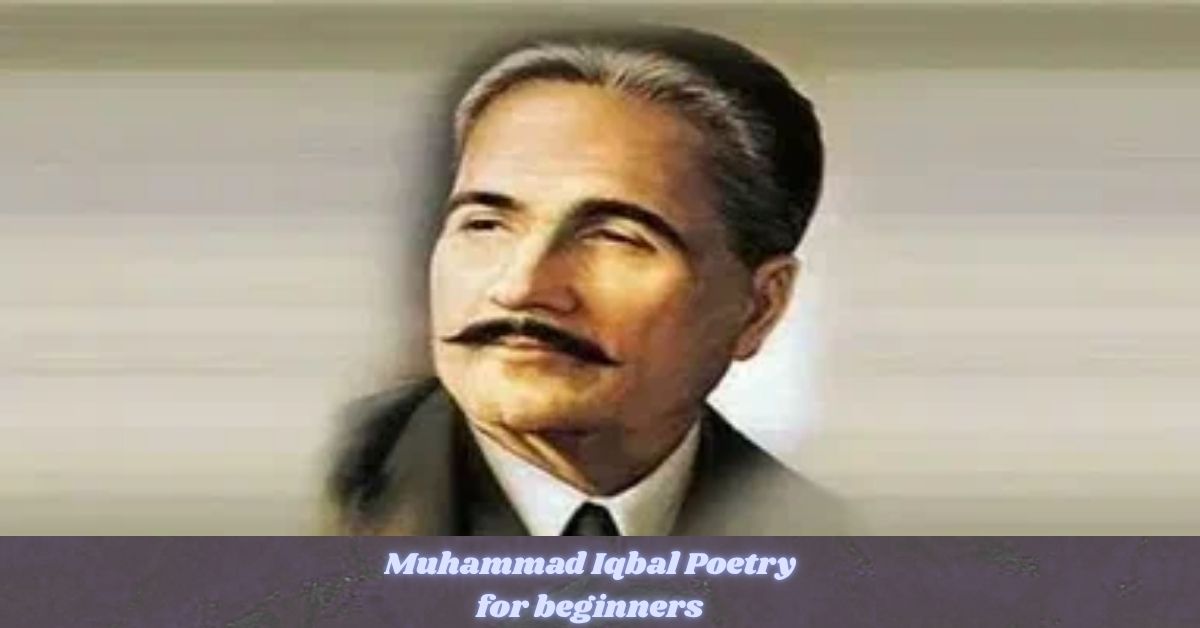
Introduction
If you have ever opened a page of Allama Iqbal poetry and felt both moved and a little lost, you are not alone. Iqbal is one of the most quoted poets in South Asia, yet most people encounter his verses in fragments: a single couplet shared on social media, a line recited at a school function, a quote printed under his portrait. Almost nobody is told where to actually start.
This guide exists to fix that gap. Instead of dropping you into a 12,000-verse body of work spread across Urdu and Persian, this article walks you through a simple, step-by-step path: who Iqbal was, why his poetry still resonates, which books to read first, which poems are genuinely beginner-friendly, and which common mistakes to avoid. By the end, you will have a clear, practical entry point into Allama Iqbal poetry, not just a list of famous names.
We built this guide the way we wished someone had built one for us: honest about what is hard to understand at first, clear about which poems reward a first-time reader, and grounded in Iqbal’s actual life and philosophy rather than recycled trivia.
Key Takeaways
Before we go step by step, here is the short version for readers who want the core points immediately:
Allama Iqbal (1877–1938) was a poet, philosopher, and lawyer, and is regarded as the "Poet of the East" and the spiritual father of Pakistan.

He wrote in both Urdu and Persian, producing an estimated 12,000 verses, with more than half composed in Persian.

His poetry centers on the philosophy of Khudi the strengthening and realization of the self which is the single most important concept to understand before reading him seriously.

His major poetry collections, in order, are Asrar-e-Khudi, Bang-e-Dara, Bal-e-Jibreel, Zarb-i-Kalim, and Armaghan-e-Hijaz.

Beginners should start with Urdu poems that already have strong English translations, such as Shikwa, Jawab-e-Shikwa, and Tarana-e-Hindi, before attempting his denser Persian philosophical works.

Reading Iqbal without translation notes is the single biggest mistake new readers make his poetry rewards context far more than most classical poets.
Keep these points in mind as we walk through the full guide below.
Who Was Allama Iqbal? A Quick Introduction to the Poet
Allama Iqbal, born Sir Muhammad Iqbal on 9 November 1877 in Sialkot, in what was then Punjab under British India, was far more than a poet. He held a Bachelor’s and Master’s degree in philosophy from Government College, Lahore, later earned a degree from the University of Cambridge, and completed a doctorate in Munich, Germany. He also trained as a barrister at Lincoln’s Inn in London and practiced law after returning to India.
What makes Iqbal unusual among poets is that his verses were never separate from his intellectual life. He was a working philosopher who happened to write in verse, and a lawyer who happened to think in metaphors of flight, selfhood, and awakening. He was knighted in 1922, becoming “Sir Muhammad Iqbal,” though within the Urdu and Persian literary tradition he is almost always referred to as Allama Iqbal “Allama” being an honorific meaning a highly learned scholar.
He died on 21 April 1938 at the age of 60, but by then had already produced a body of work that would go on to shape the intellectual foundation of the Pakistan Movement, earning him the title “spiritual father of Pakistan.” Understanding this dual identity scholar and poet is essential before reading Allama Iqbal poetry, because his verses are rarely just emotional; they are almost always philosophical arguments wrapped in imagery.
Why Allama Iqbal Poetry Still Matters Today
It would be easy to treat Iqbal as a historical figure whose relevance ended with the creation of Pakistan in 1947. That would be a mistake. Allama Iqbal poetry continues to matter today for reasons that go far beyond nostalgia or nationalism.
First, his central idea Khudi, or the cultivation of a strong, self-aware individual speaks directly to modern anxieties about identity, purpose, and self-worth. Long before “self-improvement” became a global industry, Iqbal was writing about the same core question: how does a person become fully themselves instead of a passive follower of circumstance?
Second, his poetry sits at a rare intersection of East and West. Having studied Rumi and classical Persian mysticism alongside Nietzsche, Hegel, and Bergson in Europe, Iqbal built a body of work that speaks to readers from very different intellectual traditions at once. A reader interested in Western philosophy and a reader interested in classical Sufi poetry can both find genuine substance in his work.
Third, his poetry remains a living part of everyday culture in Pakistan and parts of India recited in schools, quoted in political speeches, printed on classroom walls. Learning to read him properly is not just a literary exercise; it connects you to how millions of people still process ideas of resilience, self-respect, and purpose.
Understanding the Language of Allama Iqbal Poetry – Urdu vs Persian
One of the first surprises for new readers is that a large portion of Allama Iqbal poetry is not in Urdu at all it is in Persian. Of his estimated 12,000 verses, well over half were written in Persian, a language he adopted deliberately rather than by accident of birth.
For a beginner, this matters practically: most freely available English translations online focus on his Urdu collections, especially Bang-e-Dara, because that material is more accessible to translators and more widely taught. His Persian works, such as Asrar-e-Khudi and Payam-e-Mashriq, are equally important philosophically but harder to find in approachable English versions.
Why Iqbal Wrote in Two Languages
Iqbal began writing seriously in Persian while studying philosophy in Munich and Heidelberg. He later explained, in various letters and lectures, that Persian gave him a vocabulary and poetic tradition inherited from Rumi and other classical Sufi poets that could carry complex philosophical ideas more naturally than Urdu could at the time. Urdu, meanwhile, let him speak directly and emotionally to a mass audience in British India, particularly on themes of nationalism, community, and identity.
For a beginner, the practical takeaway is simple: start with his Urdu poetry, since it is more available in reliable translation, and treat his Persian work as a “second stage” once you are comfortable with his core ideas.
The Major Poetic Forms in Allama Iqbal Poetry, Explained Simply
Most articles about Allama Iqbal poetry assume you already know what a Ghazal or a Nazm is. This guide will not make that assumption, because understanding poetic form is one of the fastest ways to stop feeling lost when reading Urdu poetry.
Iqbal wrote across several classical forms, and each one has a slightly different rhythm and purpose. Knowing the difference will change how you read every poem in this guide.
Ghazal vs Nazm vs Sher: What’s the Difference?
- Ghazal: A collection of independent couplets (called sher) that share the same rhyme and meter but do not need to form one continuous story. Each couplet can almost stand alone. Iqbal wrote well over a hundred ghazals.
- Nazm: A poem with a single, continuous theme from beginning to end, more like a Western poem in structure. Tarana-e-Hindi and Shikwa are both Nazms; this is usually the easiest form for beginners because the narrative flows in one direction.
- Sher: A single couplet, often the smallest unit people quote and share independently, even outside its original poem.
- Rubai and Qita: Shorter forms, typically four-line or fragment-style verses, often used for a single sharp idea or observation.
If you are new to Allama Iqbal poetry, start with Nazms. Their single continuous theme is far easier to follow than a Ghazal’s collection of loosely connected couplets.
Start With Iqbal’s Most Famous Poems
Do not begin with Iqbal’s philosophical Persian masnavis. Begin with the handful of poems that are famous precisely because they are accessible, emotionally direct, and widely translated.
The best starting points are:
- Tarana-e-Hindi (“Sare Jahan Se Achha”) a patriotic Nazm about the Indian subcontinent, simple in language and rhythm.
- Shikwa (“The Complaint”) a bold, emotionally charged poem in which the poet questions God directly about the state of the Muslim community.
- Jawab-e-Shikwa (“The Answer to the Complaint”) the companion piece to Shikwa, written as a response, and best read immediately after it.
These three poems give you Iqbal’s range in miniature: national pride, spiritual questioning, and philosophical response, all in relatively approachable language. Reading them in this order Tarana-e-Hindi first, then Shikwa, then Jawab-e-Shikwa gives you a natural emotional and thematic arc before you move to anything more complex.
Learn the Philosophy of Khudi Before You Read Further
If there is one concept you need before reading deeper into Allama Iqbal poetry, it is Khudi. Almost every competitor article on this topic mentions the word without ever explaining it clearly, so let’s fix that here.
Khudi roughly translates to “selfhood” or “self,” but Iqbal used it to mean something more active: the deliberate strengthening of one’s individual will, character, and purpose until a person becomes fully realized rather than passively shaped by circumstance, tradition, or fear. For Iqbal, weakness was not a lack of resources it was a failure to cultivate Khudi.
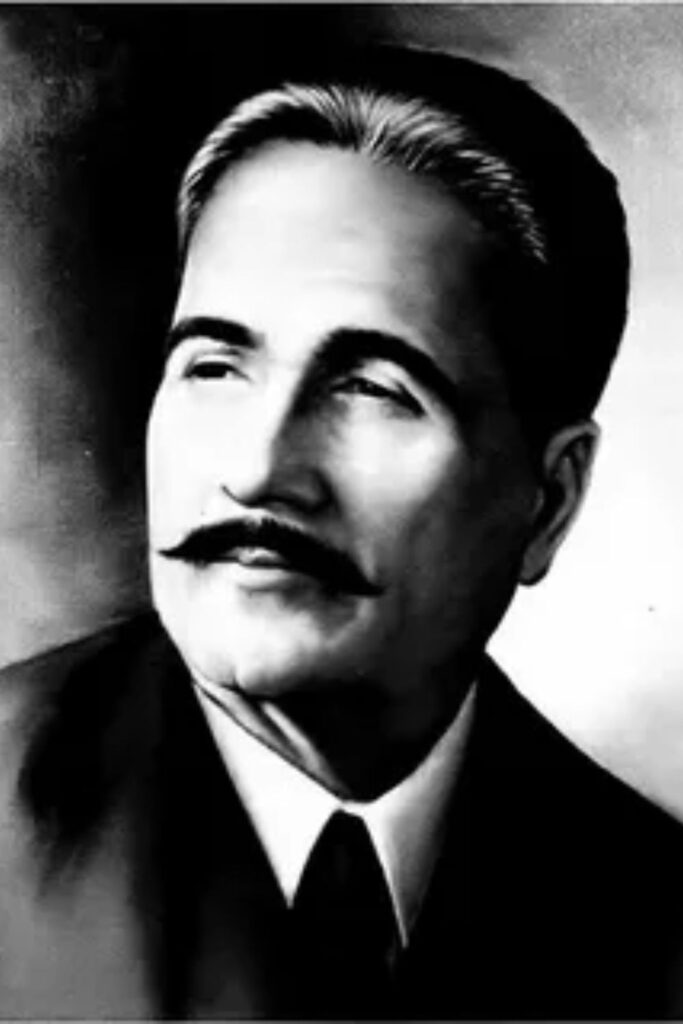
Khudi (Selfhood) – Iqbal’s Core Philosophy
Khudi is the philosophical concept at the heart of Allama Iqbal’s poetry, meaning “selfhood” in Urdu. Iqbal developed this idea across his philosophical and poetic works, and it left a lasting mark on the religious, cultural, and social revival of Muslims in the Indian subcontinent. The concept runs through nearly all of his major writings, especially The Secrets of the Self, and centers on the belief that both individuals and society can only be revived through the core principle of the Self, or Khudi. He connected this to the Quranic idea of Ruh (spirit), seeing the Quran’s deeper purpose as awakening a person’s fuller awareness of their relationship with God and the universe. In simple terms, Khudi is Iqbal’s call for self-realization over passivity, the idea that a person becomes truly whole not by disappearing into tradition, but by strengthening their own will, character, and purpose.
Source: Khudi (Wikipedia)
This is why his poetry so often uses the image of the shaheen, a mountain falcon that refuses to live in comfort or captivity, choosing instead the difficulty of the open sky. The shaheen became Iqbal’s central symbol for a person who has developed a strong Khudi: self-reliant, unwilling to settle for borrowed comfort, and always reaching upward.
Once you understand Khudi, poems that initially look like simple nature imagery eagles, stars, mountains start to reveal themselves as arguments about human potential. This single piece of context will make almost everything else in this guide easier to read.
Explore Iqbal’s Major Poetry Books in Order
Once you have read a few standalone poems and understand Khudi, you are ready to explore Iqbal’s major collections. Reading them in publication order lets you follow the development of his thinking rather than jumping around randomly.
- Asrar-e-Khudi (1915) – “Secrets of the Self,” his first major Persian work, laying out the philosophy of Khudi directly.
- Bang-e-Dara (1924) – “The Call of the Marching Bell,” his most famous Urdu collection, containing Shikwa, Jawab-e-Shikwa, and Tarana-e-Hindi.
- Bal-e-Jibreel (1935) – “Gabriel’s Wing,” widely considered his most refined and spiritually intense Urdu collection.
- Zarb-i-Kalim (1936) – “The Rod of Moses,” a more direct, sometimes political collection addressing the concerns of the Muslim community in his final years.
- Armaghan-e-Hijaz (1938, published posthumously) – “The Gift of Hijaz,” his final work, mixing Urdu and Persian verses.
For a beginner, Bang-e-Dara should be your primary book. It contains his most accessible, most translated, and most emotionally direct poems, making it the natural bridge into his denser later work.
Read Allama Iqbal Poetry With Translation and Context
This step is where most new readers go wrong, and it is worth being direct about it: reading Iqbal in Urdu or Persian without any translation or explanatory notes is genuinely difficult, even for fluent Urdu speakers, because his vocabulary draws heavily on classical Persian, Arabic religious terms, and philosophical concepts that are not part of everyday conversation.
Look for editions or websites that provide three things together: the original text (Urdu or Roman Urdu), a literal English translation, and a short explanatory note on what the verse actually means. Reading only the English translation without the note often flattens Iqbal’s meaning, since much of his imagery depends on context from Islamic history, Sufi poetry, or contemporary politics of his era that a modern reader will not automatically know.
A practical example: a couplet about a falcon refusing a golden cage means very little on its own. With the context of Khudi and Iqbal’s rejection of complacent comfort, the same couplet becomes a direct philosophical statement. Context is not optional decoration here; it is often the difference between missing the point entirely and genuinely understanding the poem.
Build a Simple Daily Reading Routine
You do not need to read Iqbal for hours to make real progress. A short, consistent routine works far better than an occasional long session, especially given how dense his verses can be.
Try this simple structure:
- Day 1–3: Read one Nazm per day from Bang-e-Dara, alongside its English translation and notes.
- Day 4–5: Read Shikwa and Jawab-e-Shikwa as a pair, one per day, and reflect on how they connect to each other.
- Day 6: Read a short explanation of Khudi (see Step 2 above) and revisit one poem you already read with this new lens.
- Day 7: Read two or three individual couplets (sher) slowly, without rushing to the next one, and try to restate each in your own words.
Repeating this seven-day cycle two or three times, moving gradually into Bal-e-Jibreel once Bang-e-Dara feels comfortable, is enough to build genuine familiarity with Allama Iqbal poetry within a month, without ever feeling overwhelmed.
Best Allama Iqbal Poems for Absolute Beginners
Pulling together everything above, here is a focused shortlist if you want to skip ahead and simply start reading right now:
- Tarana-e-Hindi – simplest language, strong rhythm, a gentle entry point.
- Shikwa – emotionally powerful, shows Iqbal’s boldness and questioning voice.
- Jawab-e-Shikwa – completes the emotional arc started in Shikwa.
- Tarana-e-Milli – a natural follow-up to Tarana-e-Hindi, shifting the same rhythm toward a broader theme of community.
- Lab Pe Aati Hai Dua (the child’s prayer poem, found in Bang-e-Dara) – short, simple, and widely taught to children, making it one of the gentlest possible introductions.
Read these five in the order listed, and you will already have a genuine working sense of Iqbal’s range before touching a single Persian verse.
Allama Iqbal Poetry Themes Every Reader Should Recognize
Once you have read a handful of poems, certain recurring themes will start to stand out. Recognizing them in advance makes every future poem easier to place.
- Khudi (Selfhood): The cultivation of a strong, self-aware individual, discussed in depth in Step 2 above.
- Self-reliance and flight: Represented through the shaheen (falcon) and other bird imagery, symbolizing freedom earned through effort rather than comfort granted by others.
- Faith and questioning: Iqbal’s poetry does not treat faith as passive acceptance; poems like Shikwa show him directly questioning and even challenging divine silence.
- Community and nationalism: Especially in his earlier Urdu work, themes of collective identity and belonging to a homeland or community appear frequently.
- Youth and potential: Many of his later poems, especially in Zarb-i-Kalim, are addressed almost directly to young readers, urging courage and self-belief.
Once these five themes become familiar, you will find that even unfamiliar poems in Allama Iqbal poetry start to feel recognizable, because most of his work circles back to one or more of them.
Common Mistakes New Readers Make With Allama Iqbal Poetry
Based on how most beginners actually struggle with Iqbal, here are the mistakes worth avoiding from day one:
- Starting with Persian philosophical works. Asrar-e-Khudi is historically important but genuinely difficult for a first-time reader. Save it for later.
- Reading translation without notes. As covered in Step 4, translation alone often loses the philosophical and historical context that gives the verse its actual meaning.
- Treating every couplet as a standalone quote. Many popular “Iqbal quotes” circulating online are pulled out of a Ghazal or Nazm without their surrounding verses, which can distort the original meaning.
- Skipping the concept of Khudi entirely. Without this foundation, a large portion of his imagery — falcons, stars, mountains — reads as generic nature poetry instead of philosophical argument.
- Assuming all his poetry is religious. While faith is a major theme, a significant portion of his work addresses education, politics, youth, and even satire on social behavior of his time.
Avoiding these five mistakes alone will put you ahead of most casual readers of Allama Iqbal poetry.
Famous Allama Iqbal Quotes to Begin Your Journey
Iqbal’s short couplets are often the first point of contact people have with his work, long before they read a full poem. Here are a few of his most widely referenced ideas, offered here as brief paraphrased reflections of his original verses rather than a single fixed translation, since Iqbal’s Urdu and Persian couplets are often rendered differently across sources:
- On self-belief: Iqbal repeatedly argued that a person who fully realizes their own inner strength can shape circumstances rather than simply endure them.
- On freedom over comfort: his recurring falcon imagery captures the idea that true dignity means choosing struggle and open sky over a comfortable cage.
- On restlessness as growth: several of his verses suggest that a settled, unchanging life is closer to stagnation than peace, and that genuine vitality requires constant striving.
- On nations and poets: Iqbal often reflected that a nation’s spirit is first shaped in the imagination of its poets, long before it is shaped by its politicians.
- On youth and courage: many of his later verses are direct calls to young readers, urging them to trust their own capability rather than wait for permission to act.
For the exact original couplets in Urdu, Roman Urdu, and multiple English translations side by side, we recommend cross-checking a dedicated archive rather than relying on a single quote graphic, since translations do vary meaningfully between sources.
Where to Read Allama Iqbal Poetry Online
Once you are ready to read beyond this guide, it helps to know which types of sources are actually reliable. Not every website presenting Allama Iqbal poetry includes accurate transliteration or trustworthy translation, so it is worth being selective.
Prioritize sources that offer the original Urdu or Persian text alongside Roman Urdu transliteration and a clear English translation ideally with a short explanatory note, since Iqbal’s imagery, as covered in Step 4, rarely stands on its own. Academic or literary institution pages tend to offer more reliable biographical framing, while dedicated poetry archives tend to offer larger collections with more translation options per poem.
As a simple checklist when evaluating any source: does it show the original script, does it offer a transliteration for non-Urdu readers, does it include an English translation, and does it explain unfamiliar references rather than leaving them unexplained? A source that checks all four boxes will serve you far better than one that only lists poem titles.
FAQs
Q: What is Allama Iqbal poetry mainly about?
A: Allama Iqbal poetry mainly explores the philosophy of Khudi, or selfhood — the idea that individuals grow strong by realizing their own inner potential rather than passively accepting circumstance. Beyond this central theme, his work also covers faith and spiritual questioning, national and community identity, youth and courage, and the relationship between the individual and the divine, expressed through recurring imagery like falcons, stars, and mountains.
Q: Which language did Allama Iqbal mostly write his poetry in?
A: Allama Iqbal wrote in both Urdu and Persian, producing an estimated 12,000 verses across his lifetime. More than half of these were composed in Persian, a language he adopted deliberately during his studies in Europe because it carried a rich philosophical and Sufi poetic tradition. His Urdu poetry, however, is more widely translated and remains the easiest starting point for new readers of Allama Iqbal poetry today.
Q: What is the best poem to start with in Allama Iqbal poetry?
A: Tarana-e-Hindi, popularly known by its opening line “Sare Jahan Se Achha,” is widely considered the best starting point in Allama Iqbal poetry. It uses simple, rhythmic Urdu and a clear, single theme, making it far more approachable than his denser Persian philosophical works. From there, Shikwa and Jawab-e-Shikwa are natural next steps, since both are emotionally direct and well documented in English translation.
Q: What does Khudi mean in Allama Iqbal poetry?
A: Khudi is the central philosophical concept in Allama Iqbal poetry, roughly translating to “selfhood.” Iqbal used it to describe the active strengthening of a person’s will, character, and purpose until they become fully self-realized rather than shaped passively by fear, tradition, or circumstance. He often expressed this idea through the image of the shaheen, a mountain falcon that chooses difficulty and freedom over comfort and captivity.
Q: Why is Muhammad Iqbal called Allama Iqbal?
A: “Allama” is an honorific title used in Urdu and Persian scholarly tradition to describe someone recognized as a highly learned scholar. Muhammad Iqbal earned this title because of his depth in philosophy, law, and poetry, not because of any hereditary or political position. Although he was formally knighted as Sir Muhammad Iqbal in 1922, he is remembered in literary and cultural contexts almost exclusively as Allama Iqbal.
Q: Is Allama Iqbal’s poetry difficult for beginners to understand?
A: Some of Allama Iqbal poetry, particularly his Persian philosophical works like Asrar-e-Khudi, can be genuinely difficult even for fluent readers. However, his more famous Urdu poems, such as Tarana-e-Hindi and Shikwa, are far more approachable, especially when read alongside a reliable English translation and explanatory notes. Starting with these accessible poems before moving to his denser philosophical work makes the transition much smoother for beginners.
Final Thoughts
Allama Iqbal poetry rewards patience far more than speed. It is not a body of work you consume the way you might scroll through a page of short quotes, it is a body of work built around one demanding, deeply human question: how does a person become fully, courageously themselves?
Start small. Read Tarana-e-Hindi first. Sit with Shikwa and Jawab-e-Shikwa as a pair. Learn what Khudi actually means before you go any further. Give yourself a simple weekly routine instead of trying to absorb everything at once. Within a month of steady, unhurried reading, poems that once looked intimidating will start to feel like old, familiar company which, for millions of readers across generations, is exactly what Iqbal’s poetry has become.
Recent Article : 15 Retirement Poems for Teacher: Heartfelt & Funny

Jennifer Aston is a passionate poetry curator and writer with a deep love for the written word. She believes poetry has the power to heal, inspire, and connect people across all walks of life. Through PoemSteric, she brings together timeless and modern verses for every emotion and every moment.