
Introduction
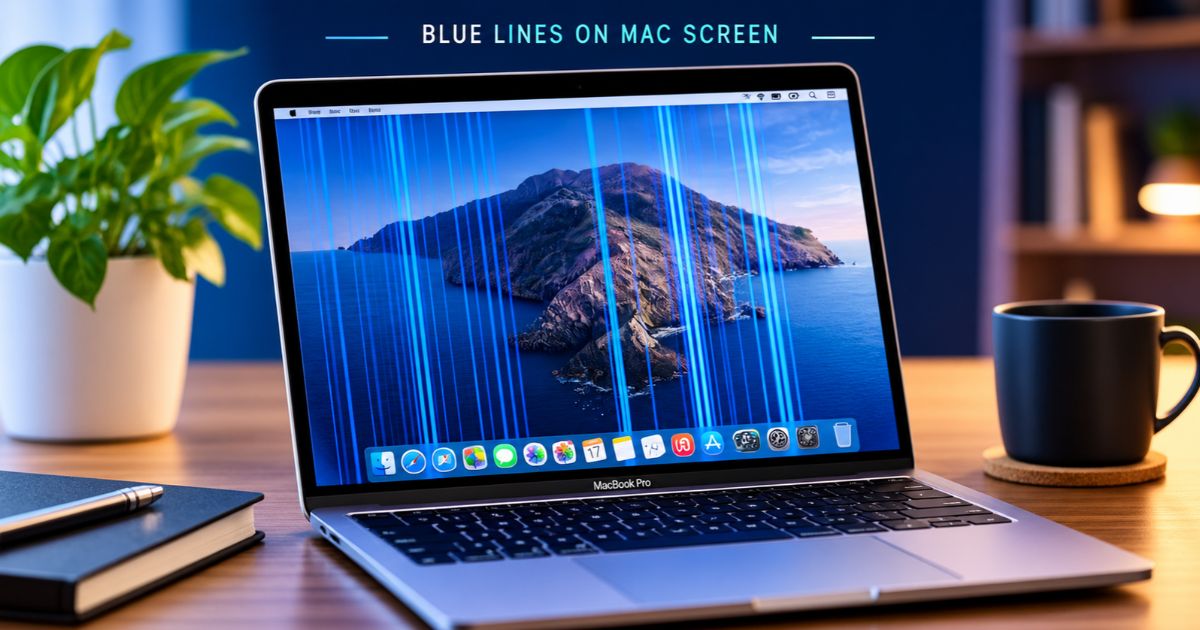
Blue lines on Mac screen usually point to a problem with the display panel, the internal display connection, or the graphics output. Sometimes a software glitch is to blame. How the lines look and behave can help you narrow down the cause. Lines that vanish after a restart suggest a temporary glitch, while lines that stay put or react to pressure on the lid suggest hardware.
This guide explains the likely causes, safe tests you can run at home, and when to get a professional inspection.
Key Takeaways
- Blue lines can come from display hardware, internal connections, software, or graphics problems. The pattern of the lines is your best clue.
- Safe first steps are a restart, a macOS update, disconnecting accessories, and running Apple Diagnostics.
- A screenshot test and an external display test can give useful clues, but neither is a complete diagnosis.
- Lines that persist, or that appear after a drop, pressure, or liquid exposure, deserve a professional hardware inspection.
- Never open your Mac to “check the cable” yourself.
Why Are There Blue Lines on My Mac Screen?
Display Panel or Pixel Problems
The display panel is made of millions of tiny pixels and the electronics that drive them. If part of that panel or its driving circuitry fails, you may see colored lines.
An isolated pixel defect usually looks like a small dot that stays one color. A continuous blue line running across or down the screen is different. It more often points to a problem with a whole row or column of the display. Panel faults tend to be stable, so the line stays in the same place whatever you do on screen.
Loose or Damaged Display Connections
Inside a MacBook, a thin cable carries the picture from the logic board to the display. Repeated opening and closing of the lid, heat, or an impact can stress that connection.
A connection problem can cause lines that flicker or change as you tilt the screen. Because this part sits inside the case, it is not something to fix yourself. Opening a Mac can also damage it further and may affect your coverage.
Software or Graphics-Related Issues
Not every display problem is hardware. A software bug, an incomplete update, or a graphics glitch can briefly corrupt what appears on screen. These issues often show up only in certain apps, after waking from sleep, or while an external display is connected.
Software is only one possibility. Don’t assume a restart will fix lines that are stuck in the same place.
Physical Damage or Liquid Exposure
A drop, a heavy object in a bag, pressure on the closed lid, or a spill can damage display layers or internal connections. Colored lines sometimes appear right after such an event, and sometimes days later.
Blue lines do not always mean your Mac was damaged. If there was an impact or liquid exposure, though, treat that as important information for a technician.
How to Identify the Cause of Blue Lines
Check Whether the Lines Appear in a Screenshot
Press Command-Shift-3 to capture the whole screen. Then open the image on another device, such as your phone or another computer.
- If the lines appear in the screenshot, the image itself may be affected. That points toward software or graphics.
- If the lines do not appear, the problem may be happening after the image is created. That points toward the display or its connection.
This test gives clues, not a verdict. Some graphics or hardware faults behave differently from what you would expect, so don’t treat the result as final.
Connect an External Display
Connect your Mac to an external monitor or TV and check the picture there.
- If the external screen looks clean while the built-in display still shows lines, the built-in display or its connection is more likely at fault.
- If the external screen shows similar lines, the cause may sit closer to the graphics system or software.
This test also has limits. An external display uses a different output path, so a clean picture does not prove the built-in screen is the only problem.
Observe the Lines Carefully
Take a minute to note how the lines behave:
- Are they vertical or horizontal?
- Are they permanent or intermittent?
- Do they flicker, or stay stable?
- Do they appear at startup, in one app, or after sleep?
- Do they change when you tilt the lid or press near the edge?
Write these details down. They help a technician, and they help you tell a glitch from a persistent hardware symptom.
Consider Recent Changes
Think back over what changed before the lines appeared:
- A drop, bump, or pressure on the lid
- A spill or exposure to moisture
- A recent macOS update
- A new adapter, dock, or external display
A clear link between one event and the lines can save a lot of guessing.
How to Fix Blue Lines on a Mac Screen
Restart Your Mac
Save your work and restart. A restart is a reasonable first step because it clears temporary graphics and software glitches. It cannot repair physical damage, so if the lines return immediately, move on to the next steps.
Update macOS When Appropriate
Go to Apple menu > System Settings > General > Software Update, and install any available update. Apple recommends installing the latest updates before running diagnostics. See Apple’s guide on how to update macOS.
An update may fix a software-related display bug, but it is not a guaranteed fix. If the lines are caused by hardware, an update will not remove them.
Disconnect External Accessories
Shut down your Mac and unplug nonessential devices such as USB hubs, adapters, drives, and external displays. Then start it again and see whether the lines change.
If they disappear, reconnect your accessories one at a time to find the one that triggers them. If nothing changes, the accessories are probably not the cause.
Run Apple Diagnostics
Apple Diagnostics helps check whether a hardware component might be at fault. The steps differ by Mac type:
- Apple silicon Macs: Hold the power button until startup options appear, then press and hold Command-D.
- Intel Macs: Turn on your Mac and hold the D key as it starts.
Apple suggests disconnecting everything except your keyboard, mouse, display, and power first. On macOS Tahoe 26 and later, you can choose a specific test, such as the built-in display. Follow Apple’s official instructions on how to use Apple Diagnostics.
If you get a reference code, write it down and give it to the repair provider. A clean result does not rule out every display fault, so don’t let it talk you out of an inspection if the lines persist.
Arrange a Professional Display Inspection
Get your Mac checked if the lines stay after the steps above, if the screen has visible damage, or if the problem began after an impact or liquid exposure. Options include an Apple Store, an Apple Authorized Service Provider, or a qualified independent repair provider. You can start at Apple Support for Mac.
When Should You Repair or Replace the Screen?
A temporary glitch tends to be inconsistent. It may disappear after a restart or update and stay away. A persistent hardware symptom keeps returning, stays in the same place, or gets worse.
Get a prompt inspection if you notice:
- Lines that appear every time you start the Mac
- Lines that spread, multiply, or are joined by other colors
- Flickering, dark patches, or a cracked or pressed-in screen
- Lines that change when you move the lid
- Any liquid exposure
The right fix depends on your Mac model and a confirmed diagnosis. It could be as small as a connection repair or as large as a full display replacement. Don’t pay for a screen replacement before the cause is identified.
Backup your important data if you can. Time Machine or iCloud works well, and doing it before a repair is a good habit.
How Much Does It Cost to Fix Blue Lines on a Mac Screen?
Repair costs vary a lot, so there is no single reliable number. The main factors are:
- Mac model and age: Newer MacBooks often use a single display assembly, which can cost more to replace.
- Type of repair: A connection repair is different from a full display replacement.
- Warranty or coverage: Apple’s limited warranty, AppleCare, or a consumer-law remedy may change what you pay. Accidental damage and liquid exposure are often treated differently.
- Repair provider: Apple, authorized providers, and independent shops price differently, and warranty terms on the repair can differ too.
For an accurate figure, get a quote that names the exact repair. Ask for the diagnosis in writing and compare it against the cost of the part and labor.
FAQs
Why are there blue lines on my Mac screen?
The cause may be a display panel fault, a damaged internal connection, a graphics or software glitch, or physical or liquid damage. The pattern of the lines and the tests above help narrow it down.
Can blue lines on a Mac screen disappear on their own?
Sometimes. A software-related glitch may clear after a restart or update. Lines caused by hardware usually come back or get worse.
Do blue lines always mean the screen is damaged?
No. They can come from software or graphics problems too. But lines that persist, or that follow an impact or spill, are more likely to be hardware-related.
Can a software update fix blue lines on a MacBook?
It can if the cause is a software bug. It will not fix a damaged panel or connection, so treat it as one step in troubleshooting, not a promise.
Should I continue using my Mac if blue lines appear?
If the lines are minor and you have backed up your data, short-term use is usually possible. Stop using it if you see liquid exposure, a cracked screen, spreading lines, or other signs of damage, and get it inspected.
When should I contact Apple or a qualified repair provider?
Contact them when the lines persist after a restart, update, and Apple Diagnostics, or when the problem followed a drop, pressure, or liquid exposure.
Final Thoughts
For blue lines on a Mac screen, start with the safe checks: restart, update, unplug accessories, test a screenshot and an external display, then run Apple Diagnostics. Together they help you tell a temporary glitch from a hardware problem without opening your Mac.
Identify the cause before you pay for a repair. If the lines persist, back up your data and book an inspection, then ask for a clear diagnosis before approving any screen replacement.
Editorial notes: No repair prices are included because current US pricing could not be verified. The Apple Diagnostics link is the en-ie version supplied in the brief; consider swapping to the en-us version after checking it matches.
Recent Article : MacBook Screen Internally Cracked? Causes & Fixes

Jennifer Aston is a passionate poetry curator and writer with a deep love for the written word. She believes poetry has the power to heal, inspire, and connect people across all walks of life. Through PoemSteric, she brings together timeless and modern verses for every emotion and every moment.