
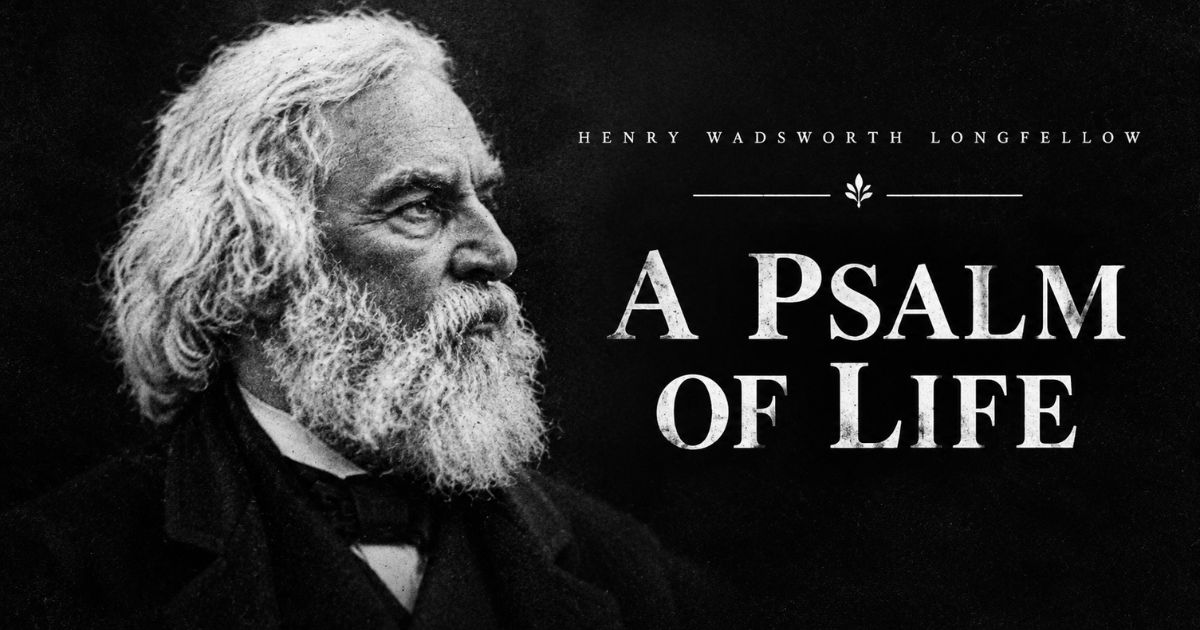
Introduction
The speaker in the poem “A Psalm of Life” is not Henry Wadsworth Longfellow himself. It is a fictional, personified figure called the “Heart of the Young Man,” who speaks directly to a second character, “the Psalmist.” Longfellow tells us this himself in the poem’s own subtitle: “What the Heart of the Young Man Said to the Psalmist.”
That subtitle is the answer key. It names both the speaker and the listener before a single line of verse begins. However, plenty of study guides and quiz sites skip straight past it, which is exactly why the confusion around this question keeps spreading online.
In close readings of this poem with students, the mix-up almost always starts the same way: someone reads “Life is real! Life is earnest!” in first person and assumes Longfellow is speaking about his own life. As a result, the correct, textually supported answer gets buried under guesswork. This guide fixes that with the evidence, not just the claim.
Key Takeaways
- The speaker of “A Psalm of Life” is the personified “Heart of the Young Man,” not Longfellow.
- The listener the speaker addresses is “the Psalmist,” a symbolic figure representing fatalistic, resigned religious teaching.
- The poem is a dramatic monologue, a form where a fictional persona not the poet speaks throughout.
- Longfellow wrote the poem in 1838, not long after his first wife’s death, which explains its themes even though he isn’t the literal speaker.
- Many sites wrongly credit Longfellow as the speaker because the poem uses “I” and “we,” a common but avoidable misreading of persona-based poetry.
The Subtitle That Solves the Mystery: “What the Heart of the Young Man Said to the Psalmist”
Longfellow rarely left his intentions to guesswork, and this poem is a clear example. Before the poem was collected into his 1839 volume Voices of the Night, its full title read: “A Psalm of Life: What the Heart of the Young Man Said to the Psalmist.” That colon splits the poem into two roles a speaker and a listener and names both.
The “Heart of the Young Man” is not a metaphor for Longfellow’s own feelings; it’s a dramatized voice, separate from the poet, given the job of arguing a specific position. For example, when the poem opens with “Tell me not, in mournful numbers, / Life is but an empty dream!”, that line is a direct rebuttal aimed at the Psalmist, not a general statement from Longfellow’s own diary.
Understanding this distinction matters for exam answers. If a test asks “who is speaking,” the textually correct response is “the personified Heart of the Young Man,” with the subtitle cited as evidence. Naming Longfellow instead is a common error that costs points on literature exams precisely because the poem tells you otherwise in its own subtitle.
Why Longfellow Personified the Heart, Not the Man
Longfellow could easily have subtitled the poem “What a Young Man Said to the Psalmist” and left it there. Instead, he chose “Heart,” which is a deliberate and specific choice. The heart, in this context, represents feeling and instinct rather than calculated reason the emotional core of youth arguing back against cold doctrine.
This choice also raises the stakes of the argument. A young man’s opinion could be dismissed as inexperience; a young man’s heart speaking with conviction reads as something closer to an instinctive, almost involuntary truth. Consequently, the poem’s persuasive force comes from feeling, not philosophy, which fits its urgent, sermon-like tone.
Who is “The Psalmist” the Speaker Is Arguing With?
The Psalmist is the second character named in the subtitle, and understanding this role clarifies the whole poem. A psalmist, historically, is a composer of biblical psalms most notably associated with Ecclesiastes’ famous refrain that “all is vanity,” a fatalistic view that earthly life and effort are ultimately meaningless.
The Heart of the Young Man’s entire argument is a rebuttal to that worldview. For instance, when the speaker insists “Life is real! Life is earnest! / And the grave is not its goal,” he is directly contradicting the Psalmist’s implied claim that life is only a fleeting dream leading to death. The poem, in short, stages an argument between resigned religious fatalism and youthful, active faith in the present.
Why So Many Sites Wrongly Say Longfellow Himself Is the Speaker
This mistake is common enough that it deserves its own explanation, rather than a quick dismissal. The poem is written entirely in first person, using “I,” “me,” and later “our” and “us.” Readers naturally associate first-person pronouns with the poet’s own voice, especially in a poem that feels this personal and confessional in tone.
However, first person in poetry does not automatically mean autobiography. This is one of the most common mis-readings in introductory literature courses, and it isn’t unique to this poem dramatic monologues by Robert Browning and others create the same confusion for the same reason.
Quick Q&A: Is Longfellow the speaker of “A Psalm of Life”?
No. Longfellow is the author of the poem, but the subtitle explicitly assigns the speaking role to “the Heart of the Young Man.” Authors and speakers are different roles, even when a poem sounds deeply personal.
It’s also worth noting a real scholarly nuance here: some annotated editions point out that Longfellow used the word “psalm” generically in his own private notes, referring to several poems as “a psalm of life” or “a psalm of death.” That naming habit is about the title, though, not the identity of the in-poem speaker the subtitle still assigns the speaking role to the Heart of the Young Man, and that distinction is exactly what gets lost when sites skim the poem’s front matter too quickly.
Dramatic Monologue Explained: How the Device Shapes This Poem
A dramatic monologue is a poem in which a fictional or historical persona not the poet speaks the entire piece, usually addressing a silent or implied listener. The form lets a poet argue a position, explore a mindset, or dramatize a conflict without claiming it as personal testimony.
“A Psalm of Life” fits this definition precisely. The speaker (Heart of the Young Man) addresses a specific listener (the Psalmist) throughout, building an argument stanza by stanza rather than simply describing a feeling. As a result, the poem reads less like a diary entry and more like one side of a debate, which is why its tone is urgent and instructive rather than reflective.
This matters for interpretation. For example, when the poem shifts from “I” to “we” and “us” partway through, the speaker isn’t randomly changing subjects he’s widening his argument from a personal rebuttal into advice for all of mankind, a natural move within a persuasive monologue. Recognizing the device changes how a reader should weigh every line: not as Longfellow’s confession, but as a case being argued.
Step-by-Step: How to Identify the Speaker in Any Poem
Because this is a skill exam questions test repeatedly, here is a repeatable method, using “A Psalm of Life” as the working example.
- Check the title and subtitle first. Longfellow’s subtitle names both the speaker and listener outright — always read this before the poem itself.
- Look for pronoun shifts. Notice where “I” becomes “we” or “you”; shifts often signal a change in who is being addressed, not who is speaking.
- Identify the listener, if one exists. “A Psalm of Life” only makes sense once you know the speaker is arguing with “the Psalmist,” not simply thinking aloud.
- Separate the poet from the persona. Ask whether the voice is making claims that fit the poet’s real biography, or arguing a position that could belong to anyone in that role.
- Confirm with direct textual evidence. Quote the actual lines that support your answer — for instance, citing the subtitle itself is stronger evidence than a general impression of tone.
Applying this method here, every step points to the same answer: the personified Heart of the Young Man, not Longfellow, is speaking.
The Historical Context Behind “A Psalm of Life”
Longfellow wrote “A Psalm of Life” in July 1838 at his home in Cambridge, Massachusetts, not long after the death of his first wife, Mary Storer Potter, who died in the Netherlands in 1835 following complications from a miscarriage. He was, by his own account, still “rallying from depression” when he wrote it, and he kept the manuscript private for a time before it was published anonymously attributed only to “L.” in the October 1838 issue of The Knickerbocker magazine.
A conversation with his Harvard colleague Cornelius Conway Felton reportedly helped crystallize the poem; the two had discussed how to bear oneself “doughtily in Life’s battle,” a phrase that echoes directly through the poem’s closing calls to action. The poem was later collected in Longfellow’s 1839 volume Voices of the Night.
This context explains why the poem carries such personal urgency, even though Longfellow is not its literal speaker. He channeled his own grief and resolve into a fictional persona rather than writing directly as himself a common and effective choice in 19th-century verse, and one more reason the poem rewards careful attention to who, exactly, is speaking.
Quick comparison — what changes if you (correctly) identify the speaker as the Heart of the Young Man, versus (incorrectly) assuming it’s Longfellow:
| Reading | If speaker = Longfellow | If speaker = Heart of the Young Man |
| Tone | Reads as autobiography | Reads as persuasive argument |
| “I” and “we” | Treated as literal confession | Treated as a rhetorical device |
| Exam answer | Marked incorrect | Matches the poem’s own subtitle |
FAQs
Q: Who is the speaker in the poem A Psalm of Life?
A: The speaker in the poem a psalm of life is the personified “Heart of the Young Man,” as stated directly in the poem’s subtitle, “What the Heart of the Young Man Said to the Psalmist.” He is not Longfellow himself, but a fictional persona created to argue against a fatalistic view of life. This is confirmed by the poem’s dramatic monologue structure, in which the speaker addresses a specific listener throughout.
Q: Who is the Psalmist in A Psalm of Life?
A: The Psalmist is the listener the speaker addresses throughout the poem, representing a fatalistic religious worldview similar to Ecclesiastes’ claim that life is fleeting and ultimately meaningless. The Heart of the Young Man directly rebuts this view, insisting that “Life is real! Life is earnest!” The Psalmist never speaks in the poem; the entire piece is the young man’s one-sided argument against that position.
Q: Is A Psalm of Life autobiographical?
A: Not literally, even though Longfellow drew on his own life for its emotional urgency. He wrote it in 1838 while recovering from depression after his first wife’s death, but he assigned the speaking role to a fictional persona, the Heart of the Young Man, rather than writing in his own voice. So the poem’s feeling is personal, but who is the speaker in the poem a psalm of life is, by design, not Longfellow.
Q: What type of poem is A Psalm of Life?
A: “A Psalm of Life” is a dramatic monologue, meaning a fictional persona speaks the entire poem to an implied listener. It consists of nine four-line stanzas in trochaic tetrameter with an ABAB rhyme scheme, giving it a steady, march-like rhythm often compared to hymn meter, fitting for a poem that calls itself a “psalm.”
Q: What is the main message of A Psalm of Life?
A: The poem argues that life should be lived actively and purposefully rather than passively endured while waiting for death or an afterlife. The speaker urges readers to “act in the living Present” and leave behind “footprints on the sands of time,” rejecting the idea that earthly effort is meaningless.
Q: Why do so many sources say Longfellow is the speaker of A Psalm of Life?
A: This mistake usually comes from the poem’s heavy use of first-person pronouns like “I” and “we,” which readers assume signal the poet’s own voice. However, first-person narration in poetry doesn’t automatically mean autobiography; Longfellow explicitly separated himself from the speaker by naming “the Heart of the Young Man” in the poem’s own subtitle.
Final Thoughts
The direct answer holds up under every kind of scrutiny: the speaker in “A Psalm of Life” is the personified “Heart of the Young Man,” addressing “the Psalmist,” exactly as Longfellow’s own subtitle states. Longfellow wrote the poem, but he did not speak it in his own voice he built a dramatic monologue instead, a distinction that separates a correct exam answer from a common, avoidable mistake.
The single most useful habit to take from this guide is simple: always read a poem’s title and subtitle before deciding who is speaking. In “A Psalm of Life,” the answer was there from the very first line of front matter, waiting to be read.
Recent Article : The Swing Poem by Robert Louis Stevenson: Summary & Mean

Jennifer Aston is a passionate poetry curator and writer with a deep love for the written word. She believes poetry has the power to heal, inspire, and connect people across all walks of life. Through PoemSteric, she brings together timeless and modern verses for every emotion and every moment.