
Introduction
What does John Berryman want to convey through this poem, “The Ball Poem”? He wants readers to understand that loss is an unavoidable part of growing up, and that no replacement, whether a new ball or comforting words, can truly heal that first real experience of grief. Through a simple scene of a boy losing his ball into the harbour, Berryman captures a much larger truth about learning to live with what cannot be recovered.
In my own reading of this poem, its power comes from how ordinary the setup seems at first. If you searched for what John Berryman wanted to convey through this poem, you now have the direct answer. However, understanding how Berryman builds this message through imagery, structure, and his own life experience adds real depth to a simple summary.
As a result, this article walks through the poem’s background, its central themes, and a clear method for explaining Berryman’s message in your own words.
Key Takeaways
- John Berryman wants to convey that loss, even something as small as a lost ball, is a necessary and unavoidable part of growing up.
- The poem argues that money and replacements cannot heal emotional loss, since what matters is the attachment, not the object itself.
- Berryman published “The Ball Poem” in 1948 in his first major collection, “The Dispossessed.”
- The poet deliberately does not intervene or comfort the boy, showing that some lessons must be learned alone.
- The poem’s famous phrase, “the epistemology of loss,” suggests that losing something teaches us a form of knowledge no one can give us directly.
For example, readers often compare this poem to their own childhood memory of losing something precious, which is exactly the universal experience Berryman wanted to capture. Readers often tell us that this simple scene stays with them long after finishing the poem, precisely because it mirrors a moment almost everyone has lived through.
What Does John Berryman Want to Convey Through This Poem? Understanding the Central Message
John Berryman was born John Allyn Smith on October 25, 1914, in McAlester, Oklahoma, and later took the surname Berryman after his mother remarried. He became one of the most important American poets of the twentieth century and a founding figure of the Confessional school of poetry, which focused on deeply personal, emotional subject matter. “The Ball Poem” appeared in his 1948 collection, “The Dispossessed,” his first major published work.
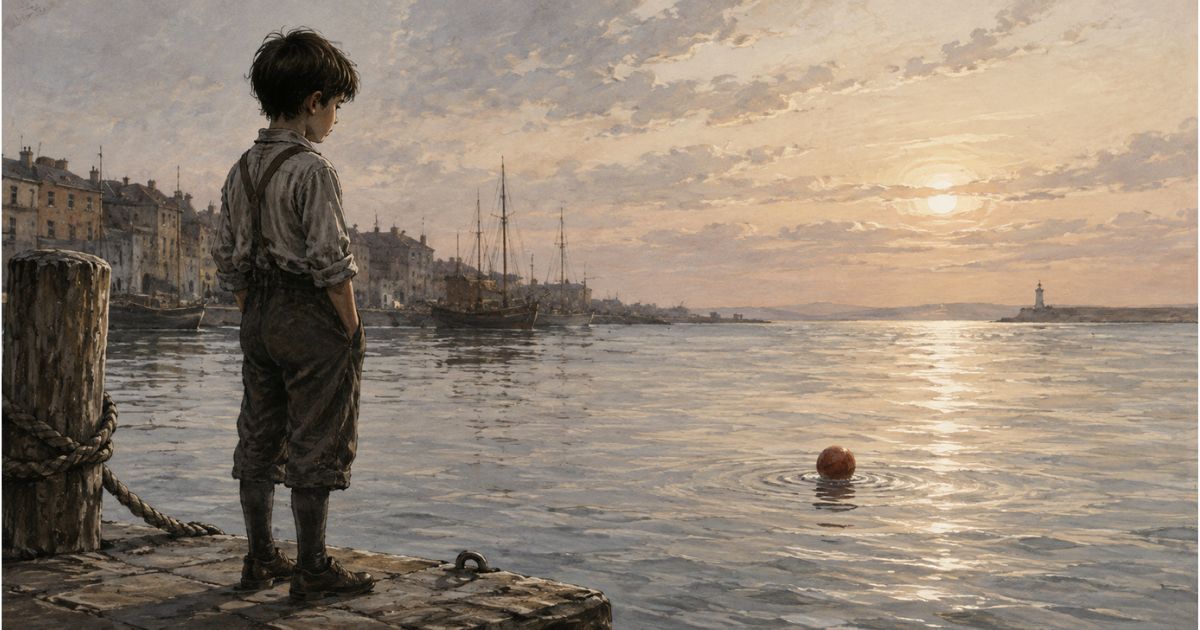
The poem opens with a direct question: “What is the boy now, who has lost his ball?” This immediately signals that the poem is not really about the ball itself, but about what happens to a person after loss. Berryman shows the boy standing rigid and trembling, staring into the harbor where his ball has disappeared, and refuses to offer easy comfort like “there are other balls.”
Through this refusal, Berryman conveys his central message clearly: real loss cannot be undone by simple substitution. A dime or a replacement ball is, in the poem’s own words, “worthless,” because the boy is not simply missing an object. He is experiencing, for perhaps the first time, the reality that some things, once gone, are gone permanently.
Berryman’s Personal Life and Why Loss Shaped His Writing
Understanding Berryman’s own history helps explain why loss became such a powerful, recurring theme in his poetry. His father died by suicide when Berryman was just twelve years old, an event that deeply affected him for the rest of his life. This early, devastating loss likely shaped his lifelong preoccupation with grief, memory, and the difficulty of moving forward after something precious is taken away.
Berryman himself struggled with emotional instability and alcoholism throughout his adult life, and he tragically died by suicide in 1972. For instance, critics often note that “The Ball Poem,” written decades before his death, already hints at themes of despair and the search for meaning within loss. This context does not make the poem autobiographical in a literal sense, but it does explain why its emotional honesty feels so genuine.
The Symbolism Behind the Boy and the Ball
The boy in the poem represents every person’s first true encounter with irreversible loss, making him a symbol rather than a specific individual. Berryman never names the boy, which allows readers to see themselves in his position rather than viewing him as a distant character. This choice strengthens the poem’s universal message about growing up.
The ball itself symbolizes childhood innocence, carefree joy, and the illusion that everything can be replaced or fixed. However, as it disappears into the harbor, it takes that innocence with it. As a result, the boy’s grief is not really about the toy; it is about the sudden, unwelcome awareness that adulthood requires accepting loss without guarantee of recovery.
Step-by-Step: How to Explain Berryman’s Message in an Essay
Breaking Berryman’s message into clear steps makes it much easier to explain confidently in an essay or exam answer.
- Start with the literal event. State that a young boy loses his ball, which rolls into the harbor and disappears from view.
- Identify the emotional reaction. Note that the boy stands “rigid, trembling,” showing genuine grief rather than minor disappointment.
- Explain why comfort fails. Point out that the poet considers offering comfort but recognizes that money or a replacement ball is “worthless” against real emotional loss.
- Connect the ball to a larger idea. Explain that the ball symbolizes childhood innocence, and its loss marks the beginning of a harder, more knowing stage of life.
- Introducing the poem’s key phrase. Mention “the epistemology of loss,” which suggests loss itself teaches knowledge that cannot be taught any other way.
- State Berryman’s overall message clearly. Conclude that Berryman wants readers to understand that growing up requires learning to carry loss forward, rather than expecting it to be fixed or forgotten.
For example, using this structure helps you move logically from the poem’s simple story to its much deeper philosophical point, which is exactly what strong literary analysis requires. In contrast, summarizing only the plot, without exploring this symbolism, misses the poem’s real purpose.
FAQs
Q: What does John Berryman want to convey through this poem?
A: Berryman wants to convey that loss is an unavoidable, necessary part of growing up, and that it cannot be undone through comfort, money, or replacement. Using the simple image of a boy losing his ball, he shows how real grief teaches lessons that shape a person’s understanding of life. The poem suggests that accepting loss, rather than avoiding or denying it, is essential to genuine emotional maturity.
Q: Why doesn’t the poet comfort the boy in the poem?
A: The poet chooses not to intervene because he recognizes that offering comfort, like suggesting “there are other balls,” would trivialize the boy’s genuine grief. This decision reflects Berryman’s broader message: some experiences must be faced directly, without shortcuts or easy reassurance. By stepping back, the speaker respects the boy’s process of learning an important truth about loss on his own terms.
Q: What is the significance of the phrase “epistemology of loss”?
A: This phrase suggests that loss itself is a form of knowledge, something that can only be understood through direct experience rather than being taught or explained beforehand. Berryman uses this idea to elevate a simple childhood moment into a philosophical statement about how people learn to process grief. It reinforces what John Berryman wants to convey through this poem: that real understanding often comes only through personal loss.
Q: When was The Ball Poem published, and where did it appear?
A: “The Ball Poem” was first published in 1948 as part of John Berryman’s collection “The Dispossessed,” his first major book of poetry. This collection helped establish Berryman as an important voice in American poetry, years before his later, more famous work, “77 Dream Songs,” won the Pulitzer Prize in 1965. The poem remains one of his most widely studied and anthologized early works.
Q: How does the boy’s loss relate to growing up in general?
A: The boy’s loss functions as a symbol for the broader process of growing up, where innocence gradually gives way to a more difficult, realistic understanding of life. Just as the boy cannot get his ball back, people eventually face experiences that cannot be reversed or replaced. This is central to what John Berryman wants to convey through this poem: that maturity requires learning to live with, rather than escape, that reality.
Final Thoughts
John Berryman turned a simple, everyday moment, a boy losing his ball, into a lasting statement about grief, growth, and the limits of comfort. His refusal to offer easy solutions makes the poem feel honest rather than sentimental, reflecting his own lifelong understanding of loss. This honesty is precisely why the poem continues to resonate with readers decades after its 1948 publication.
However, the poem’s lasting value lies not in sadness alone, but in what it teaches about resilience. For example, the boy’s ability to stand, watch, and eventually move forward mirrors how people everywhere learn to carry loss without being destroyed by it. That quiet strength, more than the lost ball itself, is the deeper truth Berryman wanted every reader to walk away with.
Recent Article : How the Poet Observed Nature: A Beautiful Insight

Jennifer Aston is a passionate poetry curator and writer with a deep love for the written word. She believes poetry has the power to heal, inspire, and connect people across all walks of life. Through PoemSteric, she brings together timeless and modern verses for every emotion and every moment.