
Introduction
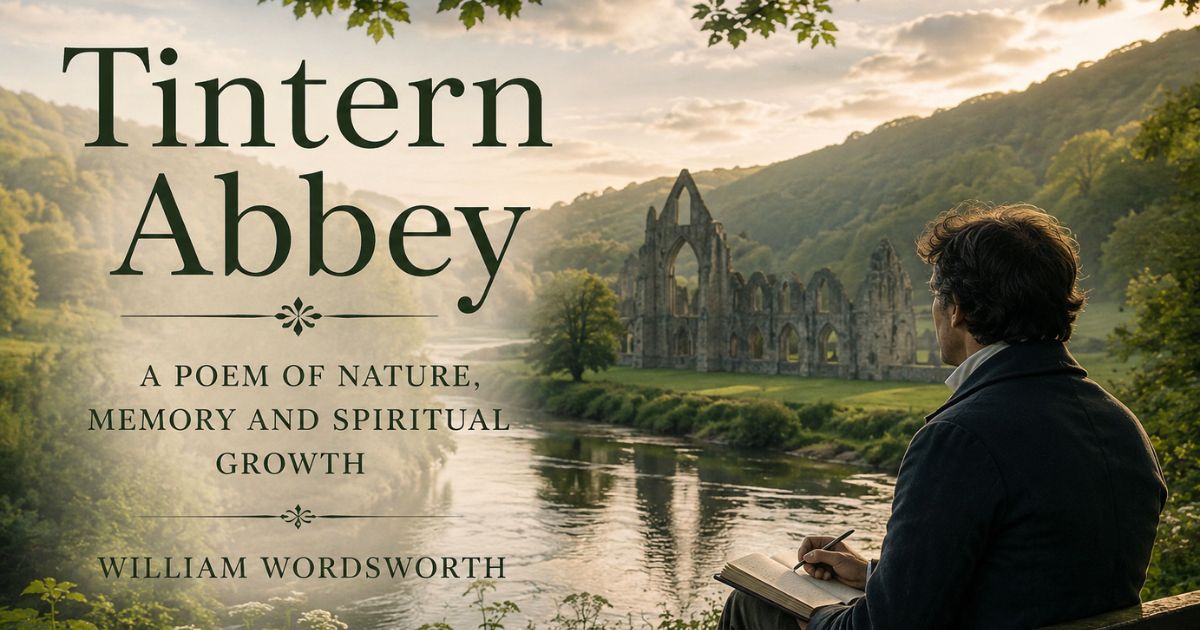
The main theme of the poem Tintern Abbey is the healing and spiritually restorative power of nature, paired closely with the role memory plays in keeping that power alive even after we’ve left a place behind. William Wordsworth wrote the poem after revisiting the banks of the River Wye near Tintern Abbey five years after his first visit, and the entire piece is built around comparing who he was then to who he has become.
In my own reading of the poem, what makes it powerful isn’t just the praise of nature, it’s the honest admission that our relationship with nature changes as we grow older, yet never fully disappears.
Key Takeaways
- The poem’s central theme is nature as a source of emotional and spiritual healing.
- A second, closely linked theme is memory of how past experiences in nature continue to comfort us later in life.
- Wordsworth traces three stages of his relationship with nature: childhood wonder, youthful passion, and mature reflection.
- The poem is addressed partly to his sister, Dorothy, suggesting nature’s benefits can be passed on to loved ones.
- Readers often tell us this poem feels less like a nature description and more like a personal, meditative confession.
- The poem helped define core ideas of the Romantic movement: emotion, memory, and nature over pure reason.
What Is the Main Theme of the Poem Tintern Abbey?
At its core, Tintern Abbey explores how a natural landscape can restore a person’s inner peace long after they’ve physically left it. Wordsworth describes returning to the same spot along the River Wye after five years away, and instead of simply describing the scenery, he spends most of the poem reflecting on how the memory of this landscape sustained him during difficult periods in the city, “in lonely rooms, and mid the din of towns and cities.”
This is the key insight that makes the theme land: nature isn’t just a place Wordsworth enjoys visiting. It becomes an internal resource, something he carries with him and draws on when life feels overwhelming. That distinction between nature as scenery and nature as sustaining memory is what separates this poem from a simple landscape poem and turns it into one of the defining works of English Romanticism.
Nature as a Living, Active Force
Wordsworth doesn’t describe nature as passive scenery in the background of his life. He treats it almost as a living presence with the power to shape his moods, thoughts, and even his moral character. Lines describing “a motion and a spirit that impels all thinking things” show that, for Wordsworth, nature and the human mind are deeply connected, not separate.
A Personal, Not Just Descriptive, Poem
Unlike many nature poems of earlier periods that focused purely on describing beautiful scenery, Tintern Abbey uses the landscape as a launching point for personal reflection. The poem constantly shifts between what Wordsworth sees in front of him and what he remembers feeling the first time he stood in that same spot years earlier.
How Nature Shapes the Speaker Across Three Stages of Life
One of the clearest structural choices in the poem is Wordsworth’s decision to break his relationship with nature into three distinct stages, and understanding these stages step by step makes the poem’s theme much easier to grasp.
- As a boy, Wordsworth experienced nature through pure physical sensation: running, playing, and feeling joy without needing to understand why. He describes this stage as instinctive and almost animal-like in its simplicity.
- In his young adult years, his connection to nature became more intense and emotional, almost overwhelming. He describes an “appetite” and “a feeling and a love” that required no deeper thought; nature moved him purely through its beauty and power.
- By the time he writes the poem, Wordsworth’s relationship with nature has become more reflective and philosophical. He now hears in nature “the still, sad music of humanity,” meaning he connects natural beauty to deeper truths about human suffering, mortality, and moral growth.
This progression matters because it shows the poem isn’t only about nature, it’s about how a person’s understanding of nature (and of themselves) naturally deepens with age. Wordsworth isn’t nostalgic for his younger self in a simple way; he sees each stage as valuable in its own right.
Memory and Time: The Poem’s Second Major Theme
If nature is the poem’s most obvious theme, memory is the mechanism that makes that nature meaningful across time. Wordsworth repeatedly emphasizes that it isn’t just his present experience at Tintern Abbey that matters, it’s his ability to store this experience as memory and return to it mentally during hard times in the future.
This is where the poem becomes especially personal. Wordsworth admits that during his years away from the countryside, living in crowded, noisy cities, it was the memory of this landscape, not the landscape itself that gave him comfort. As a result, the poem suggests that a truly meaningful experience with nature doesn’t end when you leave a place; it continues working on you internally for years afterward.
Wordsworth extends this theme by turning to his sister Dorothy near the end of the poem, hoping that she, too, will be able to draw on memories of this same landscape during her own future hardships. This shift from personal reflection to a message for someone he loves shows that, for Wordsworth, nature’s restorative power isn’t just an individual experience it’s something worth passing on.
People Also Ask: Quick Answers About Tintern Abbey
Is Tintern Abbey a religious poem?
Not in a traditional sense. While the poem uses spiritual language to describe nature’s effect on the mind, Wordsworth isn’t writing about organized religion. Instead, he treats nature itself as a source of near-spiritual comfort and moral guidance.
Why does Wordsworth address his sister in the poem?
Dorothy Wordsworth appears near the end of the poem because William hopes she will carry the same restorative memories of the landscape into her own future. It personalizes the poem’s theme, showing that nature’s benefits can extend beyond the speaker himself.
Is the poem describing a real location?
Yes, the poem is based on Wordsworth’s actual visits to the banks of the River Wye near Tintern Abbey in Wales, first in 1793 and again in 1798, five years later, which is when the poem was written.
FAQs
Q: What is the main theme of the poem Tintern Abbey?
A: The main theme is the restorative and spiritual power of nature, paired with the role memory plays in preserving that power over time. Wordsworth shows how a single landscape, once experienced deeply, can continue to comfort and shape a person’s inner life for years, even when they are far away from it physically.
Q: Why did Wordsworth write Tintern Abbey?
A: Wordsworth wrote the poem after returning to the River Wye near Tintern Abbey five years after his first visit. The experience of standing in the same place again inspired him to reflect on how his understanding of nature and of himself had changed over time.
Q: What role does memory play in the poem?
A: Memory acts as the bridge between Wordsworth’s present experience of nature and the comfort it provided him during years spent away from it. He explains that even while living in noisy cities, memories of this landscape offered him peace and emotional restoration.
Q: How does the poem reflect Romantic ideals?
A: Tintern Abbey reflects core Romantic values by prioritizing personal emotion, memory, and a deep connection to nature over strict reason or formal structure, which is one reason it’s considered a foundational poem of the English Romantic movement.
Q: Who is Dorothy in the poem, and why does she matter?
A: Dorothy is William Wordsworth’s sister, addressed directly near the end of the poem. Her presence extends the poem’s theme beyond the speaker’s personal experience, suggesting that nature’s healing power is meant to be shared with the people we love.
Final Thoughts
The main theme of the poem Tintern Abbey isn’t simply “nature is beautiful” it’s that nature has the power to heal, sustain, and shape a person’s inner life across many years, largely through the mechanism of memory. Wordsworth uses his own return to a familiar landscape to trace how his relationship with nature has matured, from childhood joy to a more reflective, adult understanding of beauty and human suffering. What makes the poem endure isn’t just its imagery of the Wye Valley, but its honest exploration of how the natural world stays with us long after we’ve walked away from it.
Recent Article : The Last Bargain: Who’s Actually Speaking in Tagore’s Poem?

Jennifer Aston is a passionate poetry curator and writer with a deep love for the written word. She believes poetry has the power to heal, inspire, and connect people across all walks of life. Through PoemSteric, she brings together timeless and modern verses for every emotion and every moment.