
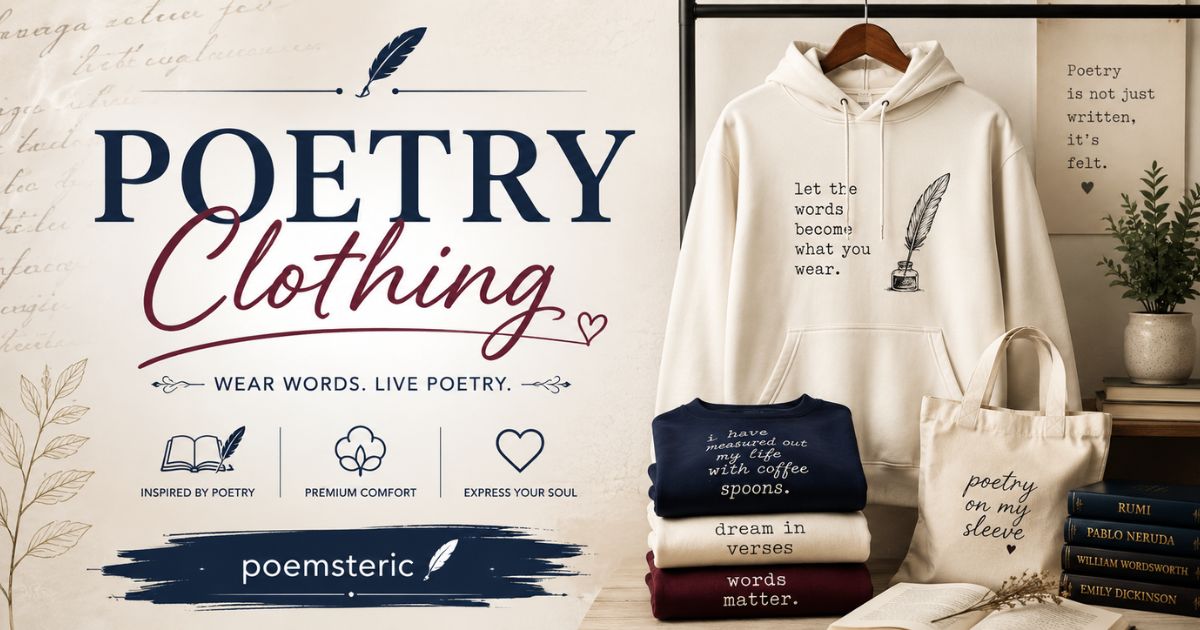
If you searched “poetry clothing,” you probably landed in one of three different places and that’s the problem with almost everything currently written about this topic. This guide covers all three, in depth, so you’re not left piecing it together yourself.
What Does “Poetry Clothing” Actually Mean?
“Poetry clothing” refers to three distinct things: Poetry, a women’s fashion retail brand known for natural-fibre, timeless pieces; the “poet shirt” or “poet blouse,” a historical loose-sleeved garment style; and poems written about clothing as a literary theme. Each has its own history, and most articles online only cover one.
Understanding which one you mean changes everything about how you shop, style, or research the term so let’s take them one at a time, starting with the brand most people are actually looking for.
Poetry the Clothing Brand: History, Ethos, and What It’s Known For
Poetry is a women’s fashion retailer built around natural fibres and understated, long-lasting design rather than fast-fashion trend cycles. The brand positions itself against mass production, aiming instead at shoppers who want fewer, better pieces dresses, linen separates, knitwear, and accessories that hold up over years of wear rather than a single season.
The brand’s founder, Luke Dashper, has been associated with a “slower fashion” philosophy: prioritizing quality and durability over rapid turnover, with collections built around natural materials (the brand frequently markets itself as using over 99% natural fibres, primarily linen, cotton, and silk). This is a meaningful point of differentiation in a market where “sustainable fashion” claims are often vague. Poetry’s specific, repeated materials claim is more concrete than most competitors offer, though as with any brand claim, it’s worth treating as a marketing statement rather than an independently verified certification.
Poetry operates internationally, with a retail and e-commerce presence spanning the UK, US, and other markets, and maintains sister-brand relationships (notably with Wrap London) that share similar design sensibilities. Store presence includes physical locations in cities such as London and New York, alongside a global online storefront.
Is Poetry Clothing Good Quality? What Customer Reviews Actually Show
Customer reviews are mixed but lean positive on fabric quality and negative on sizing consistency. Multiple review platforms show praise for the softness and durability of the natural fibres, alongside recurring complaints that garments run noticeably larger than labeled sizing suggests, and some inconsistency in return/exchange handling.
This is a genuinely useful, underreported detail: several long-term customers report using the brand’s detailed garment measurement charts (rather than standard size labels) to get a reliable fit, since actual dimensions can vary more than the printed size would imply. If you’re buying poetry clothing for the first time, measuring a well-fitting piece you already own and comparing it directly to the garment measurement table – not just the size number -is the single most effective way to avoid a return.
Fabric care is also worth noting: because the collections lean heavily on linen and silk rather than synthetics, pieces generally require gentler laundering (cool washes, air-drying) than wardrobes built around polyester blends. This isn’t a flaw, but it is a real cost-of-ownership factor that thin brand pages rarely mention.
What Is a Poet Shirt (or Poet Blouse)?
A poet shirt, also called a poet blouse, is a loose-fitting shirt style with full “bishop” sleeves, typically finished with large frills at the front and cuffs and a laced V-neck opening. It’s a distinct historical garment not a brand name and understanding it fills in a gap almost no “poetry clothing” content currently covers.
The style descends from 17th- and 18th-century shirts worn by aristocrats as fine, ruffled undergarments, later blended with the plainer, open-necked shirts worn by working men. Its modern form draws heavily on Romanticism, and it became a popular style for boys’ clothing in the 19th century before being adopted for pseudo-historical costuming in 20th-century film swashbucklers, pirates, and similar period roles. Common fabrics include linen, cotton, satin, and velvet, with frills either matching the main fabric or made of lace.
Though originally a menswear style, the poet blouse is worn by all genders today and is still referred to interchangeably as a “shirt” or “blouse” regardless of who’s wearing it. If you’re shopping specifically for this look rather than the Poetry brand, search “poet blouse” or “bishop sleeve blouse” to filter results more precisely, a keyword distinction most retailers don’t make clear.
Poems About Clothing: The Literary Tradition
Clothing has long served poets as a way to explore memory, identity, loss, and intimacy often more effectively than direct description could. A handful of widely anthologized poems illustrate the range of this theme:
- “Upon Julia’s Clothes” by Robert Herrick a 17th-century short poem in which the movement of fabric becomes a way of admiring the wearer, a classic example of clothing used as a sensory metaphor rather than mere description.
- “Father’s Old Blue Cardigan” by Anne Carson uses a specific, worn garment to carry grief and memory of an absent parent, a technique common in contemporary elegy.
- “For a Daughter Who Leaves” by Janice Mirikitani clothing and departure intertwine as a mother reflects on a child’s independence.
- “Duality” by Tina Chang explores identity and cultural inheritance partly through the lens of dress.
- “Derrick Poem (The Lost World)” by Terrance Hayes a contemporary example of clothing imagery woven into a broader meditation on identity and place.
What ties these together is that clothing in poetry rarely stays literal for long, a cardigan becomes a stand-in for a father, a piece of fabric becomes a memory of youth. If you’re researching this angle for creative or academic purposes, that’s the throughline worth citing: clothing works as poetic material precisely because it’s intimate, worn against the body, and inherited or discarded in ways that mirror relationships themselves.
How to Style Poetry-Inspired Clothing
Whether you’re building a wardrobe around the Poetry brand’s natural-fibre philosophy or the poet-blouse silhouette specifically, a few practical principles apply:
- Let natural fabrics breathe in the layering. Linen and silk drape differently than synthetics to avoid over-structuring the rest of the outfit, and let the poet blouse or linen piece be the visual anchor.
- Balance volume with fit. A poet blouse’s full sleeves and frilled front already add visual weight up top paired with a slimmer-fitting bottom (tailored trousers, a straight skirt) rather than doubling up on volume.
- Size down when the review flag runs-large fabrics. As noted above, this is a documented pattern with the Poetry brand specifically checking garment measurements, not just labeled size.
- Treat care instructions as part of the styling decision. A gentle-wash-only wardrobe works best if you’re not rotating it daily; plan pieces accordingly if you have a high-frequency wear schedule.
FAQs
What is poetry clothing?
“Poetry clothing” most often refers to Poetry, a women’s fashion brand focused on natural fibres and timeless design. The phrase can also refer to the “poet shirt/blouse,” a historical loose-sleeved garment style, or to poems written about clothing as a literary subject.
What is a poet shirt or poet blouse?
A poet shirt is a loose-fitting blouse with full bishop sleeves and frilled trim, historically descended from 17th–18th century aristocratic shirts and popularized through Romanticism and period costuming.
Is the Poetry clothing brand good quality?
Reviews consistently praise the brand’s fabric quality and durability but flag inconsistent sizing many pieces run larger than labeled, so checking garment measurement charts is recommended over relying on size labels alone.
What are some well-known poems about clothing?
Notable examples include Robert Herrick’s “Upon Julia’s Clothes,” Anne Carson’s “Father’s Old Blue Cardigan,” and Janice Mirikitani’s “For a Daughter Who Leaves,” each using a garment as a vehicle for memory or identity rather than simple description.
Recent Article : What Is Assonance in Poetry, and Why Does It Sound So Good?
This guide draws on brand information, historical garment references, and aggregated customer review data current as of 2026. Sizing and fabric details reflect patterns reported across multiple independent review platforms and may vary by specific product line or season.

Jennifer Aston is a passionate poetry curator and writer with a deep love for the written word. She believes poetry has the power to heal, inspire, and connect people across all walks of life. Through PoemSteric, she brings together timeless and modern verses for every emotion and every moment.