
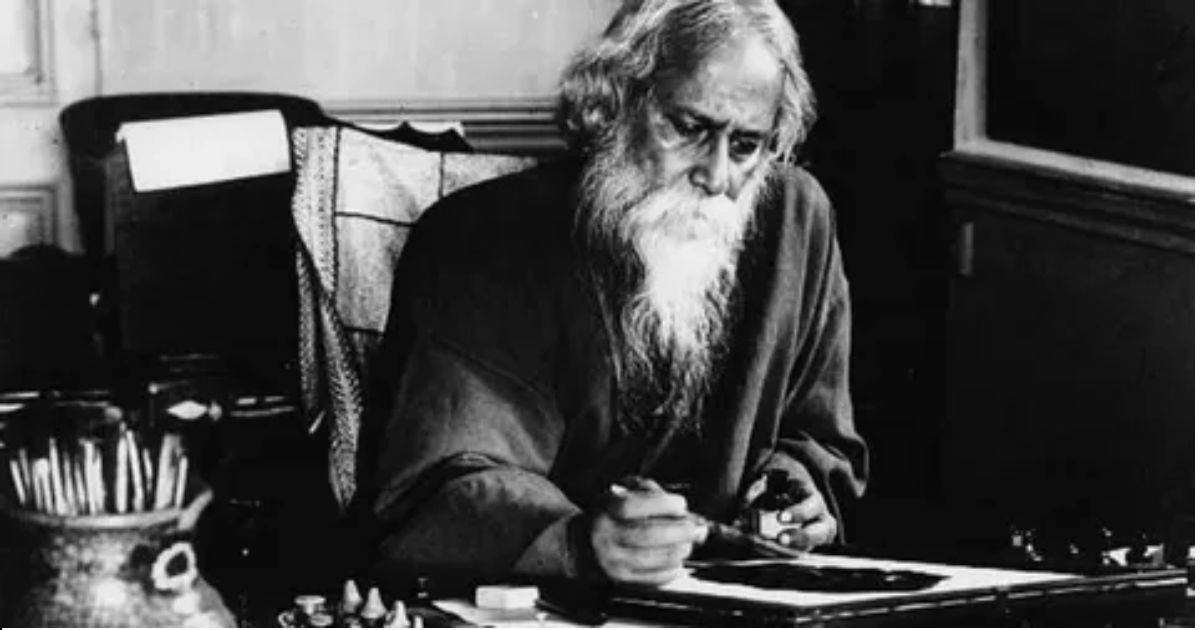
Rabindranath Tagore poems continue to resonate across generations, offering timeless wisdom wrapped in lyrical beauty. Born in Kolkata in 1861, Tagore reshaped Bengali literature and gave the world a new way to see poetry not just as words on paper, but as living, breathing expressions of the human soul. His work bridges the gap between the earthly and the divine, the personal and the universal, making him one of the most translated poets in history. Whether you are a student seeking inspiration, a lover of literature, or someone searching for meaning in chaotic times, Tagore’s verses provide a sanctuary.
This article explores 15 of his most significant poems, unpacks their deeper meanings, and shows why these Rabindranath Tagore poems remain essential reading in 2024 and beyond. From the patriotic fervour of “Where the Mind is Without Fear” to the spiritual depth of Gitanjali, we journey through themes of freedom, love, nature, and hope. Each poem is analysed not just for its literary merit, but for its practical relevance to modern life how it speaks to mental health, social media culture, climate anxiety, and the search for authentic living. By the end, you will not only understand Tagore better but feel equipped to carry his wisdom into your daily life.
Who Was Rabindranath Tagore?
Rabindranath Tagore lived from 1861 to 1941, a lifespan that saw the transformation of India from a British colony to a nation awakening to its own identity. He was the first non-European to win the Nobel Prize in Literature in 1913, a moment that stunned the Western literary establishment and announced to the world that profound poetic genius existed beyond Europe. The Swedish Academy recognized him for his collection Gitanjali, which W.B. Yeats described it as having “stirred my blood as nothing has for years.” Tagore’s ranking as the 18th greatest poet of all time by the Top 500 Poets list reflects his enduring global influence.
Beyond poetry, he wrote novels, essays, plays, and composed over 2,000 songs. He founded Visva-Bharati University, envisioning education as a meeting point between Eastern and Western traditions. Most Indians know him as the composer of “Jana Gana Mana,” India’s national anthem, while Bangladesh honors him for “Amar Shonar Bangla.”
But why does Tagore matter in 2024-2025? In an age of algorithm-driven content and shrinking attention spans, his work offers something radical: slowness, depth, and sincerity. When young people today grapple with anxiety, identity crises, and the pressure to perform, Tagore’s lines like “Let my thoughts come to you, when I am gone, like the afterglow of sunset at the margin of starry silence” provide emotional ballast. His critique of nationalism in essays like “Nationalism” feels prophetic in our polarized times. Modern readers find in him not a distant historical figure, but a companion who understands the complexities of being human.
15 Tagore Poems Everyone Should Read
National Pride & Freedom
“Where the Mind is Without Fear”
This poem, originally number 35 in Gitanjali, has become India’s unofficial spiritual anthem. Tagore writes:
Where the mind is without fear and the head is held high
Where knowledge is free
Where the world has not been broken up into fragments
By narrow domestic walls…
Into that heaven of freedom, my Father, let my country awake.
Stanza by stanza, Tagore builds a vision of an ideal society. The first two lines demand psychological liberation, freedom from fear and inferiority complexes imposed by colonial rule. “Knowledge is free” attacks the British monopoly on education, where Indians were taught to memorize rather than think critically. “Narrow domestic walls” refers to caste, religion, and regional divisions that fracture Indian unity. The poem is not merely political; it is a prayer. Tagore addresses “my Father,” framing freedom as divine will rather than human achievement.
In 2024, this poem speaks directly to social media toxicity. Online spaces have become new “narrow domestic walls” where algorithms trap us in echo chambers. The “fear” Tagore describes manifests today as canceling culture, doxxing, and the anxiety of public shaming. When he asks for a place “where words come out from the depth of truth,” he anticipates our crisis of misinformation. Reading this poem as a digital detox anthem reciting it before opening Twitter or Instagram can center us in authenticity.
“Freedom”
Less famous but equally powerful, this poem distinguishes between political liberty and spiritual emancipation. Tagore writes, “Freedom from fear is the freedom I claim for you, my motherland!” Unlike “Where the Mind is Without Fear,” which focuses on collective awakening, “Freedom” explores individual emancipation from internal bondage fear of death, fear of loss, fear of judgment. Where the former is a public prayer, the latter is a private meditation. Together, they show Tagore’s complete vision: external revolution must be matched by internal evolution.
Divine & Spiritual
“Gitanjali 35”
Many readers do not realize that “Where the Mind is Without Fear” is actually Gitanjali poem number 35. Understanding its original context deepens its meaning. In the full collection, this poem appears amid verses about the soul’s journey toward God. The “heaven of freedom” is not just a political utopia but a state of spiritual realization. Tagore wrote these poems during a period of personal loss his wife, daughter, and father had died in quick succession. The Nobel Prize committee recognized how Tagore transformed grief into universal art. W.B. Yeats, who wrote the introduction to the English Gitanjali, noted that Tagore’s poems “seem to have been written by a child who has been taught by some old religious man.” This combination of innocence and wisdom makes the spiritual content accessible rather than preachy.
“Unending Love”
This love poem transcends romantic clichés through its metaphysical depth. Tagore writes, “I seem to have loved you in numberless forms, numberless times…” The line suggests reincarnation and eternal recurrence, the idea that love is not bound by a single lifetime. Unlike Western love poetry that often focuses on possession (“How do I love thee? Let me count the ways” Elizabeth Barrett Browning), Tagore’s love is about recognition. He sees the beloved in “life after life, in age after age, forever.” This makes the poem timeless because it speaks to anyone who has felt love that seems to predate memory itself. Modern readers connect it to the concept of soulmates, while psychologists might see it as describing attachment styles that feel predestined.
“Lamp of Love”
Using the metaphor of a lamp, Tagore explores how divine love illuminates without consuming. “Light, oh where is the light?” The poem begins, capturing the universal human search for meaning. The lamp becomes a symbol of sustainable spirituality; it burns steadily rather than flaring and dying. In an era of “spiritual burnout” where people binge on wellness trends then crash, this poem offers a model of consistent, gentle devotion.
Nature & Beauty
“Paper Boats”
From The Crescent Moon, Tagore’s collection for children, this poem captures a child’s imagination: “Day by day I float my paper boats down the running stream.” The boats carry the child’s name and village, hoping strangers will find them. This simple act contains profound trust in the world’s kindness a quality adults often lose. In the digital age, the poem connects to how we share personal stories online, hoping for connection across virtual “streams.” The difference is that Tagore’s child expects no reply, finding joy in the act itself. This offers a critique of our validation-seeking social media behavior.
“Clouds and Waves”
Another gem from The Crescent Moon, this poem depicts a mother calling her child home while the child wants to play with clouds and waves. The mother becomes the “stranger” who lives “on a strange shore” , a reversal where the familiar becomes foreign and vice versa. This captures the tension between security and adventure that defines childhood. Modern parenting literature emphasizes “secure attachment”; Tagore shows it through poetic imagery rather than psychological jargon.
“The Banyan Tree”
The banyan tree is a recurring symbol in Tagore’s work, representing rootedness and shelter. In this poem, the tree becomes a repository of memory, its aerial roots touching stories from generations. For diaspora Indians and anyone living away from their birthplace, the poem evokes how landscapes hold our histories even when we are absent.
Human Relationships
“Friend”
Tagore redefines friendship not as utility but as presence: “He is my friend who loves me without asking why.” This echoes Aristotle’s concept of “friendship of the good” but adds Eastern acceptance. In transactional modern relationships, networking, and influencer culture this poem is a reminder of connection without agenda.
“Waiting”
The poem explores patience as active rather than passive. “I waited for you in the morning, but you did not come” begins a series of temporal shifts that show waiting as a creative act. The speaker fills the waiting with observation, imagination, and growth. For anyone in long-distance relationships or career transitions, this reframes waiting not as wasted time but as fertile ground.
“On the Nature of Love”
Distinguishing mature love from infatuation, Tagore writes, “Love is an endless mystery because there is no reasonable cause that could explain it.” This paradox love as both explicable and inexplicable captures its complexity. Unlike pop psychology that reduces love to attachment styles or chemistry, Tagore preserves its mystery while honoring its reality.
Life’s Struggles
“Give Me Strength”
This prayer-poem is particularly beloved by students: “This is my prayer to thee, my lord strike, strike at the root of penury in my heart.” Tagore asks not for removal of struggle but for strength to face it. The “penury” is not material poverty but spiritual scarcity, fear, hesitation, small-mindedness. Educational researchers today discuss “grit” and “resilience”; Tagore offers a poetic foundation for these concepts.
“Beggarly Heart”
Humility is the theme here, with the speaker asking to be freed from the “beggarly heart” that constantly wants more. In consumer culture, where advertising creates endless artificial needs, this poem is revolutionary. Tagore suggests that true wealth is wanting less, not having more.
“At the Last Watch”
Facing endings of days, relationships, life itself requires courage. This poem finds beauty in closure: “The lamp is burning low, and I must go.” There is no fear, only acceptance. For those dealing with grief or retirement, it offers a model of graceful transition.
Hope & Future
“The Child”
Tagore sees children not as incomplete adults but as teachers. “The child is father of the man,” Wordsworth wrote; Tagore adds that the child shows us how to hope. In climate anxiety and political cynicism, this poem redirects our attention to those who will inherit our choices, asking us to act with their future in mind.
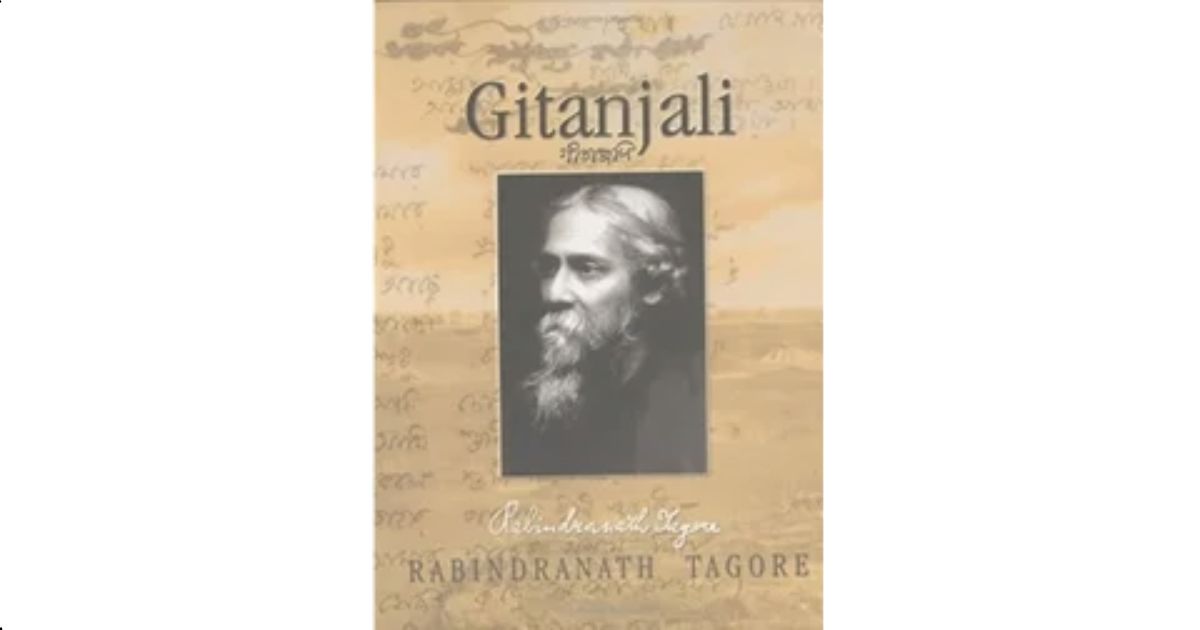
Gitanjali
Gitanjali remains Tagore’s most misunderstood work. The title combines “Git” (song) and “Anjali” (offering), suggesting poetry as devotional gift. The 103 poems are structured as a spiritual journey, moving from alienation to union with the divine. W.B. Yeats’s introduction, written after he discovered Tagore through the painter William Rothenstein, played a crucial role in the Nobel Prize. Yeats wrote that Tagore’s poems were “the work of a supreme culture,” yet seemed “as much the growth of the common soil as the grass and the rushes.” This combination of refinement and rootedness defines the collection.
Three themes dominate: nature as divine manifestation, the dignity of common life, and love for God that transcends religious dogma. Tagore’s God is not denominational but experientially found in “the shade of the tree,” “the smile of the child,” and “the sweat of the labourer.” This universalism made Gitanjali accessible to Western readers unfamiliar with Hindu philosophy while remaining deeply authentic to Tagore’s Bengali sensibility.
For readers seeking to explore further, the Internet Archive hosts authoritative editions of Gitanjali in English translation, allowing free access to this foundational text.
Tagore’s Poetry Themes Decoded
Nature as God
Tagore’s nature worship goes beyond Romantic aestheticism. For him, the monsoon is not merely weather but divine blessing: “The rain has held back for days and days, my God, in my arid heart.” This line from Gitanjali shows nature as a spiritual barometer: external landscapes mirror internal states. Unlike Western environmental writing that often frames nature as resource or refuge, Tagore sees it as an active participant in human awakening. The banyan tree, the river, the monsoon cloud are not metaphors but presences that teach and transform.
Love in All Forms
Tagore’s love poetry operates on three levels simultaneously. Divine love (Bhakti) appears in poems like “Lamp of Love,” where the beloved is explicitly God. Human love (Romantic) fills The Gardener, with sensual imagery that shocked some contemporary Indian critics. Universal love (Humanism) emerges in poems about strangers, laborers, and enemies. This threefold structure allows readers to enter at any level seeking spiritual comfort, romantic expression, or social ethics and find depth.
Freedom Beyond Politics
Tagore’s most radical insight is that political freedom without spiritual freedom is hollow. “Where the Mind is Without Fear” is often read as nationalist anthem, but its deepest request is for “the heaven of freedom” where the soul is unconfined. Tagore criticized Gandhi’s non-cooperation movement when he felt it bred hatred, showing that his commitment was to liberation of consciousness, not merely transfer of power. In 2024, as democracies worldwide face crises of meaning, this distinction matters more than ever.
Death as New Beginning
Western poetry often treats death as tragic finality (Dylan Thomas’s “Rage, rage against the dying of the light”). Tagore offers an alternative: “Death, thy servant, is at my door.” By personifying death as servant rather than master, Tagore transforms fear into hospitality. The poem “At the Last Watch” shows dying as natural as sunset, beautiful, necessary, and followed by stars.
Tagore in 2024-2025: Why He Still Matters
Tagore’s relevance is not nostalgic but urgent. Mental health practitioners note how “Give Me Strength” functions as anxiety relief, the rhythmic repetition and concrete imagery ground racing minds. Social media critics use “Where the Mind is Without Fear” as a framework for digital detox, noting how “narrow domestic walls” describe algorithmic echo chambers. Climate activists find in his nature poems language for environmental awareness that avoids both doomist and techno-optimism. The “anti-hustle culture” movement rediscovers “Leave This Chanting,” where Tagore writes, “Leave this chanting and singing and telling of beads! Whom dost thou worship in this lonely dark corner of a temple with doors all shut?” a critique of performative spirituality that applies equally to performative productivity.
How to Read Tagore
Start Here
English translations by Tagore himself, while imperfect, offer the most authentic entry point. Begin with Gitanjali for spiritual depth, The Crescent Moon for accessible beauty, or The Gardener for romantic intensity. Avoid modern “retellings” that simplify his language; the slightly archaic diction is part of the experience.
Move to Bengali
For those wanting deeper connection, Roman transliteration editions allow pronunciation without learning the script. Key words to know: “mon” (heart/mind), “bhalo” (good), “asha” (hope). Hearing these in their original context enriches even English readings.
Audio Experience
Spotify and YouTube host playlists of Tagore’s songs (Rabindra Sangeet) performed by masters like Debabrata Biswas. While few recordings of Tagore’s own voice survive, early 20th-century wax cylinder recordings capture his distinctive cadence more chant than recitation, reflecting his musical conception of poetry.
Download Free Tagore Books
The Internet Archive preserves essential Tagore texts: Gitanjali (English), The Crescent Moon (children’s poems), The Gardener (love poetry), and comprehensive collected editions. These public domain works ensure Tagore remains accessible regardless of economic circumstance, honouring his belief that knowledge should be free.
FAQs
Why did Tagore win the Nobel Prize?
The Swedish Academy recognized his “profoundly sensitive, fresh and beautiful verse,” particularly in Gitanjali, which offered Western readers spiritual insight without exoticism. He was the first non-European laureate, marking a shift in global literary consciousness.
What is Tagore’s most famous poem?
“Where the Mind is Without Fear” holds this status in India, recited at schools and independence day events. Globally, poems from Gitanjali like “Unending Love” have wider recognition.
Is Gitanjali in English or Bengali?
Tagore translated his Bengali poems into English prose-poetry for the Nobel-winning edition. The original Bengali Gitanjali differs significantly more musical, more culturally specific. Both versions reward study.
Which Tagore poem is best for students?
“Give Me Strength” offers practical inspiration without sentimentality, asking for courage to face challenges rather than removal of challenges. Its structure also teaches effective prayer/petition writing.
Did Tagore write India’s national anthem?
Yes, “Jana Gana Mana” was composed in 1911 and adopted as India’s national anthem in 1950. He also wrote “Amar Shonar Bangla,” adopted by Bangladesh in 1972.
Final Thought
Rabindranath Tagore poems remain vital because they address the permanent while acknowledging the changing. In an era of disposable content, his work demands and rewards sustained attention. Whether you encounter him through a school textbook, a Spotify playlist, or a quiet moment with Gitanjali, Tagore offers something increasingly rare: the sense of being truly seen and understood. His poetry does not provide answers so much as better questions about freedom, love, nature, and what it means to live fully. As we navigate the complexities of 2024 and beyond, his voice serves as both anchor and compass, reminding us that the “heaven of freedom” is not a destination but a way of traveling.
Recent article : 60 Graduation Poems for 2026: Every Moment Covered

- 50+ Best Poems About God | Inspirational, Short & Famous Verses - April 1, 2026
- 30 Types of Poems | Complete Guide with Examples for Every Poet - March 28, 2026
- Long Distance Love Poems | 33 Heartfelt Poems for Every Emotion - March 27, 2026