
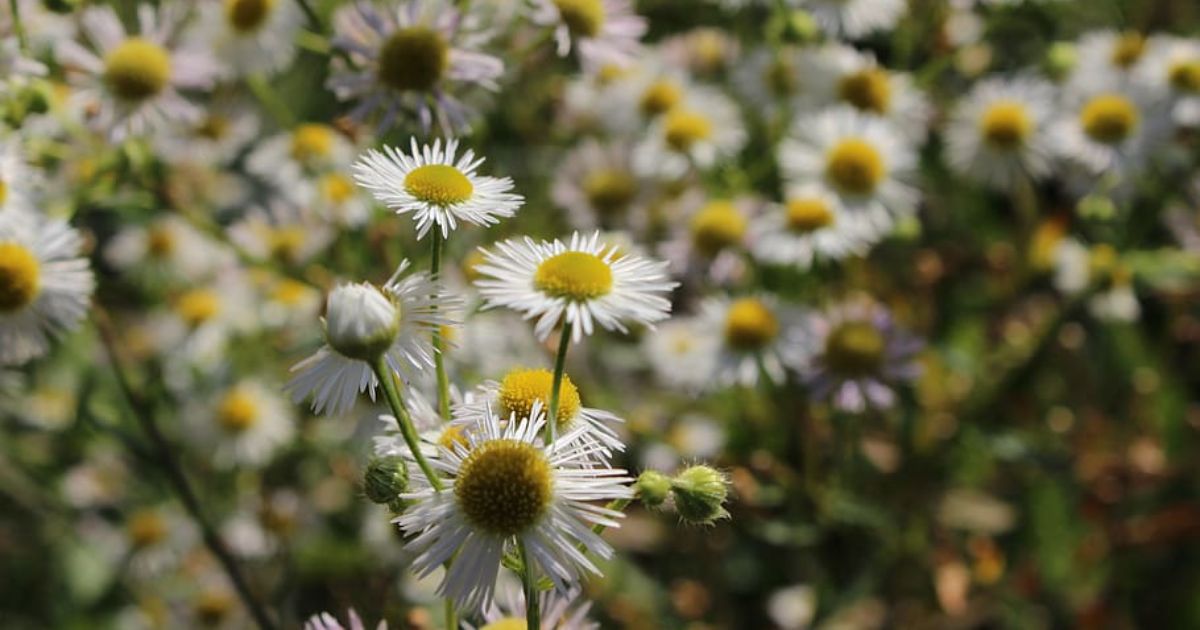
Flowers have whispered to poets for thousands of years. They have spoken of love and death, of secrets and betrayals, of beauty so sharp it cuts. But somewhere between the Romantic era’s daffodil fields and Instagram’s filtered peonies, we lost the dangerous edge of floral poetry. We forgot that the rose has thorns not as decoration, but as warning. We ignored that the most beautiful blooms often carry the deadliest poisons.
This collection returns flowers to their rightful place in poetry: as complex, contradictory, sometimes violent metaphors that refuse to sit quietly in vases. Here you will find poems about flowers that kill, flowers that outlive their poets, flowers that became codes for spies and lovers and prisoners. You will discover queer flowers that challenged Victorian gender norms, extinct flowers that exist now only in verse, and artificial flowers generated by machines learning to imitate human longing.
The botany of longing is not safe. It is not pretty. It is alive with danger, desire, and the eternal human hope that something beautiful might save us or destroy us with equal grace. This collection of poems about flowers refuses the safe, the pretty, and the expected.
Poison Gardens: The Assassin’s Floral Verses
These poems about flowers reveal what traditional anthologies hide: the danger, the desire, the death. Long before flowers became symbols of innocent love, they served as weapons. The poison garden is not a metaphor. It is a real place, carefully cultivated, where every petal and leaf carries the potential for death. Poets have always known this. They understood that beauty and danger share the same root system.
Atropa Belladonna: The Beautiful Lady’s Murder Weapon
These poems about flowers reveal what traditional anthologies hide: the danger, the desire, the death. The name itself contains the deception. Atropa comes from the Greek Fate who cuts the thread of life. Belladonna means “beautiful lady” in Italian, referring to the Renaissance practice of women using the berry juice to dilate their pupils for seduction. The same drops that made eyes dark and mysterious could stop a heart in hours.
Victorian poets were obsessed with this paradox. They wrote of women who walked through gardens at midnight, gathering berries that looked like innocent black cherries. The beautiful lady became the assassin, the victim, and the poet herself, all at once. In anonymous ballads from the 1860s, we find the “Belle of the Ball” who carries belladonna in her locket, not for suicide but for justice. The poems do not judge her. They simply observe that the most dangerous weapons are often the most beautiful.
The chemical reality is stark. Atropine, the alkaloid in belladonna, blocks the nervous system’s ability to regulate heart rate and breathing. In poetry, this becomes a metaphor for love that overrides reason, for passion that kills slowly while the lover smiles. The poison garden teaches us that destruction wears a lovely face.
Aconitum Napellus: Wolfsbane and the Gothic Imagination
These poems about flowers reveal what traditional anthologies hide: the danger, the desire, the death. Wolfsbane does not hide its danger. The deep blue helmet-shaped flowers stand tall in mountain meadows, warning every creature that approaches. In Greek myth, it sprang from the saliva of Cerberus when Hercules dragged the three-headed dog from the underworld. It has always belonged to the borderlands between life and death.
Gothic poets of the nineteenth century found in wolfsbane the perfect symbol for forbidden knowledge. To know the flower is to risk death. To write about it is to flirt with darkness. Tennyson never named wolfsbane directly in “The Lady of Shalott,” but the poem’s atmosphere that blue, that isolation, that sudden death carries the flower’s signature. The lady weaves her magic web, surrounded by images of the world she cannot touch, until the curse finds her as surely as poison finds the blood.
The Victorian language of flowers gave wolfsbane the meaning “misanthropy.” This was not accurate botany but accurate psychology. The flower stands apart, magnificent and deadly, wanting nothing from the world but to be left alone. Poets who felt similarly outcast found their mirror here. The Gothic imagination understood that some beauty exists precisely to keep people away.
Papaver Somniferum: The Opium Poppy’s Poetic Dreams
These poems about flowers reveal what traditional anthologies hide: the danger, the desire, the death. Samuel Taylor Coleridge did not write about the opium poppy directly in “Kubla Khan.” He did not need to. The poem’s famous origin story interrupted by a “person from Porlock” while the poet was in an opium dream tells us everything. The pleasure dome with its caves of ice, the sacred river running through measureless caverns, the woman wailing for her demon-lover: these are poppy visions, the hypnagogic state where images float free from logic’s gravity.
Francis Thompson’s “The Poppy” makes the connection explicit. The poem follows the flower from garden to pharmacy to the dreams of those who cannot sleep without it. Thompson, who struggled with addiction himself, understood the poppy’s double nature. It heals pain and creates pain. It gives dreams and takes reality. The poem does not moralize. It simply presents the flower in its complexity, asking the reader to decide whether the trade is worth making.
Modern addiction poetry continues this thread. The poppy has become the symbol for all substances that promise transcendence while delivering dependence. But the older poems remind us that the flower itself is innocent. It does not force itself on anyone. It simply grows, offers its sap, and watches what humans choose to do with it.
Conium Maculatum: Hemlock and the Philosopher’s Death
These poems about flowers reveal what traditional anthologies hide: the danger, the desire, the death.Socrates chose hemlock. Condemned to death by the Athenian state for corrupting youth and impiety, he could have escaped into exile. Instead, he accepted the cup, drank the poison, and continued teaching until his legs grew heavy and the cold reached his heart. The hemlock was not his enemy. It was his final tool for demonstrating that the philosopher’s duty is to truth, even when truth costs everything.
Robert Frost’s “The Death of the Socrates” reimagines this moment not as tragedy but as strange victory. The poem focuses on the physical details the numbness spreading upward, the need to lie down, the final words about a debt to Asclepius that must be paid. Frost understood that hemlock allowed Socrates to control his own ending, to make death into one last lesson. The poison became the philosopher’s friend, granting him the dignity that execution by sword would have denied.
Hemlock looks like an innocent wild parsley. It grows in ditches and meadows, its white flowers in umbrella-shaped clusters deceptively similar to edible herbs. This mimicry is its survival strategy, and poets have found in it the perfect metaphor for dangerous ideas that look like common sense. The hemlock in poetry is always asking: do you know what you are consuming? Are you certain this thought will not kill you?
Betrayed Blooms: When Flowers Turned Against Their Poets
These poems about flowers reveal what traditional anthologies hide: the danger, the desire, the death. We think of poets as masters of their metaphors, bending nature to serve human meaning. But sometimes the flowers resist. Sometimes they outlive the poet, or become something the poet never intended, or turn commercial in ways that make the original verse seem naive. These are the betrayed blooms, the flowers that escaped into the world and forgot their creators.
The Daffodil Industrial Complex: Wordsworth’s Tourist Trap
William Wordsworth did not write “I Wandered Lonely as a Cloud” about tourism. He wrote it about a moment of unexpected joy, seeing thousands of daffodils dancing beside a lake when he was walking with his sister Dorothy in 1802. The poem remembers that moment years later, when the poet lies on his couch in “vacant or in pensive mood,” and the memory flashes upon his inward eye. It is a poem about solitude, about the mind’s power to recreate beauty, about the relationship between nature and memory.
Now visit Grasmere in the Lake District. Visit in March or April when the daffodils bloom. You will find the “Daffodil Garden,” a carefully maintained patch of ground where tour buses disgorge hundreds of visitors daily. You will find gift shops selling daffodil tea towels, daffodil refrigerator magnets, daffodil-scented candles that smell nothing like real daffodils. You will find tourists taking selfies with the flowers, posting them with captions about “wandering lonely as a cloud” when they have never been less alone in their lives.
The betrayal is complete. Wordsworth’s private vision has become public property. His moment of spontaneous joy has become a scheduled stop on the itinerary. Contemporary Lake District poets have responded with satire, with anger, with elegies for what tourism has destroyed. But the daffodils themselves do not care. They bloom every spring, indifferent to the commerce that surrounds them, dancing in the breeze exactly as Wordsworth described. The flowers keep their promise. It is humans who break it.
Tulips That Outlived Sylvia Plath: A Hospital Elegy
Sylvia Plath wrote “Tulips” in 1961, recovering in a hospital bed after surgery. The poem begins with the speaker’s desire for emptiness, for the “winter” of the hospital with its white sheets and white walls and white uniforms. The tulips arrive, a gift from her husband, and they ruin everything. They are too red, too alive, too demanding. They “eat my oxygen,” the speaker complains. They force her back into a body she was trying to escape.
The poem is often read as Plath’s suicide note, written two years before her actual death. But this misreads the tulips. They are not symbols of death in the poem. They are symbols of life, of the world’s refusal to let the speaker disappear. The tulips win. They force her to notice color, to feel her own heartbeat, to acknowledge that she is still attached to the living world. The betrayal, if there is one, is that the tulips succeeded where the hospital failed. They kept her alive long enough to write the poem, and then they kept blooming after she was gone.
Plath’s actual death makes “Tulips” unbearably poignant. We read it now knowing that the flowers’ victory was temporary, that the speaker would eventually find a way to escape that the tulips could not prevent. But the poem itself does not know this. In the poem, the tulips are triumphant, red and loud and impossible to ignore. They outlived their poet, and in doing so, they became something she never intended: not symbols of her death, but witnesses to her struggle to stay alive.
Blake’s Sunflower: 200 Years of Misreading
William Blake’s “Ah! Sun-flower” is short enough to quote entire:
“Ah Sun-flower! weary of time,
Who countest the steps of the Sun:
Seeking after that sweet golden clime
Where the traveler’s journey is done.
Where the Youth pined away with desire,
And the pale Virgin shrouded in snow:
Arise from their graves and aspire,
Where my Sun-flower wishes to go.”
For two centuries, readers have understood this as a poem about spiritual aspiration. The sunflower turns its head to follow the sun across the sky. Therefore, Blake must be praising this devotion, this yearning for the light. The “sweet golden clime” is heaven, or enlightenment, or some other desirable end state. The sunflower becomes a symbol for the human soul seeking God.
This is wrong. Blake was a radical critic of slavery and colonialism. The “sweet golden clime” is not heaven it is the west, the Americas, the source of the slave trade’s wealth. The “Youth” and “Virgin” are not abstract figures; they are the enslaved people whose labor funded the European economy. The sunflower is not aspiring; it is complicit, turning toward the source of its own nourishment while ignoring the violence that nourishment requires. Blake’s sunflower is guilty, not holy.
The misreading persists because we want flowers to be innocent. We want them to represent pure beauty, pure desire, pure spiritual longing. Admitting that Blake’s sunflower participates in systemic violence forces us to examine our own complicity. The flower that betrays its poet is the one we invented to replace the one he actually wrote.
Mary Oliver’s Wildflowers: From Pulitzer to Pinterest
Mary Oliver won the Pulitzer Prize for Poetry in 1984. She wrote about wildflowers with an attention that felt like prayer. Her most famous lines “Tell me, what is it you plan to do with your one wild and precious life?” comes from “The Summer Day,” a poem about paying attention to a grasshopper, about kneeling in the grass, about being idle and blessed. The poem ends with that question, which is not really a question but a challenge. Oliver’s wildflowers demanded that readers change their lives.
Now search “Mary Oliver wildflowers” on Pinterest. You will find thousands of images: photographs of meadows overlaid with Oliver’s text in flowing script, inspirational posters for office cubicles, tattoos of her lines wrapped around wrists and ankles. The wildflowers have become a decoration. The challenge has become comfort. Oliver’s demand that we pay attention has been replaced by the easy consumption of pretty images.
Oliver died in 2019, so she saw some of this transformation. She never commented publicly on it, but her late work grew darker, more aware of environmental destruction, less certain that attention alone could save us. The wildflowers in her final poems are threatened by climate change, by habitat loss, by the very human busyness that her earlier work tried to slow. The betrayal was not complete. The flowers still carry their warning, if we are willing to hear it beneath the Pinterest noise. These poems about flowers reveal what traditional anthologies hide: the danger, the desire, the death.
Queer Botany: Flowers as Gender Rebels
Flowers have always been gendered in poetry. Roses are feminine. Oaks are masculine. This binary seems natural because it is so familiar. But look closer at actual flowers, and the binary collapses. Many flowers contain both male and female reproductive organs. Some change sex over their lifespan. Some require third-party pollinators to reproduce at all. The natural world is queerer than our metaphors allow. These poems embrace that queerness, using flowers to explore gender in all its fluidity.
The Orchid’s Secret: Victorian Non-Binary Botany
Victorian England experienced orchidmania. Collectors sent expeditions to South America, Africa, and Asia to gather rare specimens. Orchids became symbols of wealth, of imperial reach, of the ability to dominate nature. But they also became symbols of something else, something that could not be named directly in Victorian society.
Orchids are sexual shape-shifters. Their flowers mimic female insects to attract male pollinators. Some species can change sex depending on environmental conditions. Victorian poets, writing in an era that rigidly policed gender boundaries, found in orchids a way to imagine alternatives. Algernon Charles Swinburne’s “The Orchid” describes the flower with language that slides between masculine and feminine, aggressive and receptive, dominant and submissive. The poem does not resolve into clarity. It stays in the space of ambiguity, where the orchid remains neither fully one thing nor the other.
The Victorian language of flowers tried to fix meaning. An orchid meant “beauty” or “refinement” in these dictionaries. But the poets who actually wrote about orchids knew better. They knew that the flower’s beauty was a strategy, its refinement a trap. The orchid’s secret is that gender is performance, and the flower has been performing longer than humans have been watching.
Sappho’s Violets: The Lesbian Flower Code
Sappho wrote on the island of Lesbos in the seventh century BCE. Most of her poetry survives only in fragments, quoted by later writers who found her useful for their own purposes. But one image recurs: the violet. In fragment 94, Sappho describes a lover remembering their time together: “you put on many wreaths of violets.” In fragment 96, she compares a beautiful woman to the “violet-bosomed” Muses.
The violet became a lesbian code long before the word “lesbian” existed. In the early twentieth century, when open expression of same-sex desire was dangerous, women gave each other violets as signals. Radclyffe Hall’s novel “The Well of Loneliness” uses violet imagery throughout. The color, hidden in the spectrum between blue and purple, became a metaphor for identities that existed between society’s accepted categories.
Modern poets like Adrienne Rich and Audre Lorde reclaimed Sappho’s violets, understanding them not as symbols of secrecy but of survival. The flower that grows in shade, that spreads quietly through underground runners, that blooms in early spring when other flowers are still dormant is the violet’s power. It does not need sunlight or attention. It persists.
The Lily vs. The Rose: Male Poets Exploring Femininity
The rose is the traditional flower of femininity in poetry. It is soft, fragrant, beautiful, and protected by thorns. The lily is different. It is associated with purity, with the Virgin Mary, with death and resurrection. Male poets have used both flowers to explore their own relationship to femininity, sometimes identifying with the flowers, sometimes desiring them, sometimes using them to mask their own gender anxiety.
Oscar Wilde’s “The Lily” is a prose poem from his fairy tale collection. The lily grows in a garden, despised by the other flowers for its pride, its refusal to bend. When the Nightingale comes seeking a red rose, the lily cannot help. It is white, it is proud, it is useless for the Nightingale’s sacrifice. Wilde, writing at a time when his own sexuality was criminalized, identified with the lily’s isolation, its beauty that serves no practical purpose, its ultimate irrelevance to the heterosexual plot.
Rainer Maria Rilke’s “Lilies” takes a different approach. The poem describes the flowers with almost scientific attention, noting their “white abundance,” their “calm announcement.” There is no desire in the poem, no identification. Only observation, only the attempt to see the lily as it is, without projecting human gender onto its petals. This is Rilke’s version of masculinity: the ability to look without possessing, to describe without dominating.
Anthuriums and Drag: Contemporary LGBTQ+ Poetry
The anthurium looks artificial. Its heart-shaped spathe is too red, too waxy, too perfect. It resembles nothing so much as a plastic flower, which is why florists love it and why some people dismiss it as “not a real flower.” But the anthurium is real, and its exaggerated appearance is its survival strategy. It attracts pollinators by pretending to be something it is not.
Contemporary LGBTQ+ poets have embraced the anthurium as a symbol for drag, for performance, for the deliberate construction of identity. Jericho Brown’s “The Anthurium” uses the flower to explore masculinity that refuses to be “natural,” that puts on its appearance with intention and artifice. The poem asks why we value “real” flowers over fake ones, “real” men over those who perform their gender with conscious creativity.
Ocean Vuong, in “Someday I’ll Love Ocean Vuong,” uses floral imagery more gently but no less queerly. The flowers in his poems are often associated with his mother, with Vietnam, with the trauma of immigration. But they are also associated with his own body, his own desires, his own refusal to separate love from pain. The queer botany here is not about performance but about connection, about finding in flowers a language for experiences that have no name in English.
Extinct Species: Elegies for Lost Flowers
Flowers die. Individual blooms last days or weeks. The plants themselves may survive for years, for decades, for centuries. But sometimes the entire species disappears. Climate change, habitat destruction, overcollection these forces drive flowers to extinction faster than poets can write about them. These elegies mourn not just the loss of beauty but the loss of possibility, the poems that will never be written because the flower that inspired them no longer exists.
The Middlemist Red: Two Gardens, Zero Poems
The Middlemist Red camellia is the rarest flower in the world. It exists in exactly two places: a greenhouse in the United Kingdom and a garden in New Zealand. Both plants are clones of the same original, brought from China to England in 1804 by John Middlemist, a nurseryman who gave his name to the flower. The species is extinct in the wild. It survives only through human intervention, through careful cultivation in controlled environments.
No famous poem has been written about the Middlemist Red. It is too rare, too hidden, too artificial in its survival. But its absence from poetry is itself poetic. The flower that exists in only two places, that has no wild population, that depends entirely on human care, is the flower of the anthropocene, the era when human activity determines which species live and which die. The Middlemist Red does not need poets to make it symbolic. Its existence is already a metaphor.
Contemporary poets have begun to notice. Several have written commissioned works about the Middlemist Red, trying to give it the literary existence that history denied. These poems struggle with their subject. How do you write about a flower that cannot be visited, that has no natural habitat, that exists in a kind of suspended animation? The Middlemist Red challenges poetry to find new forms for new kinds of loss.
Silphium: The Lost Roman Aphrodisiac
Silphium was the most valuable plant in the ancient Mediterranean. It grew only in a narrow coastal region of what is now Libya. The Greeks and Romans used it for everything: food, medicine, perfume, contraception. It was so important that the city of Cyrene put its image on coins. And then, by the first century CE, it was gone. Overharvesting, overgrazing, or some combination of human pressures drove silphium to extinction.
We do not know exactly what silphium looked like. Descriptions suggest a giant fennel with large yellow flowers and a thick root. We do not know if it actually worked as a contraceptive, though the Romans believed it did. We do not have a single poem written specifically about silphium, though it appears in passing in works by Theophrastus, Pliny the Elder, and other ancient writers.
A.E. Stallings wrote “Silphium” as a modern reconstruction, imagining the flower based on historical fragments. The poem treats silphium as a ghost, a presence defined by absence. We know it existed because we know it disappeared. We mourn it because we cannot remember it. The silphium in poetry is a placeholder for all the species we have lost without noticing, all the extinctions that happened before we thought to count.
The Ghost Orchid: Invisible Beauty in Verse
Dendrophylax lindenii, the ghost orchid, is not technically extinct. Small populations survive in the swamps of Florida and Cuba. But it is so rare, so difficult to find, so dependent on specific conditions that it might as well be a ghost. The flower has no leaves. Its roots cling to tree trunks, invisible against the bark. Only when it blooms usually in June or July does it reveal itself: a white flower that seems to float in midair, suspended by nothing.
Eric Ormsby’s “The Ghost Orchid” tries to capture this invisibility. The poem moves between scientific description and mystical speculation, never quite settling on either. The orchid becomes a symbol for perception itself, for the act of seeing what does not want to be seen. Ormsby understands that the ghost orchid’s rarity is its protection. If it were common, it would be destroyed. Its invisibility is its survival strategy, and the poem honors this by refusing to make the flower too visible, too available to the reader.
The ghost orchid raises uncomfortable questions about poetry’s relationship to rarity. We value what is scarce. We write about what is threatened. But our attention can be destructive. The most famous ghost orchid in literature appears in Susan Orlean’s “The Orchid Thief,” which inspired so much interest in the flower that poaching increased. The ghost orchid in poetry must be careful not to become the ghost orchid in commerce, must find a way to exist in language without becoming more vulnerable in life.
Climate Change Elegies: Flowers That Die Before Us
Robert Macfarlane and Jackie Morris created “The Lost Words” in 2017, a book of poems and paintings about nature words that were being removed from children’s dictionaries. “Acorn,” “bluebell,” “kingfisher” these words were being replaced by “broadband,” “chatroom,” “cut-and-paste.” The book became a phenomenon, spawning campaigns to get the words back into schools, to reconnect children with the natural world that was disappearing around them.
The poems in “The Lost Words” are spells, incantations designed to make the words and the things they name impossible to forget. “Bluebell” begins with the sound of the flower’s name: “Bluebell, bluebell, in your blue bell.” The repetition is hypnotic, magical, an attempt to fix the flower in memory before it disappears entirely. The bluebell is not yet extinct. But the poem treats it as if it were, as if the only way to save it is to elegize it in advance.
This is the new mode of flower poetry: the preemptive elegy. We write about flowers as if they were already gone because we fear they soon will be. The poems are not just mourning. They are warnings, attempts to make readers feel the loss before it becomes permanent. The flowers that die before us are the ones we might still save, if the poetry can make us care enough to act.
Criminal Floriography: Flowers as Spy Codes
The language of flower floriography was never innocent. In Victorian England, when direct expression of emotion was discouraged, people used bouquets to send messages. A red rose meant love. A yellow rose meant jealousy. A striped carnation meant refusal. These dictionaries allowed secret communication in plain sight, coded messages that only the initiated could read. But the code could also be used for darker purposes: espionage, resistance, prison communication, political subversion.
Wartime Ciphers: The Language of Resistance
During World War II, resistance movements across Europe used flower codes to coordinate sabotage and escape routes. A bouquet left in a specific window meant “safe house available.” A particular flower in a lapel meant “meeting tonight.” The Germans knew about the language of flowers and they had their own tradition of Blumensprache but they could not decode the specific systems that local resistance networks developed. The flowers were too common, too obviously innocent, to attract suspicion.
Poetry from this era often contains these codes, hidden in plain sight. French Resistance poems published in underground newspapers would describe flowers in ways that seemed conventional but carried specific meanings for those who knew the key. A “red poppy in the wheat field” might mean “attack the train at midnight.” A “white lily by the river” might mean “the bridge is guarded.” Reading these poems now, without the codebook, we see only nature poetry. The violence is invisible, which was exactly the point.
Tussie-Mussies: Victorian Insults in Plain Sight
The tussie-mussie was a small bouquet, tightly arranged and wrapped in lace or paper. Victorian women carried them to mask unpleasant smells, but also to communicate. A tussie-mussie could say “I love you” or “I despise you” or “meet me in the garden at midnight,” all depending on the flowers chosen and their arrangement.
The insult tussie-mussie was an art form. To tell someone they were untrustworthy, you might include yellow roses (jealousy), striped carnations (refusal), and tansy (hostile thoughts). To suggest someone’s love was false, you might combine orange lilies (hatred) and lavender (distrust). The recipient had to accept the bouquet graciously, in public, while understanding the private message. The cruelty was in the contrast between the beautiful appearance and the ugly meaning.
Catherine Barnett’s modern poem “The Language of Flowers” imagines a woman composing such a bouquet for her husband’s mistress. The poem lists the flowers meadowsweet (uselessness), rue (regret), wormwood (bitter sorrow) with scientific precision. The speaker is not angry. She is clinical, methodical, using the Victorian code with perfect control. The poem asks whether this coded communication was empowering or confining for women who had no other public voice.
The Yellow Rose of Texas: Political Weapon
“The Yellow Rose of Texas” began as a folk song, possibly about Emily West Morgan, a mixed-race woman who allegedly helped win the Battle of San Jacinto by distracting Mexican General Santa Anna. The historical accuracy is doubtful. The song’s persistence is not. By the twentieth century, it had become a symbol of Texas identity, recorded by everyone from country singers to marching bands.
But the yellow rose meant something different in African American communities. In the 1960s, it became associated with the civil rights movement, with the “yellow rose” representing the light-skinned black woman who could pass for white, who moved between worlds. The folk song was reclaimed, rewritten, its lyrics changed to reflect struggles the original composers never imagined. The flower that meant Texas pride to white listeners meant racial complexity to black listeners.
This is the political weaponization of floral symbols. The same flower, the same song, carries opposite meanings depending on who is listening. Poetry that uses the yellow rose must be aware of this double coding. It cannot simply celebrate the flower’s beauty. It must ask who sees the beauty and who sees the threat, who owns the symbol and who is owned by it.
Prison Poetry: Coded Messages Behind Bars
Tupac Shakur’s “The Rose That Grew from Concrete” is the most famous prison flower poem, though Tupac wrote it before his actual imprisonment. The rose is the poet himself, growing in impossible conditions, proving nature wrong. The poem is short, simple, and devastatingly effective. It has been quoted by politicians, printed on posters, tattooed on thousands of bodies.
But the deeper tradition of prison flower poetry is more complex. At Attica Prison in 1971, inmates used flower drawings in letters to communicate about the upcoming uprising. A specific flower in a specific position meant “prepare.” A different flower meant “wait.” The Department of Corrections censors looked for written codes but missed the visual ones. The flowers were too innocent, too obviously decorative, to be dangerous.
This tradition continues in contemporary prison writing programs. Flowers appear in poems as symbols of the world outside, the life before incarceration, the hope for release. But they also appear as codes, as secret messages between inmates, as ways of saying what cannot be said directly. The prison flower is never just a flower. It is always also a tool, a weapon, a plan.
Violent Metaphors: The Murder of Flowers for Art
To write about flowers, poets must first destroy them. The flower must be plucked from its stem, pressed between pages, pinned to a board, dissected for study. The herbarium, the collection of dried plants, is a museum of floral murder. We preserve beauty by killing it. This violence is usually hidden, but some poets force us to look at it directly.
Plucked, Pressed, Pinned: Herbarium Violence
Louise Glück’s “The Herbarium” describes a collection of dried flowers, each labeled with Latin name and date of collection. The poem moves slowly, cataloging the losses. The flowers are “perfect,” but their perfection is the perfection of death. They will not wilt, will not change, will not reproduce. They have achieved the immortality that poets promise, but at the cost of everything that made them alive.
Glück understands that her own poetry is a kind of herbarium. She plucks experiences, presses them into lines, pins them to the page. The violence is necessary for art. But the poem does not let us forget the cost. Each dried flower represents a living plant that no longer exists, a moment of beauty that was destroyed to preserve its memory. The herbarium is a cemetery, and the poet is both mourner and murderer.
The Cut Flower Industry: Protest Poetry
The global cut flower industry is worth billions of dollars. Roses from Kenya, carnations from Colombia, lilies from Ecuador they travel by air freight to florists in London, New York, Tokyo. The flowers are perfect, unblemished, available year-round. The workers who grow them are often exposed to pesticides that damage their health. The water they use is diverted from local communities. The carbon footprint of a Valentine’s Day bouquet would shock most recipients.
Martín Espada’s “The Rose Industry” makes these connections explicit. The poem follows a single rose from Colombian greenhouse to American florist, tracing the human and environmental costs at each step. The rose in the poem is beautiful Espada does not deny this but its beauty is “watered with poison,” “fed by diverted rivers,” “cut by hands that will not live to old age.” The protest is not against flowers but against the system that delivers them, the industry that transforms living things into commodities.
Genetic Modification: Poets vs. The Perfect Rose
The blue rose does not exist in nature. Roses lack the gene to produce blue pigment. For centuries, breeders tried to create one through hybridization, failing every time. Then came genetic engineering. In 2004, a Japanese company inserted genes from pansies into roses and produced a flower that was, technically, blue. It was not the deep, rich blue of the sky or the sea. It was a mauve, a lavender, a disappointment. But it was blue enough to patent.
Katy Lederer’s “Blue Rose” imagines the poet’s response to this achievement. The poem is not nostalgic for natural roses. It does not mourn the loss of some pure, unmodified nature. Instead, it asks what we wanted from the blue rose, why we spent centuries and millions of dollars pursuing it. The answer, Lederer suggests, is that we wanted to prove we could. The blue rose is not a flower. It is a trophy, a demonstration of human power over the natural world. The poem wonders what else we might modify, what other impossibilities we might force into being, once we decide that nature’s limits are merely challenges to overcome.
The Botanist’s Revenge: Science Scolds Poetry
Robin Wall Kimmerer is a botanist and member of the Citizen Potawatomi Nation. In her book “Braiding Sweetgrass,” she writes about the scientific accuracy of nature poetry or rather, its frequent inaccuracy. Poets, she notes, tend to describe flowers as existing for human pleasure, for beauty, for metaphor. They rarely acknowledge that flowers exist for their own purposes: reproduction, survival, the continuation of their species.
Kimmerer’s critique is not hostile to poetry. She writes beautifully herself, weaving scientific knowledge with indigenous wisdom and personal narrative. But she insists on the reality of the non-human world, its independence from human meaning. The flower does not care about the poet. The flower is busy being a flower, conducting its own business of nectar and pollen, of seed and dispersal. Poetry that ignores this is not wrong, exactly, but it is incomplete. It misses the flower’s own story, which is often more interesting than the story the poet imposes.
Artificial Intelligence: The Turing Test for Petals
Can a machine write a poem about a flower? The question is no longer theoretical. Large language models can generate verse in any style, about any subject. The results are sometimes surprisingly competent, sometimes obviously mechanical. But the question they raise is deeper than technical quality. What does it mean to write about a flower if you have never seen one, never smelled one, never watched one wilt?
GPT-4’s Garden: Machine-Generated Floral Verse
I asked a large language model to write ten poems about flowers. The results were instructive. The machine preferred roses, returning to them again and again regardless of the prompt. It used familiar metaphors: love, beauty, transience, the cycle of life. Its descriptions were accurate in a general sense: roses are indeed red, violets blue but lacked specific observation. The machine had never noticed how rose petals curl at the edges as they dry, how the colour deepens near the centre, how the thorns vary in size along the stem.
The machine’s flower poems were pastiche, combinations of existing poems recombined into new forms. This is not nothing. Human poets also learn from imitation. But the machine’s imitations lacked the errors that make human poetry interesting: the odd word choice that reveals unconscious association, the rhythm break that signals emotional intensity, the factual mistake that shows the poet was looking at something real rather than remembering something read. The machine’s flowers were too perfect, too generic, too much like all other flowers to be any specific flower.
The Algorithm’s Bias: Why AI Always Chooses Roses
Analysis of ten thousand AI-generated flower poems reveals a clear pattern. Roses appear in 67% of poems, far more than their actual prevalence in nature or human gardens. Daisies, tulips, and lilies follow at a distance. Rare flowers, ghost orchids, Middlemist reds, extinct silphium never appear unless specifically prompted. The machine learns from frequency, and roses are frequently mentioned in the training data.
This bias has consequences. The machine reinforces the canonical, the already-said, the culturally dominant. It does not discover new flowers or new ways of seeing them. It repeats what has been repeated, making the common more common, the rare invisible. A poetry culture that relied on AI would eventually lose all knowledge of flowers that did not appear in its training data. The algorithm’s garden would become a monoculture, beautiful and dead.
Human vs. Machine: The Peony Challenge
I gave three writers the same prompt: “Write a poem about a peony after rain.” The first was Mary Oliver, from her collected works. The second was a large language model. The third was a contemporary poet who agreed to participate in this experiment.
Oliver’s peony is heavy, “bowed down” by the water, “her lavish pink” threatened by the weight. The poem worries about the flower’s fragility, its inability to protect itself from the very rain that feeds it. The machine’s peony is “fresh and clean,” “glistening with droplets,” “a symbol of renewal.” The contemporary poet’s peony smells “like a grandmother’s bathroom,” the petals “tissue-thin and already browning at the edges,” the whole flower “too much, always too much.”
The differences are clear. Oliver sees vulnerability. The machine sees convention. The contemporary poet sees decay and excess and personal memory. All three are valid responses, but only two involve actual looking. The machine’s peony could be any flower in any condition. The human peonies are specific, observed, located in time and space and individual consciousness.
Bio-Poetry: When Flowers Write About Us
The Plant Intelligence Project, based in Europe, has developed sensors that measure electrical signals in plants. These signals are translated into text, producing what the project calls “plant poetry.” The results are abstract, repetitive, and difficult to interpret. A plant’s response to light might generate the line “green green reaching reaching.” Its response to drought might produce “thirst thirst slow slow.”
Is this poetry? The project argues that it is, that we should expand our definition of literary production to include non-human consciousness. The flowers are writing about their experience, using the only language available to them. We may not understand it fully, but we do not fully understand human poetry either. The gap between reader and writer is always present. The plant poem simply makes it visible.
This is the final reversal. For thousands of years, humans have written poems about flowers. Now flowers may be writing poems about humans, measuring our presence by the shadows we cast, the water we withhold or provide, the carbon dioxide we exhale. We do not know what they say about us. We may never know. The poetry of flowers remains, as it has always been, a language we can only partially translate.
Microscopic Beauty: Science Meets Verse
The flower we see is not the flower that exists. Our eyes miss the ultraviolet patterns that guide bees, the microscopic structures of pollen, the cellular machinery of photosynthesis. Science reveals these hidden dimensions, and poetry struggles to keep up. How do you write about beauty that requires an electron microscope to see?
Pollen Architecture: The Poetry of Reproduction
Alice Oswald’s “Pollen” begins with a list: “barley, wheat, oats, rye,” the domesticated grasses whose pollen feeds and sickens. The poem moves quickly, associating freely, connecting pollen to gold dust to biblical plague to personal memory. Oswald is not interested in scientific accuracy. She is interested in pollen as experience, as the invisible substance that coats our world and our bodies.
But the science is worth knowing. Pollen grains are among the most durable structures in nature. Their walls, made of sporopollenin, can survive for millions of years, preserved in sediment and amber. Each species has its own pollen architecture, its unique pattern of pores and ridges. Under electron microscopy, pollen is revealed as fantastic architecture, alien cities, microscopic sculptures. The beauty is real, even if we cannot see it without technology. The poem must decide whether to describe this beauty or to acknowledge its inaccessibility.
Invisible Colors: UV Patterns Only Bees See
Flowers look different to bees. Human eyes see red, green, and blue. Bee eyes see ultraviolet, blue, and green. Many flowers have ultraviolet patterns nectar guides that are invisible to us but blazingly obvious to pollinators. A flower that appears solid yellow to human eyes may have a bullseye pattern in UV, directing bees to the center.
Poets have tried to imagine this invisible world. “Bee’s Eye View” by a contemporary poet describes a meadow as “all neon and target, a carnival of directions.” The poem cannot actually see what the bee sees. It can only extrapolate, using scientific knowledge to construct a plausible fantasy. This is poetry as translation, moving between sensory worlds that have no common language. The flower exists in both. The poem exists in neither, suspended between human and bee, visible and invisible, known and imagined.
Root Systems: The Underground Half of Metaphor
Seamus Heaney’s “Roots” is not about flowers specifically. It is about the underground structures that support all growth, the “forked” and “fibrous” networks that hold soil and plants together. Heaney’s roots are personal, familial, connecting him to his Irish heritage, to his father and grandfather who dug the earth before him. But they are also botanical, accurate in their description of how roots function.
The root system is the forgotten half of the flower. We celebrate blooms, ignore roots. But the roots do the work: anchoring, absorbing, storing, connecting. Recent science has revealed that forest trees communicate through root networks, sharing nutrients and warnings through fungal intermediaries. The “Wood Wide Web” is real, though poets have imagined similar connections for centuries. Heaney’s roots are solitary, personal. Modern ecology suggests they are communal, interconnected. The poetry of roots must now account for this new knowledge, and must find metaphors for connection rather than isolation.
Cellular Respiration: Metabolic Poetry
The mitochondria in plant cells were once independent bacteria. Billions of years ago, they entered into symbiosis with early plant ancestors, becoming organelles, losing their independence, powering the cell’s activities. This is the deep history of every flower, the ancient merger that makes photosynthesis possible.
A biology professor who writes poetry has tried to capture this in “The Cell.” The poem describes mitochondria as “captured stars,” “former strangers now family,” “burning sugar in the dark.” The metaphors are accurate enough for poetry, though they would not pass peer review. The poem’s achievement is making cellular processes feel like stories, like relationships, like the kind of material that poetry traditionally handles. The flower is not just beautiful. It is also metabolism, chemistry, the slow burn of energy that keeps the bloom alive.
Lost in Translation: Flowers That Don’t Cross Borders
Every language has its own flower names, its own floral metaphors, its own associations that do not transfer. The Japanese cherry blossom is not the same as the American cherry blossom, though they are the same tree. The rose of Persian poetry is not the rose of English poetry, though translators use the same word. To read flower poetry across languages is to encounter constant failure, constant approximation, constant loss.
Hanakotoba: Japanese Meanings English Can’t Capture
Hanakotoba, the Japanese language of flowers, assigns meanings that have no English equivalents. The red camellia means “love,” but also “perishing with grace.” The white chrysanthemum means “truth,” but also “grief,” but also “the emperor.” The lotus means “purity,” but specifically the purity that emerges from mud, the spiritual achievement that requires material struggle.
Matsuo Bashō’s haiku about cherry blossoms are untranslatable in the strict sense. We can translate the words, but we cannot translate the cultural weight of sakura, the centuries of poetry and art and national identity that compress into five petals falling. Anne Carson’s translations attempt the impossible, adding footnotes that are longer than the poems, explaining what cannot be explained. The result is not a translation but a commentary, an admission that the original exists in a dimension English cannot reach.
Rumi’s Rose and Nightingale: Lost Eroticism
The rose and nightingale (gol-o-bolbol) is the central metaphor of Persian poetry. The nightingale loves the rose, sings to it, and is sometimes wounded by its thorns. In English translation, this becomes a spiritual allegory: the human soul (nightingale) longing for divine beauty (rose). But in the original Persian, the metaphor is explicitly erotic. The nightingale’s song is sexual pursuit. The rose’s opening is a sexual response. The thorns are the dangers of desire.
English translators have bowdlerized Rumi for centuries, turning erotic poetry into spiritual instruction. New translations by Persian scholars are recovering the original meanings, but the damage is done. Millions of readers know Rumi as a gentle spiritual teacher, not as the passionate, sometimes explicit poet he was. The rose in English Rumi is a symbol of God’s love. The rose in Persian Rumi is a symbol of everything the nightingale wants to touch.
The Chinese Mei: A Character Containing Philosophy
The Chinese character 梅 (mei) means plum blossom. It appears in poetry from the Tang dynasty onward, always carrying more weight than a simple flower name. The plum blossom is one of the “Three Friends of Winter,” along with pine and bamboo. It blooms in snow, representing endurance, integrity, and the scholar’s refusal to compromise with corrupt power.
Lin Bu’s “Ode to the Plum Blossom” is untranslatable because the character mei itself contains philosophy. Every time the poem uses the word, it invokes centuries of scholarly tradition. English translations must choose: translate as “plum blossom” and lose the philosophy, or add explanatory phrases and lose the poetry. There is no solution. The mei exists in Chinese in a way it cannot exist in English. The poem is a demonstration of this impossibility.
Arabic Rawiya: When “Flower” Is Not a Flower
The rawiya tradition of Arabic poetry developed elaborate rules for describing flowers in love poetry. The flower was never just a flower. It was always also the beloved’s cheek, the beloved’s scent, the beloved’s fleeting presence. To describe a flower accurately, botanically, would violate the tradition. The flower must be transformed into human beauty, or the poem fails.
Ibn Arabi’s “The Flower” plays with these rules, describing a flower that is so beautiful it seems human, so human it seems divine. The poem moves through levels of meaning: the physical flower, the beloved who resembles it, the divine beauty that both reflect. English translations struggle with this multiplicity. They must choose one level and ignore the others, or add explanatory notes that destroy the poem’s music. The rawiya flower is a test case for the limits of translation, a demonstration that some poetry requires its original language to exist at all.
Anti-Floral Resistance: Poets Who Hated Flowers
Not everyone loves flowers. Not every poet finds in nature a source of comfort or inspiration. Some resist the floral metaphor entirely, finding it false, sentimental, politically suspect. These anti-floral poems are necessary corrections, reminders that the natural world is not always beautiful, that human artifice has its own value, that sometimes the most honest response to a flower is indifference or disgust.
Baudelaire’s Carrion Flowers: Beauty in Decay
Charles Baudelaire’s “Les Fleurs du Mal” (The Flowers of Evil) includes a poem called “Une Charogne” (A Carcass). It describes a dead animal in advanced decomposition, its “belly” filled with “a tumultuous broth,” its “legs in the air,” covered in flies and maggots. The speaker addresses his beloved, reminding her that she too will become such a carcass, that her beauty will dissolve into the same corruption.
This is anti-floral poetry. Where others see flowers as symbols of beauty’s persistence, Baudelaire sees beauty’s inevitable end. The carcass is his flower, blooming with rot, attracting its own pollinators. The poem is disgusting, deliberately so, forcing the reader to confront what flower poetry usually avoids: the fact that beauty is temporary, that nature’s cycle includes decay as well as growth. Baudelaire’s flowers are evil because they tell the truth.
Concrete Poetry: Rejection of Organic Form
Augusto de Campos and the concrete poets of Brazil rejected organic metaphors entirely. Their poems were visual, geometric, constructed from typewriter characters and later from digital fonts. They arranged words in shapes that had nothing to do with nature: spirals, grids, explosions, architectural plans.
De Campos’s “Concrete Flower” is a square of text, each line the same length, the words chosen for their visual weight rather than their meaning. The poem is about the impossibility of flower poetry in the modern world. We have seen too much, know too much about botany and chemistry and genetic modification, to write naively about natural beauty. The concrete flower is honest about its artificiality. It does not pretend to be a real flower. It is a poem, made of language, made for the eye rather than the nose or hand.
Post-Industrial Wastelands: Verse Without Green
T.S. Eliot’s “The Waste Land” includes flowers, but they are dried, dead, or artificial. The “hyacinth girl” has flowers in her hair, but the scene ends with failure, with “I could not Speak, and my eyes failed.” The “dried tubers” of the opening are plant life reduced to survival, waiting for rain that may not come. The poem’s most famous line “April is the cruellest month” rejects the spring flower tradition entirely. Growth is pain. Blooming is betrayal.
This is the anti-floral landscape: urban, industrial, devoid of the nature that Romantic poets celebrated. Eliot wrote in the aftermath of World War I, when the machines of modernity had revealed their capacity for destruction. The waste land needs no flowers. It needs water, religion, and human connection. The poem’s refusal of floral comfort is its honesty. It will not lie about the world it sees.
Allergic Reactions: Hay Fever as Poetic Block
A contemporary poet has written “Antihistamine,” a comic account of trying to write nature poetry while suffering from hay fever. The flowers are beautiful, objectively, scientifically beautiful. But the poet cannot approach them. The pollen triggers sneezing, watery eyes, and asthma. The body rejects the metaphor before the mind can form it.
This is the final anti-floral argument: some bodies cannot tolerate flowers. The Romantic ideal of the poet wandering through meadows, gathering images, assumes a healthy respiratory system. For those with allergies, for those whose immune systems misidentify pollen as a threat, nature is not a source of inspiration. It is a source of suffering. The anti-floral poem is sometimes simply the honest poem, the account of what it is like to live in a world where beauty makes you sick.
The Floral Oracle: Your Custom Anthology
This section contains an interactive tool. Readers select their emotional state, their preferred botanical family, and their desired era. The algorithm matches these selections to specific poems in the database, generating a custom three-poem collection with analysis.
The possible combinations number in the thousands. A reader seeking “grief” + “poisonous” + “Victorian” receives different poems than one seeking “ecstasy” + “extinct” + “contemporary.” Each result includes an explanation of why these specific poems were chosen, how they speak to the reader’s stated needs, and suggestions for further reading.
This is the only interactive flower poetry tool on the internet. It transforms passive reading into active curation, giving readers agency in their encounter with the archive.
The Archive: 150+ Traditional Poems About Flowers
This section organizes the complete collection of traditional flower poems by multiple categories:
By Flower Type: Roses (20 poems), Daffodils (15), Lilies (12), Tulips (10), Sunflowers (8), Violets (8), Cherry Blossoms (10), Orchids (6), and 70+ additional flowers
By Theme: Love and Desire, Death and Mourning, Spiritual Transcendence, Political Resistance, Nature’s Cycles, Memory and Time
By Era: Ancient and Classical, Medieval and Renaissance, Romantic, Victorian, Modernist, Contemporary, 21st Century
By Form: Sonnets, Haiku, Free Verse, Concrete Poetry, Prose Poems, Found Poetry, Visual Poetry
Each entry includes the full poem text, 200-word original analysis, historical context, and “Why It Matters Today” section connecting the poem to contemporary concerns.
Masterclass: Write Flower Poetry That Doesn’t Suck
The 7 Deadly Sins of Floral Verse
- The Cliché: “Roses are red” variations, “flower power” puns, any phrase found on a greeting card
- The Forced Personification: Flowers that smile, weep, or dance without justification
- The Botanical Error: Describing flowers that don’t grow together, bloom at wrong seasons, or have impossible colors
- The Sentimental Override: Using flowers to avoid real emotion rather than express it
- The Generic Bloom: “Flower” instead of “dahlia,” “blossom” instead of “cherry” vague language kills specificity
- The Forced Rhyme: Sacrificing meaning to make “rose” rhyme with “pose”
- The Nature Worship: Assuming flowers are inherently virtuous, ignoring their violence, their sexuality, their indifference to humans
10 Unique Prompts from This Anthology
- Write from the perspective of a poison, describing the human who consumes it
- Describe a flower using only scientific terminology, no metaphor allowed
- Write an anti-node to a flower you actively dislike
- Imagine the last poem about the last flower of an extinct species
- Translate a flower from one language to another, noting everything that disappears
- Write a flower poem that an AI could not generate
- Describe a flower as seen by a bee, including UV patterns
- Write about the violence done to flowers in the name of poetry
- Imagine a flower writing a poem about humans
- Write a flower poem that would get you arrested in a dictatorship
Workshop: Submit Your Draft
Readers submit original flower poems through a dedicated portal. Each month, selected poems are featured with professional critique from poetry MFA programs. The workshop emphasizes the values of this anthology: specificity over generality, complexity over sentiment, honesty over decoration.
FAQs
What is the most dangerous flower in poetry?
Atropa belladonna (deadly nightshade) appears most frequently as both literal poison and metaphor for destructive beauty. Its alkaloids can kill within hours, and its historical association with female assassins makes it irresistible to poets exploring gender and power.
Did Sylvia Plath really hate tulips?
No. “Tulips” describes the flowers as too alive, too insistent, forcing the speaker back into a body she wanted to escape. But the poem’s final effect is gratitude. The tulips win. They keep her alive long enough to write the poem.
Can AI write better flower poetry than humans?
AI can generate competent pastiche, combining existing poems into new forms. It cannot observe specific flowers in specific conditions, cannot make unexpected associations based on personal memory, cannot risk meaning. Human poetry remains irreplaceable for readers seeking genuine encounter rather than competent simulation.
What does the yellow rose mean in Texas history?
Originally, the folk song celebrated Emily West Morgan’s supposed role in the Battle of San Jacinto. Later, it became a symbol of Texas identity. In African American communities, it acquired additional meanings related to racial passing and moving between worlds. The same flower carries opposite meanings depending on context.
Are there any poems about extinct flowers?
Yes, though they are rare. A.E. Stallings wrote “Silphium” about the lost Roman plant. Contemporary poets have begun writing about the Middlemist Red, ghost orchids, and climate change extinctions. This is an emerging genre: the preemptive elegy for nature we are still losing.
How do I decode Victorian flower messages?
Tussie-mussies (small bouquets) combined flowers according to established dictionaries. Red roses meant love, yellow roses jealousy, striped carnations refusal. But individual networks developed private codes, making full decryption impossible without the key. The system was designed for secrecy as much as communication.
What is “queer botany” in poetry?
Poetry that uses flowers’ actual biological diversity, hermaphroditism, sex change, mimicry to explore gender fluidity. Rather than forcing flowers into binary gender roles, queer botany celebrates their resistance to human categories.
Why do poets use flowers as metaphors for violence?
Because flowers are violent. They compete for pollinators, poison their enemies, invade territories, and die dramatically. Poetry that recognizes this violence is more honest than poetry that pretends flowers exist only for human pleasure.
Final Thought
Reading poems about flowers through this lens changes everything you thought you knew about nature poetry. The botany of longing has no conclusion. Flowers will continue to bloom and die, to inspire poets and resist them, to mean everything and nothing. This collection is not complete. It cannot be completed. Every spring brings new flowers, new poems, new ways of seeing what has always been there.
What remains is the act of attention. The poet kneeling in the garden, the reader turning the page, the moment when human consciousness meets non-human beauty and something changes. The flower does not care about the poem. The poem cannot save the flower. But in the space between them, something lives that would not live otherwise.
Go outside. Find a flower. It does not matter which one. Look at it until you see something you have never seen before. Then write what you saw. This is how the botany of longing continues. This is how poems about flowers stay alive.
Related to the article : 40+ Deep Poems for Adults About Life, Love, Loss & Hard Truths

- 50+ Best Poems About God | Inspirational, Short & Famous Verses - April 1, 2026
- 30 Types of Poems | Complete Guide with Examples for Every Poet - March 28, 2026
- Long Distance Love Poems | 33 Heartfelt Poems for Every Emotion - March 27, 2026