
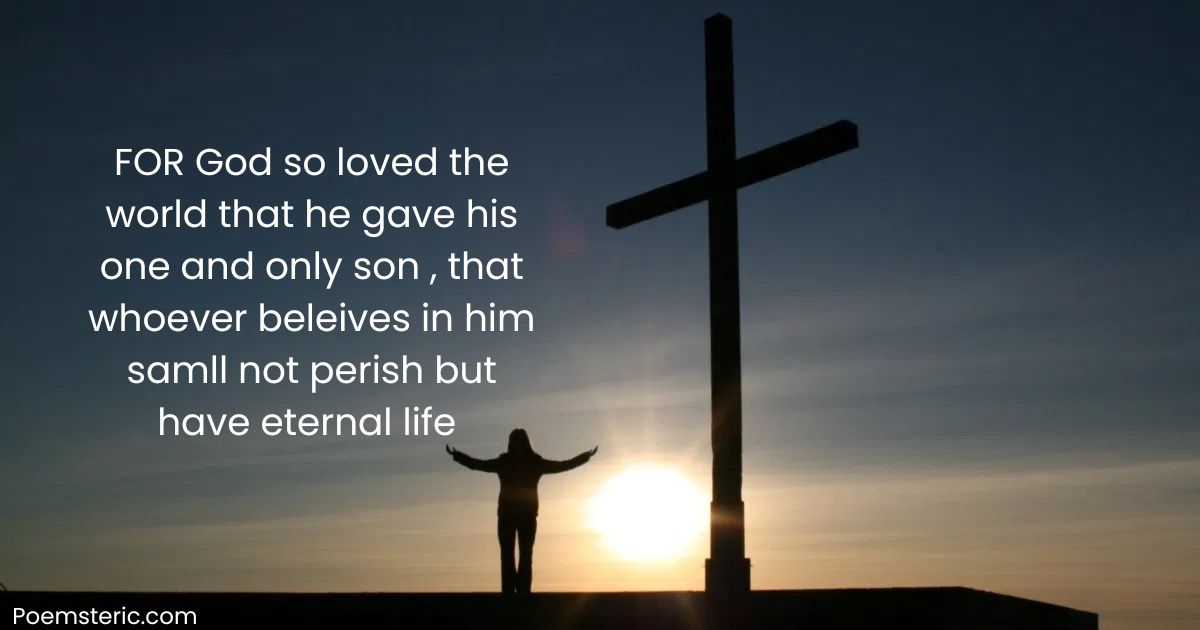
Christian poems have long served as bridges between the human heart and the divine. These verses capture what prose often cannot: the mystery of belief, the struggle of doubt, and the overwhelming gratitude that comes from encountering grace. From ancient hymns scratched on papyrus to contemporary verses shared across social media, Christian poetry remains a living tradition that speaks to seekers and believers alike. Whether you come to these Christian poems for comfort during a dark night of the soul or for words to celebrate resurrection morning, you will find that the best ones do not lecture. They are invited. They open a door and let you step through into something larger than yourself.
What Are Christian Poems?
Christian poems are works of verse that explore the terrain of faith in Jesus Christ. They may take the form of quiet meditations whispered during morning prayer, or they might roar with the drama of biblical battles and miracles. At their core, these poems wrestle with the central questions of Christian belief: Who is God? Who am I in relation to Him? What does redemption look like? How do I live while waiting for heaven?
The tradition stretches back to the earliest days of the church. The apostle Paul quoted hymns in his letters to the Colossians and Philippians, suggesting that verse was already shaping Christian worship before the New Testament was complete. By the fourth century, poets like Prudentius were composing epic works in Latin that dramatized salvation history. As Christianity spread through Europe, poetry became the primary vehicle for theology among common people who could not read scholarly treatises but could remember rhyme and meter.
What distinguishes a Christian poem from merely religious verse is its centering on the person and work of Christ. While religious poetry might explore general spirituality or the divine nature of the universe, Christian poems are specifically anchored in the story of creation, fall, redemption, and restoration found in Scripture. They may approach this story with intellectual rigor or emotional abandon, but they always circle back to the cross and the empty tomb.
Types of Christian Poems
The landscape of Christian poetry is rich and varied, offering something for every temperament and spiritual need. Understanding these different types helps readers find the right poem for their current season of life.
Devotional Poems
Devotional poems function as poetic prayers. They slow the reader down, creating space for contemplation in a noisy world. George Herbert’s “Prayer” is a masterwork in this category, describing devotion as “the church’s banquet, angels’ age, God’s breath in man returning to his birth.” Such poems do not merely talk about prayer; they become an act of prayer themselves. When you read a devotional poem slowly, letting each image settle in your mind, you may find that your own unspoken longings find voice. These Christian poems work best in the morning hours or before sleep, when the heart is most receptive to stillness.
Biblical Narrative Poems
Biblical narrative poems retell Scripture stories with imaginative detail that helps readers see familiar accounts with fresh eyes. John Milton’s Paradise Lost remains the most ambitious example, taking readers inside the fall of Satan and the temptation of Adam and Eve. These poems fill in the emotional texture that the biblical text leaves implicit, not to contradict Scripture but to help us inhabit it more fully. When a poet describes the smell of the garden or the expression on Mary’s face at the tomb, they are doing what any good preacher does, helping the congregation enter the story. The best biblical narrative poems always send readers back to the original text with renewed curiosity and deeper appreciation.
Praise and Worship Poems
Praise and worship poems give language to adoration. They respond to God’s character and act with joy and thanksgiving, celebrating everything from the grandeur of creation to the intimacy of personal salvation. The Psalms stand as the original model here raw, honest songs that range from exuberant celebration to confused complaint, all directed toward God. Modern worship songs have their roots in this tradition, but the poetic form allows for more complexity than three-minute songs typically permit. A praise poem can hold contradiction, can move from doubt to confidence within a single stanza, mirroring the actual experience of worshippers who do not always feel what they wish to feel.
Lament and Doubt Poems
Lament and doubt poems address the shadow side of faith that many Christians feel but few dare to express. The Psalms contain many laments, and the Christian tradition has never shied away from questioning God when pain seems senseless. These poems matter because they give permission for struggle. They say that you can love God and still ask why. Christina Rossetti’s “Good Friday” moves through doubt to surrender, capturing the tension between what we feel and what we choose to believe. When Job cried out from the ash heap or when Jesus asked why God had forsaken him, they were performing lament. These Christian poems continue that necessary tradition, refusing to let faith become shallow optimism.
Seasonal Christian Poems
Seasonal Christian poems follow the church calendar, preparing hearts for Advent, marking the sorrow of Good Friday, or exploding with Easter joy. They root spiritual experience in time, refusing to let faith become merely abstract. An Advent poem builds longing; a Christmas poem fulfills it. A Good Friday poem sits in devastation without rushing to resurrection; an Easter poem breaks forth in impossible celebration. These poems help believers move through the year with intention, marking time not by secular holidays alone but by the story of redemption. Many families read the same poems each season, building traditions that shape children’s imaginations and adult devotion alike.
Famous Christian Poets & Their Masterpieces
Some voices have shaped Christian poetry so profoundly that their influence echoes across centuries. Knowing these poets helps readers navigate the vast ocean of available verse.
Classic Christian Poets
John Donne brought the intellectual fireworks of metaphysical poetry to devotion. A former womanizer and skeptic who became an Anglican priest, Donne understood spiritual struggle from the inside. His Holy Sonnets shock with their intimacy, nowhere more than in “Batter My Heart, Three-Person’d God,” where he asks to be overpowered because he cannot reform himself. Donne’s poems feel like private journal entries that somehow became universal, speaking across four centuries to anyone who has felt divided in their devotion.
George Herbert served as a country person and died young, leaving behind The Temple, a collection of poems structured like the building itself. Herbert’s genius lies in his formal invention poems shaped like altars or wings that enact their meanings visually. “Love (III)” presents God as a host who invites the ashamed guest to sit and eat, capturing the gospel in three stanzas of unmatched tenderness. Herbert wrote primarily for himself and his congregation, never seeking fame, which perhaps explains the unguarded sincerity that makes his work so accessible.
Christina Rossetti lived as a devout Anglican in Victorian England, resisting marriage for religious reasons and serving with the Anglo-Catholic Sisters of Mercy. Her poetry explores the cost of discipleship with unflinching honesty. “In the Bleak Midwinter,” perhaps her most famous work, became a beloved Christmas carol, its final verse “What can I give Him, poor as I am?” expressing the essence of humble devotion. Rossetti’s female voice in a male-dominated field brought fresh perspective to traditional themes.
Gerard Manley Hopkins revolutionized English verse with his sprung rhythm and dense wordplay while serving as a Jesuit priest. His poems celebrate the particularity of creation “kingfishers catch fire, dragonflies draw flame” as manifestations of divine presence. “God’s Grandeur” insists that despite human corruption, “the Holy Ghost over the bent world broods with warm breast and with ah! bright wings.” Hopkins wrote against the grain of his Victorian contemporaries, creating poetry so innovative that it was not published until decades after his death.
John Milton composed the greatest epic in English, Paradise Lost, after losing his sight and his political hopes. His Satan remains dangerously compelling, but the poem’s true hero is the Son who volunteers to become human and die. Milton’s theology of free will and obedience continues to generate scholarly debate, but his poetic ambition to “justify the ways of God to men” remains unmatched in scope and execution.
Contemporary Christian Poets
Scott Cairns brings Eastern Orthodox spirituality to contemporary American verse. His poems often begin with mundane moments, a dog sleeping, a meal shared and open into mystical encounters. Cairns reminds us that the divine breaks through the ordinary, not despite it. His work introduces Western readers to the concept of theosis, the gradual transformation into Christlikeness that Orthodox theology emphasizes.
Malcolm Guite, an Anglican priest and Cambridge chaplain, writes sonnets that are both intellectually rich and pastorally warm. His sequence on the Stations of the Cross has been set to music and used in churches worldwide. Guite believes poetry can be “a door into something wider,” and his work proves it. He frequently performs his poetry, demonstrating that Christian poems are meant to be heard, not just read silently.
Luci Shaw, poet-in-residence at Regent College, has spent decades writing attentive, luminous poems about creation and incarnation. Her long friendship with Madeleine L’Engle produced some of the finest Christian poetry of the late twentieth century, work that sees the sacred shimmering through the material world. Shaw’s attention to natural detail stones, birds, and weather reflects her conviction that creation itself is a form of divine revelation.
Best Christian Poems for Every Season of Life
Life does not move in straight lines, and Christian poetry offers companionship for every twist and turn. These categories help readers find verses that speak directly to their current circumstances.
Poems for Grief and Loss
Poems for grief and loss acknowledge that Christianity does not eliminate sorrow but transforms it. John Donne’s “Death Be Not Proud” definitely predicts death’s destruction, while more recent works help mourners feel less alone in their devastation. These poems do not rush to resolution; they sit with pain until hope becomes possible again. When C.S. Lewis wrote A Grief Observed after his wife’s death, demonstrating that even professional theologians must walk through the valley without shortcuts. The right poem at a funeral or during private mourning can name what feels unnameable, providing the first step toward healing.
Poems for Joy and Celebration
Poems for joy and celebration keep gratitude from becoming generic. When George Herbert writes “The Pulley,” imagining God pouring blessings upon humanity until “repining restlessness” pulls us back to our maker, he captures the complexity of joy that it always carries within it a longing for more. Celebration poems help us pause long enough to actually enjoy God’s gifts rather than immediately wanting the next thing. They train us in the discipline of thanksgiving that Scripture commands.
Poems for Doubt and Questioning
Poems for doubt and questioning prevent faith from becoming brittle. R.S. Thomas, the Welsh priest-poet, spent his career writing about God’s absence, his “not being there to be believed in.” Such honesty protects faith from sentimentality, ensuring that when we do believe, we believe something real rather than a comfortable illusion. These Christian poems give voice to the midnight questions that surface during crisis, allowing readers to bring their whole selves to God rather than pretending confidence they do not feel.
Poems for Daily Devotion
Poems for daily devotion provide structure for prayer when words fail. The tradition of “morning offering” poems and evening examinations can shape a life. Kathleen Norris, in her prose and poetry, has shown how monastic disciplines of attention can transform ordinary time. Reading a short poem each morning sets the tone for the day, creating a moment of orientation before the demands of work and family rush in. Many believers find that memorizing these poems allows the words to return throughout the day as unconscious prayer.
Short Christian Poems for Quick Reflection
Short Christian poems for quick reflection serve those who need truth in concentrated form. Epigrams by writers like Anne Bradstreet or modern haiku-like verses offer complete spiritual experiences in a handful of lines. These are the poems to memorize, to carry into hospital rooms, to write in cards when your own words fail. Their brevity makes them accessible, but their density rewards repeated reading. A truly great short poem unfolds new meanings over years of acquaintance.
Featured Christian Poems
A curated collection of classic Christian poems from the public domain allows readers to encounter these works directly. This section should include the full text of masterpieces like Milton’s “When I Consider How My Light Is Spent,” Herbert’s “The Collar,” and Rossetti’s “Up-Hill.” Each poem needs a brief commentary explaining its historical context and spiritual significance, helping modern readers understand references that might otherwise confuse.
Including audio recordings honours the oral tradition from which these poems emerged. Poetry was spoken and sung before it was written, and the rhythm of Christian verse carries theological weight that print alone cannot convey. Hearing John Donne’s rough metaphysical cadences or Hopkins’s sprung rhythm performed aloud transforms the reading experience. These recordings should be accessible to visually impaired readers and those who simply prefer listening during commutes or household tasks.
How to Write Christian Poetry
Many believers feel called to write poetry but hesitate, believing they lack permission or skill. The tradition suggests otherwise some of the greatest Christian poets, like Herbert and Donne, were amateurs in the best sense, writing out of devotion rather than professional ambition.
Finding Inspiration in Scripture
Finding inspiration in Scripture begins with slow, imaginative reading. Enter the story. What did the air smell like at the wedding in Cana? What did the prodigal’s father feel while watching the road? The poet’s task is not to explain the text but to inhabit it, bringing sensory detail to what might otherwise remain abstract. Lectio divina, the ancient practice of meditative reading, naturally produces poetic response as the reader lingers over words until they yield their fruit.
Using Metaphor and Symbolism
Using metaphor and symbolism extends the Incarnation itself the belief that the invisible God became visible flesh. Good Christian poetry finds concrete images for abstract truths. Herbert’s “The Altar” uses a broken heart as building material; Hopkins finds Christ in “ten thousand places.” The best metaphors surprise while also feeling inevitable, as if the comparison were waiting to be discovered rather than manufactured. Beginning poets should avoid clichés like roses for love or dark nights for doubt, searching instead for fresh images from their own experience.
Sharing Your Work with Others
Sharing your work with others requires courage and community. Local writing groups, online forums, or church newsletters provide venues for feedback and encouragement. Remember that your poem may be the exact words someone else needs to pray, even if it feels imperfect to you. The Christian tradition has always been communal; poetry written in isolation finds its fulfillment when it serves the body of Christ. Consider reading your work aloud before publishing, listening for awkward rhythms or unclear images that silent reading might miss.
Share Your Favourite Christian Poems
The living tradition of Christian poetry depends on participation. Readers should have space to submit poems that have sustained them, with the best selections featured monthly. This creates not just content but community a gathering of witnesses who testify through verse to God’s faithfulness in their particular lives. Voting mechanisms allow the community to recognize which poems resonate most broadly, while comments enable readers to share personal stories of how specific verses carried them through difficulty.
This section transforms passive consumers into active contributors, ensuring that the tradition continues to grow rather than merely preserving the past. Young poets find encouragement here; seasoned believers find fresh voices that speak to new cultural moments. The collection becomes a collaborative anthology of faith across time and geography.
Christian Poetry Collections
Building a personal library of Christian poems provides resources for every spiritual season.
Best Anthologies to Buy
Every library needs The Oxford Book of Christian Verse, edited by Donald Davie, which spans from Caedmon to the twentieth century with authoritative selection and notes. Poems of Devotion by Shane Claiborne gathers contemporary voices speaking to justice and faith with an activist edge. For those seeking specifically American traditions, American Religious Poems edited by Harold Bloom and Jesse Zuba offers comprehensive surveys from the colonial period to the present. Single-author collections allow deep immersion in one poet’s vision. Herbert’s The Temple or Donne’s Holy Sonnets reward years of rereading.
Free Online Archives
The Poetry Foundation and Academy of American Poets websites include substantial collections of Christian poetry with thoughtful curatorial essays. Project Gutenberg provides complete texts of public domain works by Herbert, Donne, and others, making classic Christian poems accessible to anyone with internet access. Many contemporary Christian poets maintain personal websites with free archives of their work, allowing readers to sample before purchasing books. These digital resources democratize access to a tradition that was once available only to those with money for books and education.
FAQs
What makes a poem Christian?
A Christian poem centers on the person and work of Jesus Christ, engaging with the biblical narrative of creation, fall, redemption, and restoration. It may explore doubt, suffering, or joy, but it ultimately circles back to the cross and resurrection. The poet’s faith commitment matters less than the poem’s content; some agnostic writers have produced profoundly Christian poems while some believing writers produce vague spiritual verse. The test is whether the poem helps readers encounter the specific God revealed in Scripture.
Are hymns considered Christian poetry?
Hymns are Christian poetry written specifically for congregational singing, while Christian poems are typically intended for private or small-group reading. The distinction is functional rather than qualitative; many hymns work beautifully as spoken poems, and many poems have been set to music. Charles Wesley wrote thousands of hymns that stand as major contributions to English poetry; Isaac Watts and others achieved similar literary quality. The categories overlap significantly.
What is the most famous Christian poem?
John Milton’s Paradise Lost stands as the most ambitious and influential Christian poem in English, though its length makes it less frequently quoted than shorter works. For pure memorability, George Herbert’s “The Pulley” or John Donne’s “Death Be Not Proud” compete for recognition. In the modern period, T.S. Eliot’s “Ash-Wednesday” or his Christmas poems from Ariel have achieved canonical status. The “most famous” depends on whether one measures by scholarly citation, popular quotation, or sales.
Where can I find short Christian poems for cards?
This website’s section on short Christian poems provides ready-to-use verses for greeting cards, funeral programs, and wedding bulletins. Public domain poems by Herbert, Rossetti, and others require no permission to reproduce. For contemporary options, many poets grant personal-use rights freely simply by email to request. When using poems in published materials, always check copyright status and obtain necessary permissions.
How is Christian poetry different from religious poetry?
Religious poetry explores general spiritual experience, the divine nature of the universe, or the human search for meaning. Christian poetry specifically engages with the triune God revealed in Scripture and the historical events of Christ’s life, death, and resurrection. Rumi writes religious poetry; George Herbert writes Christian poetry. Both have value, but they speak from different theological foundations and lead readers toward different ultimate commitments.
H2: Christian Poems by Occasion
Christmas Poems About the Nativity
The Incarnation that staggering belief that God became a crying baby has inspired Christian poems for two millennia. From Milton’s “On the Morning of Christ’s Nativity” to Chesterton’s “The House of Christmas” to Madeleine L’Engle’s “After Annunciation,” these poems try to capture what remains ultimately mysterious: the infinite contained in a manger, the creator entering creation as creature. Good Christmas poems avoid sentimentality, acknowledging the poverty and danger of the first nativity while celebrating its impossible hope. They prepare readers not just for December 25th but for the transformation that incarnation demands.
Easter Poems on Resurrection
Easter poems move from despair to impossible joy. They must convey not just that Jesus rose, but that everything changed because of it. George Herbert’s “Easter Wings” and “The Dawning” dramatize this transition, as does more recent work by writers like James Weldon Johnson. The best resurrection poems do not skip over Good Friday they carry the wound marks into the garden, showing that new life comes through death rather than around it. These Christian poems are essential for the church’s greatest celebration, providing language when our own gratitude fails.
Thanksgiving Poems of Gratitude
Gratitude in Christian poetry goes beyond polite thanks for good fortune. It recognizes every gift as grace, unearned and abundant. Herbert’s “The Glance” and “Gratefulness” teach readers to receive all of life as blessing, even the difficult portions. Thanksgiving poems help believers practice eucharisteo, the Greek term for thanksgiving that lies at the root of the Eucharist itself. They train us to see provision where we might notice only scarcity, transforming anxiety into trust through the discipline of praise.
New Year Poems for Fresh Starts
The Christian calendar begins with Advent, not January first, but the new year still prompts reflection and resolution. Poems by Alfred, Lord Tennyson (“Ring Out, Wild Bells”) and more contemporary writers help mark time as a gift rather than threat. These Christian poems acknowledge the failures of the past year without despair, trusting in the God who makes all things new. They set intentions not as self-improvement projects but as offerings, asking God to accomplish what human willpower cannot.
Funeral and Memorial Poems
At gravesides, we need words that acknowledge death’s reality while insisting on resurrection hope. John Donne’s “Death Be Not Proud” appears at countless services, as does Henry Scott Holland’s “Death Is Nothing At All.” The best funeral poems do not deny grief; they place it within a larger story of redemption. They allow mourners to weep while whispering that tears are not the final word. Choosing the right poem for a service requires knowing the deceased and the mourners some need the defiant confidence of Donne, others the gentle reassurance that love persists beyond death.
Final Thought
Christian poems endure because they speak to the deepest human longings while answering them with the peculiar hope of the gospel. They do not promise that life will be easy; they promise that nothing, no doubt, not suffering, not death itself separates us from the love of God in Christ Jesus. In an age of quick fixes and shallow inspiration, Christian poetry requires something better: attention, patience, and the willingness to be changed by words that have been shaped by faith.
As the poet and priest George Herbert wrote nearly four centuries ago, “Love bade me welcome: yet my soul drew back, guilty of dust and sin.” The best Christian poems still extend that welcome, still acknowledge our guilt and dust, and still point to the Love that will not let us go. Whether you come to these verses as a lifelong believer, a curious seeker, or a wounded doubter, you will find that they meet you where you are and invite you somewhere new. That is the power of poetry rooted in the truth that became flesh and dwelt among us full of grace and truth.
Related to the article : 41 Timeless Love Poems That Say “I Love You” Better Than Words

- 50+ Best Poems About God | Inspirational, Short & Famous Verses - April 1, 2026
- 30 Types of Poems | Complete Guide with Examples for Every Poet - March 28, 2026
- Long Distance Love Poems | 33 Heartfelt Poems for Every Emotion - March 27, 2026