
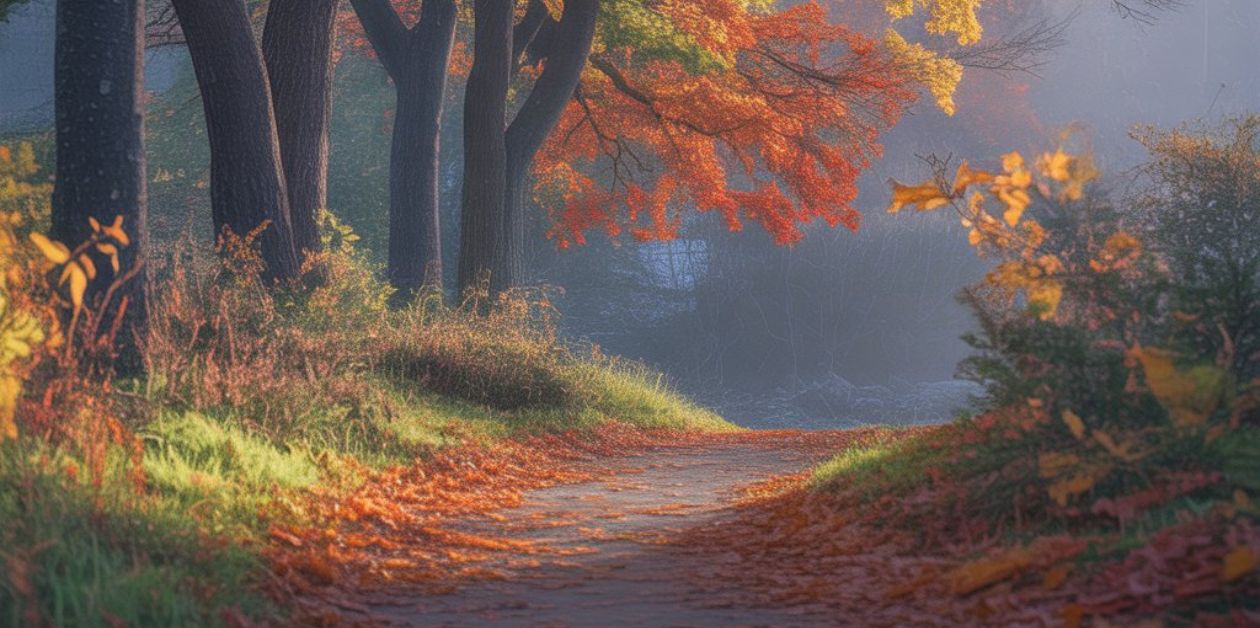
Autumn, also known as fall, is a season of quiet transformation, where golden leaves fall, the air turns crisp, and nature slowly prepares for rest. Fall poems and autumn poems have long captured this seasonal beauty, reflecting themes of change, time, and reflection. Through vivid imagery of falling leaves, harvest days, and cooling weather, autumn poetry expresses both nostalgia and renewal. From classic fall poems by famous poets to modern poems about autumn, this collection celebrates the emotion, symbolism, and natural charm of the fall season.
Autumn and Fall in Poetry: Meaning, Mood, and Symbolism
In literature, autumn is rarely just a time of year. It is a rich symbol, laden with meaning and emotional resonance. The very words “fall” and “autumn” evoke distinct imagery: “fall” suggests action, descent, and the literal falling of leaves, while “autumn poems” carries a more lyrical, mature tone. Poets use this season to explore universal themes. The changing leaves become a metaphor for life’s transitions, aging, and the beauty of letting go. The shortening days and cooling weather symbolize reflection, maturity, and the approach of an end. The harvest represents abundance and reaping what we have sown, while the bare branches that follow speak of loss, rest, and eventual renewal. This duality, the vibrant beauty alongside the certainty of decay creates the unique, bittersweet mood that makes fall poetry so deeply moving and perennially popular.
Best Classic Fall Poems by Famous Poets
The canon of English literature is rich with autumnal masterpieces. These classic fall poems by famous poets have defined how we perceive the season, setting a standard for its depiction in verse.
To Autumn : John Keats
Often hailed as the perfect autumn poem, Keats’s “To Autumn” is a sensual ode to the season’s ripeness and abundance. Instead of focusing on decay, Keats paints a picture of fulsome beauty: the “mellow fruitfulness,” the “vines that round the thatch-eves run,” and the “barred clouds” that “bloom the soft-dying day.” It personifies autumn as a figure of serene productivity, sitting on a granary floor or watched while it carries a load of grain. This poem is a cornerstone of classic autumn poetry, celebrating the season’s peak with unparalleled imagery before gently acknowledging the “gathering swallows” that hint at the coming winter. Autumn poems beautifully capture the colours of falling leaves, quiet landscapes, and emotional transitions, which is why autumn poems feel deeply reflective and timeless.
Sonnet 73 : William Shakespeare
While not exclusively an autumn poem, Shakespeare’s Sonnet 73 is a profound meditation on aging and twilight, using fall as its central metaphor. The opening lines, “That time of year thou mayst in me behold / When yellow leaves, or none, or few, do hang,” directly compare the speaker’s later life to the bleakness of late autumn. The imagery moves from bare branches to the fading twilight of a day, and finally to the glowing embers of a dying fire. This poem masterfully ties the fall season to human mortality, making the love expressed in the final couplet more poignant and urgent. It’s a prime example of how autumn serves as a powerful symbol for the later stages of life. Autumn poems beautifully capture the colours of falling leaves, quiet landscapes, and emotional transitions, which is why autumn poems feel deeply reflective and timeless.
Nothing Gold Can Stay : Robert Frost
Robert Frost’s brief, brilliant poem, “Nothing Gold Can Stay,” captures the ephemeral beauty of early autumn or more precisely, the moment just before fall. It speaks of nature’s first, most vibrant gold (like the first green of spring being a “hue”) and how it is her “hardest hue to hold.” The “leaf’s a flower” for only an hour before it subsides to green and then, by implication, to the decay of fall. This poem is an essential, if bittersweet, entry in any collection of fall poems, as it encapsulates the core truth of the season: that supreme beauty is often fleeting, and change is the only constant. When it comes to expressing change, nostalgia, and nature’s calm beauty, autumn poems remain one of the most powerful and expressive poetic forms.
Autumn Nature Poems About Leaves, Weather, and Landscapes
Some of the most evocative fall poems are those that focus intensely on the physical transformation of the natural world, the crunch of leaves, the quality of October light, and the damp chill of November.

Fall, Leaves, Fall : Emily Brontë
Emily Brontë’s short lyric is a defiant embrace of autumn’s decay. She directly addresses the leaves, urging them to “Fall, leaves, fall; die, flowers, away.” Unlike poets who mourn the loss of summer, Brontë welcomes the “sombre” and “brown” atmosphere, finding in it a “joy” that suits her own spirit. The poem connects the falling leaves to the shortening days, creating a unified landscape of decline that the speaker finds strangely uplifting and appropriate. It’s a powerful autumn nature poem that finds peace in the inevitable.
October : Robert Frost
In “October,” Robert Frost makes a personal plea to the autumn month to slow down its inevitable progression toward winter. “O hushed October morning mild, / Begin the hours of this day slow,” he asks, wishing to savor the “slow decay” that is itself beautiful. He wants the leaves to linger on the branch and the harvest to remain in the field, just a little longer. This poem perfectly captures the human desire to hold onto a perfect, transient moment, making it a beloved poem about the fall season and its fleeting, golden beauty.
November : John Clare
John Clare’s “November” presents a stark, realistic portrait of late autumn. This is not the vibrant golden October, but the damp, cold, and bare landscape that follows. He describes the “sheep-boy” whistling and the fieldmouse running for shelter, painting a picture of a world preparing for dormancy. The language is simple and observational, focusing on the small, often overlooked details of the season’s end. It’s a crucial counterpoint to more romanticized visions and an important autumn poem for its honest depiction of the season’s bleaker, quieter phase.
Short Fall Poems and Modern Autumn Poetry
Contemporary poetry continues to engage with autumn, often using concise, impactful language and fresh metaphors to explore timeless themes.

Japanese Maple : Clive James
Written by the late Clive James as he faced his own mortality, “Japanese Maple” is a profoundly moving modern autumn poem. The tree, promised to him by his daughter, becomes a symbol of the future beauty he will miss. “Your death, near now, is of an easy sort,” the poem begins, as he imagines the tree’s leaves turning a brilliant, slow-burning red. The poem transforms the classic autumnal metaphor of dying leaves into a deeply personal and heartbreakingly graceful acceptance of an individual end, showing how modern autumn poetry can breathe new life into ancient symbols.
Autumn Leaving
“Autumn Leaving” (by a modern poet, often found in contemporary collections) typically examines the act of departure, both literal and emotional, mirrored by the season. It might use images of packing a suitcase alongside images of shedding leaves, or a relationship cooling like the evening air. These poems connect the external seasonal change to internal journeys, making the personal feel universal. They show that short fall poems can carry immense emotional weight, using the season’s imagery to frame stories of love, loss, and moving on.
Fall Poems About Change, Time, and Human Emotions
Autumn’s core themes resonate deeply with the human experience of time, memory, and emotional transition. These poems use the season as a lens to examine our inner lives.

When You Are Old : W.B. Yeats
Yeats’s “When You Are Old” invites the reader and the subject of his love to project into a future autumn of life. He asks her to imagine a time when she is old, nodding by the fire, and to “slowly read” and dream of her past. The “glad grace” of her youth is contrasted with the “pilgrim soul” he loved and the “sorrows” of her changing face. While not explicitly about nature, the poem’s mood is autumnal: it’s about the harvest of memories, the fading of beauty, and the love that endures beyond the summer of life. It is a cornerstone poem about change and time.
Sentenced to Life : Clive James
Another powerful late work by Clive James, “Sentenced to Life” confronts aging and illness with wit and resilience. He describes himself as being “sick of the seasons,” yet finds moments of grace and observation that keep him engaged with the world. The poem’s title reframes a terminal diagnosis as a life sentence to be lived fully, not a death sentence. In its clear-eyed look at the “autumn” of a life, it finds purpose and even beauty, connecting the personal autumn of the body with the cyclical autumn of the natural world in a uniquely powerful way.
Autumn and Fall Poems for Kids and Young Readers
Introducing the magic of autumn poetry for kids can foster a lifelong love for both language and nature. These poems use rhythm, rhyme, and playful imagery.

Come, Little Leaves : George Cooper
“Come, Little Leaves” is a delightful personification of autumn leaves. The poet has the North Wind call, “Come, little leaves,” and the leaves eagerly respond, flying like “troops” to their earthy beds below. They dance, whirl, and finally sleep under a snowy cover. It’s a gentle, whimsical explanation of fall that removes any fear from the concept of decay, turning it into a playful dance and a cosy nap. This is a perfect fall poem for children.
Fall Harvest and Halloween Poems
The season also brings cultural celebrations that inspire verse, focusing on abundance, mystery, and a touch of the uncanny.
Halloween : Katharine Towers
Modern poet Katharine Towers’s “Halloween” captures the eerie, magical atmosphere of the night. It might focus on the thin veil between worlds, the flickering of pumpkins, or the crisp, exciting chill in the air. Such poems connect the ancient roots of the holiday, a time of spirits and change with the modern experience of costumes and candy, making them a fun and atmospheric addition to any list of Halloween and fall poems.
The Harvest Season
Poems about the harvest (from traditional folk rhymes to more serious reflections) center on the fruits of labor, gratitude, and community. They describe loaded wagons, full orchards, and the satisfaction of gathering in. This theme links the season directly to human cycles of work and reward, providing a grounded, celebratory counterpoint to the more melancholic autumn poems about loss. They remind us that fall is a time of plenty and culmination.
Why Autumn and Fall Poems Feel Deeply Personal
Autumn poems resonate on a personal level because they act as a mirror. The season’s external transformations, the dying light, the shedding of leaves, the harvesting of fields parallel our internal experiences: nostalgia for the past, contemplation of our own aging, the process of letting go, and the reaping of life’s lessons. When we read a poem about November rain, we might think of our own quiet sorrows. When we read about October’s gold, we might recall a perfect, fleeting moment from our own lives. The season provides a shared, beautiful vocabulary for expressing private emotions, making these poems feel like they were written just for us. This universal yet intimate connection is the true power of autumn poetry .For poetry lovers, autumn poems offer a meaningful reading experience where autumn poems reflect seasonal change, inner emotions, and the gentle rhythm of nature.
Final Thoughts
From the mellow fruitfulness celebrated by Keats to the personal elegies of modern poets, fall and autumn poems offer a timeless way to understand and appreciate this season of transformation. They remind us that change, even when it carries a hint of sadness, is inherently beautiful and worthy of our attention. This collection is just a starting point. We encourage you to take a walk on a crisp day, observe the turning world, and perhaps even find your own words for the profound, quiet drama of autumn.
FAQs
What is the famous poem for the fallen?
“For the Fallen” is a poem written by Laurence Binyon . It was first published in The Times in September 1914. It was also published in Binion’s book “The Winnowing Fan : Poems On The Great War” by Elkin Mathews, London, 1914.
Is there a poem about October?
O hushed October morning mild, Thy leaves have ripened to the fall; To-morrow’s wind, if it be wild, Should waste them all.
What is a short simple poem?
We define short form poetry as anything 9 lines and under, or any poem that uses 60 words or less. The sonnet, for example, is a 14-line poem that often grapples with love, and though sonnets are by no means “long,” they often have abstract qualities not found in short poems
What is the poem called To Autumn?
“To Autumn” is a poem by English Romantic poet John Keats (31 October 1795 – 23 February 1821). The work was composed on 19 September 1819 and published in 1820 in a volume of Keats’s poetry that included Lamia and The Eve of St. Agnes. “To Autumn” is the final work in a group of poems known as Keats’s “1819 odes
Recent article : Cat Poems by T.S. Eliot & Modern Poets | 20+ Picks

- 50+ Best Poems About God | Inspirational, Short & Famous Verses - April 1, 2026
- 30 Types of Poems | Complete Guide with Examples for Every Poet - March 28, 2026
- Long Distance Love Poems | 33 Heartfelt Poems for Every Emotion - March 27, 2026