
Introduction
Does the poem talk of an exclusively personal experience? No, it does not. “Father to Son” by Elizabeth Jennings opens with one father’s private conflict with his son, but its real subject is universal. The generation gap, emotional distance, and communication gap it describes appear in countless families, not just one.
In my own reading of this poem, what stands out is how quickly a single household argument turns into something every reader recognizes. The father speaks in the first person, yet his frustration mirrors a father-son relationship struggle that repeats across generations. That shift, from one voice to a shared human problem, is the whole point of the poem.
Key Takeaways
- The poem begins with a personal experience: one father describing conflict with his son.
- However, the underlying theme is universal: broken communication between parents and children.
- The generation gap is the bridge between the personal and the universal.
- Both father and son fail to understand each other, which creates lasting emotional distance.
- The poem’s final tone suggests hope for reconciliation, even though it never fully arrives.
Why “Father to Son” Feels Personal at First Glance
The opening stanza reads like a private diary entry. The father talks directly about his son, his disappointment, and his sense of failure as a parent. As a result, first-time readers often assume this is simply one man’s story.
The Father’s Individual Voice
Elizabeth Jennings writes in the first person throughout the poem. This choice makes the personal experience feel immediate and raw. The father admits he does not understand his son’s choices, and he speaks with real vulnerability rather than distant commentary.
A Private Family Argument
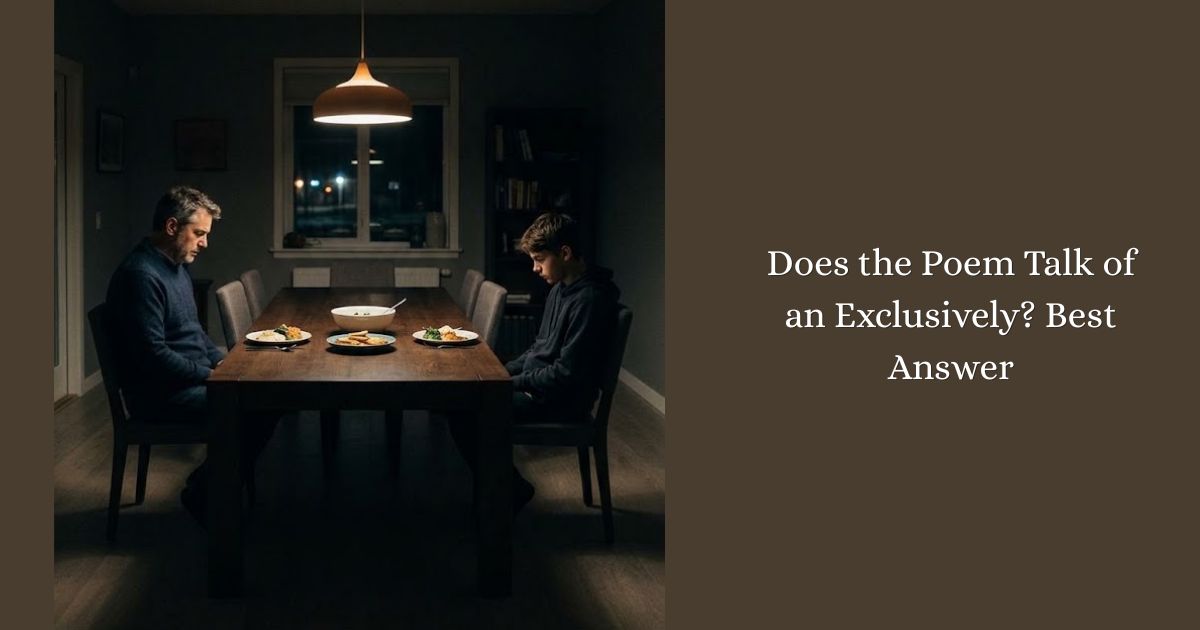
The poem also describes specific, intimate details: silence at the dinner table, unspoken resentment, and a shared home that no longer feels shared. These details ground the poem in one family relationship, not an abstract idea. For example, the father notes that words fail between them, which is a very concrete, personal image rather than a general statement about parenting.
Why the Same Experience Becomes Universal
Despite these personal details, the poem’s core conflict is far from unique. Generation gaps exist in nearly every family, across every culture and era. Therefore, readers everywhere recognize the father’s frustration, even if their own family situation looks nothing like his.
This is where the poem’s strength lies. Jennings never explains the son’s specific choices or the father’s exact expectations. As a result, the conflict stays general enough that any reader can insert their own experience of parental conflict into the gap. A parent who has ever felt shut out by a teenager, or a child who has ever felt misunderstood by a parent, will find themselves in these lines.
Readers often tell us that this vagueness is exactly why the poem still feels relevant decades after it was written. It does not lock itself into one family’s story; instead, it becomes a mirror for many.
The Generation Gap Behind the Poem’s Conflict
The generation gap is the poem’s true engine. The father and son live in the same house, yet they inhabit different emotional worlds. Neither can fully explain their position to the other, and neither seems willing to be the first to close the distance.
This gap is not shown through shouting or open conflict. Instead, Jennings uses silence and missed connection to suggest alienation. The father wants closeness but cannot find the language for it. Meanwhile, the son’s inner life remains completely hidden from the reader, which mirrors how hidden it feels to the father himself.
How the Poem Moves From Personal to Universal
Here is how the poem builds its personal-to-universal argument, stage by stage:
- Establish a personal voice. The father speaks directly, using “I,” which grounds the poem in one relationship.
- Introduce concrete, private details. Silence, disappointment, and physical closeness without emotional closeness make the scene feel real.
- Remove specific explanations. The poem never states exactly why the son and father disagree, which opens space for any reader’s story.
- Widen the emotional pattern. The communication gap described is common enough that it applies far beyond this one household.
- Leave the ending open. The final lines suggest a wish for understanding rather than a resolved conflict, which keeps the theme universal rather than tied to one outcome.
Best Exam Answer for Does the Poem Talk of an Exclusively Personal Experience
For exams, the strongest answer balances both sides clearly. Use this structure:
The poem begins with the father’s personal experience of conflict with his son. However, it is not an exclusively personal experience, because the generation gap, emotional distance, and communication problems it presents are common to many families. Jennings uses one relationship to explore a universal theme.
This answer works well because it directly addresses the “exclusively” wording in the question, rather than only describing the poem’s plot. Many student answers lose marks by describing the father-son argument without ever explaining why it also feels universal — that connection is exactly what examiners look for.
FAQs
Q: Does the poem talk of an exclusively personal experience or is it fairly universal?
A: The poem does not talk of an exclusively personal experience. It starts with one father’s private conflict with his son, but the generation gap and communication breakdown it describes are common across many families. Elizabeth Jennings uses a single relationship to represent a wider, universal pattern of parent-child misunderstanding, which is why the poem still feels relevant to readers from very different backgrounds and eras.
Q: Who wrote “Father to Son”?
A: “Father to Son” was written by Elizabeth Jennings, a British poet known for direct, emotionally honest verse. She often explored personal relationships and inner conflict in simple, accessible language. This poem is commonly studied as part of the NCERT Class 11 Hornbill syllabus, where students analyze both its personal and universal dimensions.
Q: What is the central theme of “Father to Son”?
A: The central theme is the emotional distance and generation gap between a father and his son. Although the poem opens with a personal experience, its larger theme is universal: the difficulty of communication between generations. The father wants connection but cannot express it, which reflects a struggle many families face regardless of their specific circumstances.
Q: Why does the poem avoid specific details about the son’s choices?
A: Jennings likely avoids specific details so the conflict stays relatable to more readers. If the poem explained exactly why the father and son disagree, it would feel tied to one particular family’s story. By keeping the disagreement general, the poem allows anyone experiencing a generation gap to recognize their own situation within it.
Q: Is there any hope for reconciliation in the poem?
A: Yes, the poem hints at hope, even though it does not resolve the conflict. The father’s willingness to reflect on the relationship, rather than dismiss it, suggests he still wants closeness with his son. This open, unresolved ending reinforces the universal theme, since real family conflicts rarely close neatly either.
Final Thoughts
Father to Son works because it never chooses between the personal and the universal. Instead, it uses one father’s honest voice to speak for many. Readers connect with the specific images of silence and disappointment, and then recognize the larger pattern underneath: a generation gap that repeats in family after family. That combination is what makes the poem endure in classrooms and personal reading alike.
Recent Article : Justify the Title of the Poem Childhood: Best Answer

Jennifer Aston is a passionate poetry curator and writer with a deep love for the written word. She believes poetry has the power to heal, inspire, and connect people across all walks of life. Through PoemSteric, she brings together timeless and modern verses for every emotion and every moment.