
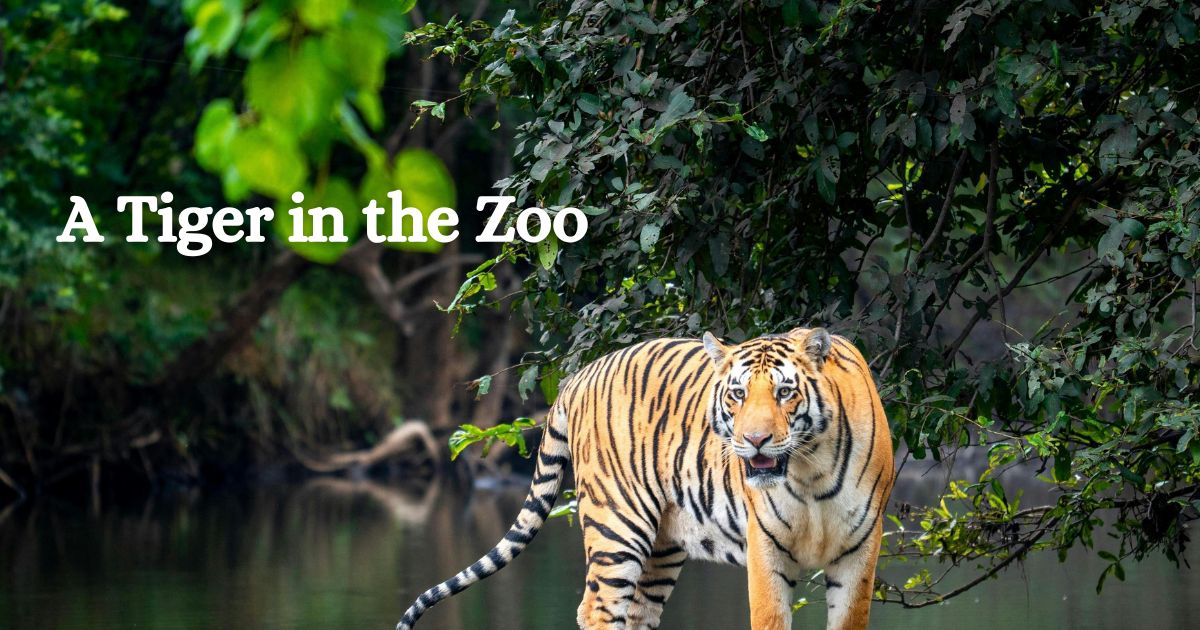
introduction
The theme of “A Tiger in the Zoo” by Leslie Norris is the painful contrast between physical captivity and the tiger’s untouched inner wildness. The poem shows that while a cage can confine a tiger’s body, it cannot erase its natural instincts, dignity, or longing for freedom. Norris develops this theme not just by stating it, but by building a detailed contrast between two settings: the tiger’s natural jungle world and the artificial, restrictive world of the zoo.
Key Takeaways
The central theme is freedom versus captivity, but the poem's real depth lies in the contrast between physical confinement and psychological wildness.

The tiger's body is trapped, but its instincts, alertness, and rage remain fully intact.

Norris uses jungle imagery and zoo imagery side by side to sharpen the contrast.

The tiger's behaviour pacing, snarling, staring reveals suppressed natural instinct rather than acceptance of captivity.

The final stanza intensifies the theme by showing the tiger patrolling under artificial light, watched by an armed guard, far from its natural world.

Understanding the poem's imagery and structure is essential; a plain "freedom vs captivity" answer alone is incomplete.
Main Theme of A Tiger in the Zoo
At its heart, the poem explores how captivity affects a wild creature not by taming it, but by suppressing it. Norris does not present the tiger as broken or content in captivity. Instead, the tiger retains everything that makes it a tiger: its power, its senses, its predatory instincts. The theme, then, is not simply that captivity is unfortunate, but that captivity creates a painful gap between what a creature naturally is and the artificial conditions forced upon it.
This distinction matters because it moves the poem beyond a simple statement of sympathy and into a sharper commentary on how confinement damages a being without changing its fundamental nature.
Freedom vs Captivity
Freedom versus captivity is the most commonly cited theme of the poem, and it is accurate as a starting point. Norris structures the poem around two imagined states for the tiger: the free, natural life it should have in the jungle, and the restricted, observed life it actually leads in the zoo. However, the poem does more than contrast these two states, it shows the tiger’s continued resistance to captivity through its behaviour, refusing to let the theme rest on a simple opposition alone.
Physical Confinement
Physical confinement is shown through concrete details: bars, cage walls, and restricted movement. The tiger’s world in the zoo is described in terms of hard, artificial materials very different from the soft, natural textures associated with the jungle. This physical imagery grounds the theme in something readers can visualize immediately: a powerful animal reduced to pacing within a fixed, unnatural space.
Psychological Suffering
Beyond physical confinement, the poem emphasizes psychological suffering, a distinction many readers overlook. The tiger’s mind and instincts remain fully wild even though its body cannot act on them. This is shown through its restless pacing and its aggressive reactions, such as snarling at visitors. These are not the actions of an animal that has adapted peacefully to captivity; they are signs of ongoing internal tension between instinct and imprisonment. The poem’s emotional power comes largely from this psychological layer, not just the physical one.
Wildness vs Captivity
The tiger’s wildness is never diminished by the zoo environment; this is one of the poem’s most important ideas. Its senses remain sharp, its body remains powerful, and its instincts remain predatory. Norris makes clear that captivity has changed the tiger’s circumstances, not its essential nature. This reinforces the poem’s theme: captivity restrains behavior, but it cannot erase identity.
Tiger’s Dignity and Identity
Even while confined, the tiger is described with imagery that emphasizes strength and beauty rather than weakness details like its “stripes,” “muscles,” and controlled, deliberate movement. This preserves the tiger’s dignity within the poem. Norris avoids portraying the tiger as pitiful or diminished; instead, the animal remains commanding, which makes its captivity feel like an injustice rather than a natural or acceptable state.
Tiger in the Zoo vs Tiger in the Jungle
This contrast is the poem’s structural backbone. Norris alternates between describing what the tiger should be doing in the jungle and what it actually does in the zoo, and this back-and-forth pattern is what makes the theme land emotionally rather than simply being stated outright.
| Aspect | Tiger in the Jungle | Tiger in the Zoo |
| Movement | Free, wide-ranging, silent stalking | Restricted pacing within a cage |
| Environment | Natural: grass, shadow, water-holes | Artificial: concrete, bars, cages |
| Behavior | Hunting, stalking prey instinctively | Snarling, pacing, staring at visitors |
| Emotional state | Implied confidence and purpose | Restlessness and suppressed aggression |
| Role | Predator in control of its world | Observed object under human control |
| Symbol of | Natural freedom | Loss of freedom despite intact instinct |
This comparison shows that the tiger’s essential nature does not change between settings — only its ability to express that nature does. The jungle allows instinct to become action; the zoo suppresses that action while leaving the instinct intact, which is precisely where the poem’s tension comes from.
Important Imagery
Norris relies on vivid, sensory imagery to build the contrast between environments. Jungle-related imagery evokes natural movement and stealth, while zoo-related imagery relies on hard, artificial, restrictive words. This deliberate imagery choice is not decorative it does the work of establishing the theme without the poem needing to explain it directly. Readers feel the difference between the two worlds through description alone, which is a hallmark of skilled poetic craftsmanship.
Symbolism
The tiger itself functions as a symbol of suppressed freedom representing any powerful, natural force restricted by artificial control. The cage symbolizes the limitations imposed by captivity, while the tiger’s continued alertness and aggression symbolize the persistence of natural instinct despite those limitations. Together, these symbols reinforce the poem’s central argument: confinement changes circumstances, not identity.
Poetic Techniques That Develop the Theme
- Contrast : Alternating jungle and zoo imagery sharpens the emotional impact of captivity.
- Sensory imagery : Descriptions of movement, sound, and texture make the tiger’s confinement feel immediate and physical.
- Word choice (diction) : Soft, natural words describe the jungle; harder, mechanical words describe the zoo, reinforcing the theme through tone alone.
- Structure : The poem’s shifting focus between imagined freedom and observed captivity mirrors the tiger’s internal conflict between instinct and restriction.
- Final imagery : The closing stanza, featuring artificial light and an armed guard, reinforces how completely the tiger’s world has been replaced by human control, intensifying the theme at the poem’s conclusion.
Each of these techniques does not simply decorate the poem, it actively builds the emotional and thematic weight of freedom versus captivity, which is why analyzing how Norris writes is just as important as identifying what the poem is about.
Deeper Interpretation
Beyond the literal image of a caged tiger, the poem can be read as a broader commentary on how any powerful or natural force behaves when restricted by artificial systems losing outward freedom while retaining inward identity and instinct. This reading extends the poem’s relevance beyond zoos specifically, allowing it to comment more generally on captivity, control, and the resilience of natural instinct under restriction.
Exam-Ready Answer
Short Answer
The theme of A Tiger in the Zoo is the contrast between freedom and captivity. Leslie Norris shows that while the tiger’s body is confined by the zoo’s cage, its wild instincts, strength, and restlessness remain completely intact, highlighting the injustice of captivity for a naturally free creature.
Long Answer
In “A Tiger in the Zoo,” Leslie Norris explores the theme of freedom versus captivity by contrasting the tiger’s imagined life in the jungle with its actual life behind bars in a zoo. In the jungle, the tiger is shown as a powerful, silent predator moving confidently through its natural habitat. In the zoo, the same tiger is reduced to pacing within a restricted space, its physical freedom entirely removed. However, Norris makes clear that captivity has not changed the tiger’s essential nature: its senses remain sharp, its instincts remain predatory, and its restlessness and occasional aggression reveal that its wildness has not been tamed, only suppressed.
This distinction between physical confinement and unchanged psychological wildness is central to the poem’s meaning. Through vivid contrasting imagery, careful word choice, and a structure that shifts between the tiger’s natural and artificial worlds, Norris builds a poem that critiques captivity not as something the tiger has adapted to, but as an ongoing, unresolved injustice.
The poem’s final image, showing the tiger patrolling under artificial light with an armed guard nearby, reinforces this theme by emphasizing just how completely human control has replaced the tiger’s natural environment, without ever replacing its natural identity.
Common Mistakes Students Make
- Stopping at “freedom vs captivity” without explanation. This names the theme but skips the deeper point about physical confinement versus unchanged psychological wildness.
- Treating the tiger as passive or accepting of captivity. The poem shows ongoing resistance and instinct, not acceptance.
- Summarizing stanzas instead of analyzing technique. A strong answer explains how imagery and contrast build the theme, not just what each stanza describes.
- Ignoring the jungle imagery. Some answers focus only on the zoo, missing the contrast that gives the poem its emotional force.
- Overlooking the final stanza’s significance. The artificial light and armed guard are important details that intensify the theme, not just closing description.
FAQs
What is the main theme of A Tiger in the Zoo?
The main theme of A Tiger in the Zoo is the contrast between freedom and captivity. Leslie Norris shows a tiger whose body is confined within a zoo cage, yet whose natural instincts, strength, and restlessness remain fully intact. The poem argues that captivity restricts an animal’s freedom of movement without changing its essential wild identity, making the theme of the poem A Tiger in the Zoo about suppression rather than transformation.
What does the tiger symbolize?
The tiger symbolizes suppressed natural freedom, a powerful force restricted by artificial control. Its continued alertness, aggression, and instinctive behaviour, despite being caged, symbolize the persistence of nature under restriction. More broadly, the tiger can represent any strong, natural force placed under human or artificial control, making the poem’s symbolism relevant beyond the literal image of a zoo animal.
How does the poem show captivity?
The poem shows captivity through concrete physical imagery bars, cages, and restricted movement — combined with the tiger’s ongoing restless and aggressive behaviour. Rather than depicting an animal that has calmly adjusted to confinement, Norris shows continuous tension between the tiger’s instincts and its physical limitations, which makes the captivity feel more immediate and unresolved throughout the poem.
What is the contrast between the zoo and jungle?
The zoo and jungle are contrasted through setting, movement, and imagery. The jungle is described using natural, flowing language associated with stalking and freedom, while the zoo relies on harder, more artificial imagery like concrete and bars. This contrast is central to the theme of the poem A Tiger in the Zoo, as it visually and emotionally demonstrates what the tiger has lost.
What is the message of the poem?
The message of the poem is that captivity may restrict an animal’s freedom of movement, but it cannot erase its natural instincts or identity. Leslie Norris uses the tiger’s unresolved restlessness to suggest that confinement creates ongoing internal conflict rather than peaceful adaptation, offering a quiet critique of how captivity affects naturally wild creatures.
How does Leslie Norris show the tiger’s helplessness?
Norris shows the tiger’s helplessness indirectly, through its restricted movement and repetitive pacing rather than explicit description. The tiger’s snarling and staring reveal frustration rather than resignation, and the final image of it patrolling under artificial light with an armed guard nearby reinforces its lack of control over its own environment, closing the poem on a note of quiet, unresolved tension.
Final Thoughts
The theme of the poem A Tiger in the Zoo goes well beyond a simple statement about freedom and captivity. Leslie Norris builds this theme carefully through contrast, imagery, and structure, showing a tiger whose body is confined but whose instincts, dignity, and wildness remain fully intact. Recognizing this distinction between physical restriction and unchanged inner nature is what separates a surface-level answer from a genuinely strong literary analysis of the poem.
Recent Article : What Is the Message of the Poem Fire and Ice?

Jennifer Aston is a passionate poetry curator and writer with a deep love for the written word. She believes poetry has the power to heal, inspire, and connect people across all walks of life. Through PoemSteric, she brings together timeless and modern verses for every emotion and every moment.