
Introduction
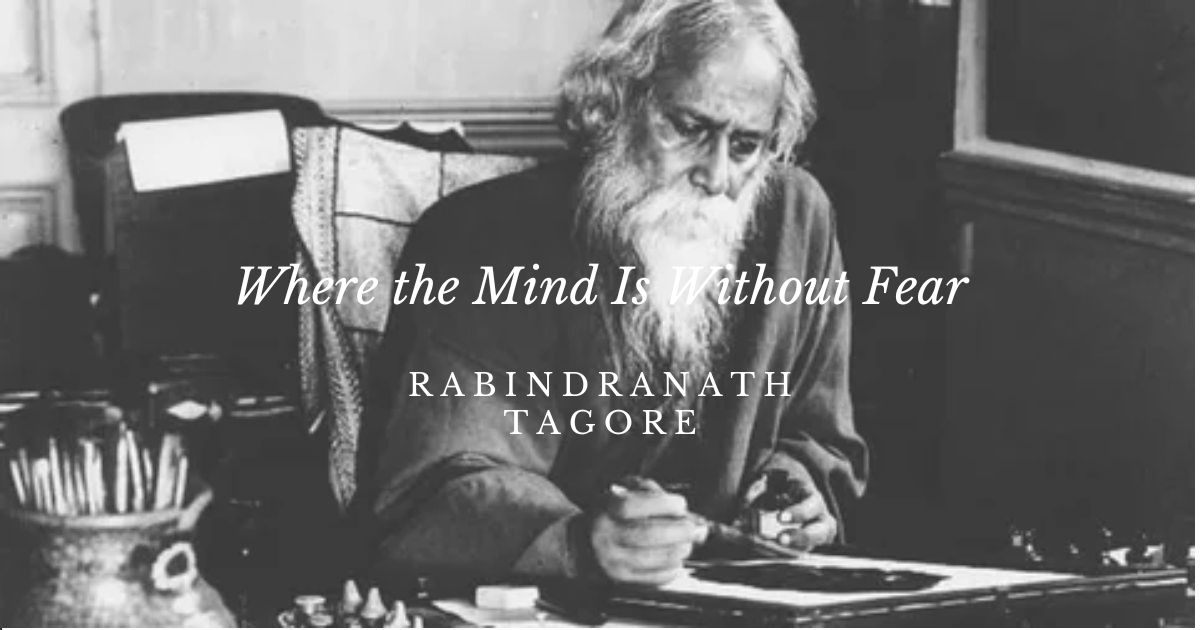
The Where the mind is without fear poem is one of Rabindranath Tagore’s most celebrated works, written as a prayer for a free, fearless, and enlightened nation. Published as poem number 35 in his collection Gitanjali, it expresses a vision of a country where people can think freely, speak truthfully, and grow without the barriers of ignorance, division, or oppression. This article walks through the poem’s structure, meaning, and lasting relevance, with a line-by-line breakdown suitable for students and general readers alike.
Key Takeaways
The Where the mind is without fear poem is Gitanjali 35, written by Rabindranath Tagore.

It's structured as a prayer, asking for a nation built on freedom, truth, and reason.

The poem contrasts a "heaven of freedom" with narrow-mindedness, fear, and division.

Tagore uses repetition and imagery to build a rhythmic, almost hymn-like tone throughout.

The poem remains widely studied for its themes of Indian independence poetry and universal human dignity.

Its message continues to resonate wherever people seek freedom of thought and expression today.
I’ve studied and taught Tagore’s work in the context of both literature and Indian history, and this poem consistently stands out for how compactly it captures a vision that’s both deeply personal and broadly political.
Where the Mind Is Without Fear – Full Poem Text
Because Tagore’s translated works may still carry regional copyright and translation rights depending on the edition, the full text isn’t reproduced here. Instead, here is a brief, fair-use excerpt with attribution, followed by an original prose summary of the poem’s content and structure.
As Tagore writes near the poem’s opening:
"Where the mind is without fear and the head is held high. Where knowledge is free..." Rabindranath Tagore, Gitanjali (1912 English translation), Poem 35
The poem continues across eleven lines, moving through a series of “where” clauses each describing a condition of an ideal, free society before closing with a direct address to a higher power, asking that the nation be awakened into this state of freedom. For the complete, accurately translated text, readers are encouraged to consult Gitanjali directly, which is widely available in the public domain given Tagore’s death in 1941.
About Rabindranath Tagore and Gitanjali
Rabindranath Tagore (1861–1941) was a Bengali poet, writer, composer, and philosopher, and remains one of the most influential literary figures from the Indian subcontinent. In 1913, he became the first non-European to win the Nobel Prize in Literature, largely on the strength of Gitanjali (“Song Offerings”), a collection of poems originally written in Bengali and later translated into English by Tagore himself.
Gitanjali was first published in Bengali in 1910, with the English translation released in 1912 through the India Society in London, featuring an introduction by W.B. Yeats. The collection is deeply spiritual in tone, blending personal devotion with reflections on freedom, humanity, and connection to a higher truth. Tagore’s freedom poem analysis often centers on Gitanjali poems specifically because they combine intimate, prayer-like language with broader social and political ideals, a combination that was unusual for its time.
Tagore was also a committed advocate for social reform and Indian self-determination. He renounced his British knighthood in 1919 in protest following the Jallianwala Bagh massacre, and he later composed the lyrics and music for India’s national anthem, “Jana Gana Mana,” as well as Bangladesh’s national anthem, “Amar Shonar Bangla.” This background is essential context for understanding why “Where the Mind Is Without Fear” reads as much like a patriotic poem as a spiritual one.
Line-by-Line Analysis
Lines 1–4 – Freedom and Fearlessness
The opening lines establish the poem’s central image: a mind free of fear, with knowledge freely available and the world not fragmented into isolated, narrow compartments. This heaven of freedom poem begins by describing individuals who can hold their heads high, unburdened by oppression or the fear of speaking their minds.
Tagore’s imagery here rejects narrow domestic walls, a phrase widely interpreted as a criticism of division, whether based on caste, religion, class, or narrow nationalism. The early lines set up the poem’s larger argument: that true freedom starts with freedom of thought, before it can extend into freedom of action or freedom as a nation.
Lines 5–8 – Truth and Reason
The middle section shifts toward describing words that come from a place of truth, and a tireless striving toward perfection guided by reason rather than superstition or blind habit. This section reflects Tagore’s broader philosophical interest in reason and truth as guiding forces for both individuals and societies.
Here, the poem also gestures toward the idea of a “clear stream of reason” that hasn’t been lost in the “dreary desert sand of dead habit” , a well-known image from the poem that contrasts living, purposeful thought with stagnant, meaningless tradition followed without understanding. This is often the section students focus on when preparing a Where the Mind Is Without Fear class 10 analysis, since it’s rich in metaphor and open to layered interpretation.
Lines 9–11 – The Poet’s Prayer for the Nation
In the final lines, the poem shifts into direct address, with the speaker calling on a higher power “Father” to awaken the nation into this envisioned state of freedom. This closing section transforms the poem from description into prayer, reinforcing its identity as part of a devotional collection.
The final line functions as both a personal spiritual request and a broader appeal for national awakening, making it one of the clearest examples in Gitanjali poems of Tagore blending the sacred with the civic. It’s this closing turn that elevates the piece from simple description into what many readers experience as a genuine poem on fearless nation-building.
Major Themes in the Poem
Several themes run consistently through the poem:
- Freedom of thought is the idea that true liberty begins in the mind, not merely in political or social structures.
- Unity over division is a rejection of narrow walls, whether social, religious, or national, that separate people from one another.
- Truth and reason are a call for honesty in speech and clarity in thought, free from superstition or blind habit.
- Spiritual awakening framing national and personal progress as something granted through divine or higher guidance.
- Aspiration and striving the poem values continuous effort toward improvement, rather than passive acceptance of the status quo.
Together, these themes of Gitanjali 35 position the poem as both a personal meditation and a broader social vision, which is part of why it continues to be studied within Indian independence poetry and beyond.
Literary Devices Used
Tagore employs a number of literary techniques that give the poem its distinctive rhythm and power:
| Device | Example/Effect |
| Anaphora | Repeated “Where…” structure builds a rhythmic, prayer-like momentum |
| Metaphor | “Dreary desert sand of dead habit” represents stagnant, meaningless tradition |
| Imagery | Vivid contrasts between narrow walls and open, free spaces |
| Apostrophe | Direct address to “Father” in the final lines, turning description into prayer |
| Symbolism | “Heaven of freedom” symbolizes an idealized, enlightened society |
This combination of devices gives Gitanjali 35 literary devices that are simple in language but layered in meaning, which is part of why the poem remains accessible to younger readers while still rewarding deeper literary interpretation.
Why Is This Poem Still Relevant Today?
Why does a poem written more than a century ago still feel relevant? Part of the answer lies in its universal themes: freedom of thought, resistance to division, and the pursuit of truth aren’t tied to any single historical moment. What does heaven of freedom mean in the poem is a question readers continue to explore because the answer shifts depending on context: colonial India, post-independence nation-building, or even contemporary conversations about free expression and social division.
The poem also avoids naming specific political events or figures, which gives it a timeless, adaptable quality. Readers in vastly different circumstances, students, activists, everyday citizens have found their own meaning in its call for fearless, reasoned, undivided thought. This flexibility is a major reason why Tagore wrote this poem in such broad, symbolic language rather than referencing specific historical grievances directly.
Where the Mind Is Without Fear – Summary
In summary, the poem describes an idealized society where people live without fear, think freely, and pursue truth guided by reason rather than blind tradition. It rejects narrow divisions between people and instead calls for unity, honesty, and continual striving toward improvement. The poem closes with a direct prayer, asking a higher power to awaken the nation into this state of freedom.
What is the summary of Where the Mind Is Without Fear in one sentence? It’s a poet’s prayer for a fearless, united, truth-seeking nation, built on freedom of thought rather than freedom alone in the political sense. This summary of Tagore’s freedom poem captures why the piece continues to be taught, quoted, and referenced well beyond its original historical context.
FAQs
Q: Who wrote Where the Mind Is Without Fear?
A: The Where the mind is without fear poem was written by Rabindranath Tagore, a Bengali poet and the first non-European to win the Nobel Prize in Literature, awarded in 1913. The poem appears as number 35 in his collection Gitanjali, originally written in Bengali and later translated into English by Tagore himself for international publication in 1912.
Q: What is the summary of Where the Mind Is Without Fear?
A: The poem is a prayer for a nation where people think freely, speak truthfully, and aren’t divided by narrow social or religious walls. It asks for a reason to guide thought instead of blind habit, and closes with a direct appeal to a higher power to awaken the country into this envisioned state of freedom.
Q: What does “heaven of freedom” mean in the poem?
A: “Heaven of freedom” refers to an idealized society where fear, division, and ignorance no longer limit human potential. It represents Tagore’s vision of a nation guided by truth, reason, and unity, rather than by fear or narrow-mindedness. The phrase captures the poem’s central hope for both personal and national awakening.
Q: Why did Tagore write this poem?
A: Tagore wrote this poem as part of Gitanjali, a devotional collection blending spiritual reflection with social vision. While it doesn’t name specific historical events, the poem reflects his broader concerns about division, blind tradition, and the importance of free, reasoned thought themes closely tied to his views on both individual dignity and Indian independence poetry.
Q: What are the main themes of Gitanjali 35?
A: The main themes of Gitanjali 35 include freedom of thought, truth and reason, unity over division, and spiritual awakening. The Where the mind is without fear poem presents these themes through vivid imagery and a repeated “where” structure, building toward a closing prayer for national and personal transformation guided by higher purpose.
Q: Is Where the Mind Is Without Fear a patriotic poem?
A: Yes, it’s widely read as a patriotic poem, though its patriotism is expressed through universal values like truth, reason, and freedom of thought rather than specific political demands. This is part of why the Where the mind is without fear poem continues to resonate broadly, beyond the particular historical context in which it was written.
Final Thoughts
The Where the mind is without fear poem endures because it speaks to something larger than any single moment in history: the human desire for freedom of thought, truth, and unity. Written by Rabindranath Tagore as part of Gitanjali, it blends personal spirituality with a clear social and political vision, making it one of the most enduring pieces of Indian independence poetry. Reading it closely, line by line, reveals just how much meaning Tagore packed into eleven carefully constructed lines, a reminder that some of the most powerful writing says the most with remarkably few words.
Recent Article : Beginning and Ending of a Poem: Amazing Insights Revealed

Jennifer Aston is a passionate poetry curator and writer with a deep love for the written word. She believes poetry has the power to heal, inspire, and connect people across all walks of life. Through PoemSteric, she brings together timeless and modern verses for every emotion and every moment.