
Introduction
There is a particular kind of poem that does not ask to be read quietly. It asks to be felt out loud, in your chest, on a crowded train, or alone in your room at 2 a.m. Sarah Kay writes exactly that kind of poem. If you have ever watched a spoken word video and had to pause it halfway through because your throat tightened, you already know why so many readers keep searching for Sarah Kay poems long after they first discovered her work.
This guide pulls together nine of her most emotionally resonant poems, explains the story or feeling behind each one, and shows you exactly where to send someone when words of your own are not enough. Unlike a simple list of quotes, every poem here comes with context: when she wrote it, what inspired it, and who it tends to hit hardest. Whether you are heartbroken, homesick, in love, or simply looking for something that finally puts a feeling into language, there is a Sarah Kay poem here for that exact moment.
We will also cover who Sarah Kay actually is, how her performance style shapes the way these poems land, and where you can watch or read the full versions once you find the one that speaks to you.
Key Takeaways
Before we go poem by poem, here is a quick snapshot of what this guide covers, so you can jump straight to what you need.
● Sarah Kay is an American spoken word poet, TED speaker, and founder of Project VOICE, known for turning everyday emotion into performance poetry.
● This list covers nine Sarah Kay poems, each matched to a specific mood: love, grief, self-doubt, nostalgia, and quiet resilience.
● Her poem ‘B (If I Should Have a Daughter)’ remains her most recognized work, thanks to her viral 2011 TED talk.
● Sarah Kay’s poetry is available in four published books and in dozens of performance videos, most of them free to watch.
● Her newest collection, A Little Daylight Left, was released by Penguin Random House in 2025, showing her work is still evolving.
Keep these in mind as you read through the full list below they will help you pick the right poem for exactly what you are feeling right now.
Who Is Sarah Kay? Meet the Poet Behind the Feelings
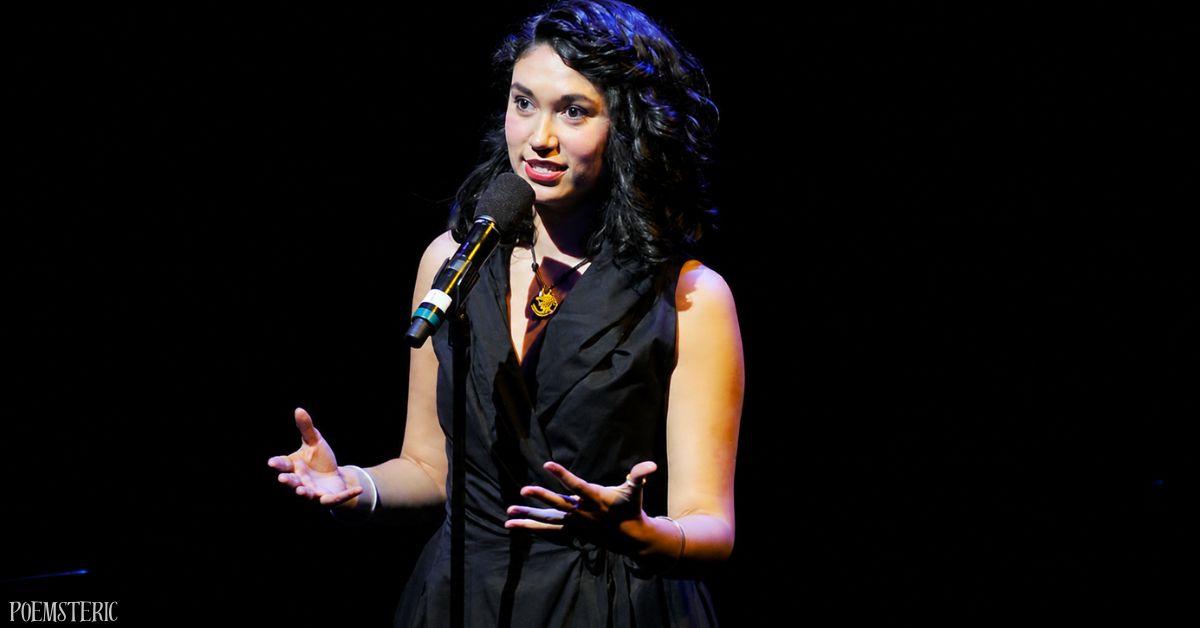
Sarah Kay is a New York City–born poet, performer, and educator who has spent close to two decades turning spoken word into something millions of people actively seek out. She began performing at the Bowery Poetry Club as a teenager and was, for a time, the youngest poet ever to compete in the National Poetry Slam. In 2004, she founded Project VOICE, an organization built around using spoken word poetry as a teaching and healing tool in classrooms around the world.
Her breakout moment came in 2011, when she performed at TED in Long Beach, California. That single talk, built around two of her poems, has since been watched millions of times online and remains one of the most shared spoken word performances on the internet. Since then, she has published four full poetry collections and continues to write a regular poetry column for The Paris Review called ‘Poetry Rx.’
What makes her work different from most page poetry is that it is written to be heard. The line breaks, the pacing, and the pauses are part of the meaning. That is exactly why a simple list of quoted lines rarely does her poems justice; you have to understand the moment each poem was written for, which is what this guide focuses on instead.
How to Choose the Right Sarah Kay Poem for Your Mood
Not every poem fits every moment. Here is a simple two-step way to find the right one before you scroll through the full list below.
Name What You’re Actually Feeling
Start by being specific. ‘Sad’ is too broad. Are you grieving, homesick, heartbroken, or just overwhelmed? Sarah Kay’s catalogue covers all of these separately, and picking the wrong poem for the wrong feeling can actually make a hard moment feel more confusing instead of clearer.
Match the Poem to the Moment
Once you know the feeling, match it to tone. If you want comfort, look for her quieter, gentler poems. If you want catharsis, something that lets you feel the full weight of an emotion before it lifts, look for her performance-heavy pieces, the ones built for a stage rather than a page. The list below tells you which is which for each poem.
9 Sarah Kay Poems That Will Make You Feel Everything At Once
Here are nine Sarah Kay poems worth knowing, in the order they tend to hit readers hardest starting with love and ending with the poem that made her famous.
1. When Love Arrives
A collaborative piece Sarah Kay is known for performing alongside fellow poet Phil Kaye, this poem captures the messy, unglamorous, deeply human side of falling in love, the version that shows up without warning and rarely looks like the movies. It is best for anyone who has just started falling for someone and needs language for the confusion that comes with it.
2. The Type
Later illustrated into its own book with artist Sophia Janowitz, ‘The Type’ is written directly to women who have been told, in one way or another, that their worth depends on how they are treated by others. It is a poem about reclaiming identity on your own terms rather than someone else’s. Send this to a friend who needs reminding that she was never defined by the people who hurt her.
3. Still Here
This is Sarah Kay at her most defiant. ‘Still Here’ is built around endurance, the quiet, stubborn kind that gets you through a hard season one day at a time. It resonates most with people going through a slow recovery, whether that is from heartbreak, illness, or simply a difficult year, and works as a reminder that survival itself is an achievement.
4. Scaffolding
A poem about the invisible structures that hold a family or a home together, ‘Scaffolding’ explores what happens when the support systems of childhood quietly start to weaken. It is one of her more introspective pieces, ideal for anyone processing a complicated relationship with ‘home’ as a concept rather than just a place.
5. Private Parts
This poem deals with vulnerability, intimacy, and the fear of being fully known by another person. It is one of Sarah Kay’s more tender, unguarded pieces, and it lands especially hard for anyone learning to let someone else in after being hurt before.
6. Worst Poetry
A more playful, self-aware entry in her catalogue, this piece pokes fun at the pressure poets feel to sound profound all the time. It is a good palate cleanser between heavier poems on this list and shows a lighter, funnier side of Sarah Kay’s stage presence that first-time listeners are often surprised by.
7. Postcards
Built around the ache of long-distance love and unfinished goodbyes, ‘Postcards’ captures the specific loneliness of loving someone from far away. It is frequently shared by people in long-distance relationships or anyone missing someone they cannot easily reach.
8. Dreaming Boy
A gentler, more hopeful poem, ‘Dreaming Boy’ leans into imagination and the version of the future we build in our heads before life catches up with us. It works well for anyone who needs a reminder that hope is not the same as naivety.
9. If I Should Have a Daughter (B)
This is the poem that introduced most of the world to Sarah Kay. Performed at her 2011 TED talk and later published as the short book ‘B,’ it is written as advice to a daughter who does not exist yet about resilience, heartbreak, and how to survive a life that will inevitably knock you down more than once. It remains her most searched, most shared, and most quoted piece of work, and it is usually the first Sarah Kay poem people fall in love with.
Where to Watch and Read Sarah Kay’s Poems
Most of Sarah Kay’s performances are available for free on YouTube, including her original 2011 TED talk. The Academy of American Poets (poets.org) hosts several of her more recent works in full text form, including poems originally published through their Poem-a-Day series. Her own official site also links to selected performances and written pieces. If you want the authentic performance experience, pacing, tone, and pauses included video is always the better starting point over text alone, since these poems were written to be heard first.
Sarah Kay’s Poetry Books: Where These Poems Live On the Page
If you want to read rather than watch, Sarah Kay has published four full poetry collections: ‘B’ (2011), ‘No Matter the Wreckage’ (2014), ‘The Type’ (2016), and ‘All Our Wild Wonder’ (2018), all illustrated by artist Sophia Janowitz. In 2025, Penguin Random House released her newest collection, ‘A Little Daylight Left,’ which she has described as a reflection on what poetry can and cannot do across a lifetime of writing. Each book collects poems that overlap with her live performances, making them a natural next step for anyone who has just discovered her through video.
Why Sarah Kay’s Poetry Resonates With So Many Readers
Part of what makes Sarah Kay’s work so widely shared is that it refuses to sound like ‘poetry’ in the distant, academic sense. She writes the way people actually think and feel in run-on thoughts, contradictions, and small, specific details rather than grand abstract statements. That accessibility is exactly why her poems keep circulating years after they were first performed, and why ‘Sarah Kay poems’ remains a steady, ongoing search rather than a passing trend. Her work meets people exactly where they are, which is the rarest thing a poem can do.
FAQs
Q: What is Sarah Kay’s most famous poem?
A: Sarah Kay’s most famous poem is ‘B (If I Should Have a Daughter),’ which she performed at the 2011 TED conference. The talk has been viewed millions of times online and introduced most of her global audience to her work. It was later published as a short illustrated book titled ‘B.’ Among all Sarah Kay poems, this remains the most searched, quoted, and shared piece, largely because of how widely the TED performance was circulated.
Q: Who is Sarah Kay?
A: Sarah Kay is an American spoken word poet, performer, and educator from New York City. She is the founder of Project VOICE, an organization that uses poetry as an educational tool, and has published four full poetry collections. She is widely known for her 2011 TED talk and continues to write and perform Sarah Kay poems for audiences worldwide, alongside writing a poetry column for The Paris Review.
Q: Where can I read or watch Sarah Kay’s poems for free?
A: Many of her performances are available free on YouTube, including her 2011 TED talk. The Academy of American Poets (poets.org) also hosts full text versions of several of her poems. Her official website links to additional performances and written work. Watching the performance is recommended over reading text alone, since her poems are written for spoken delivery.
Q: What makes Sarah Kay’s poetry different from other poets?
A: Sarah Kay writes in an accessible, conversational style built for performance rather than the page alone. Her Sarah Kay poems often use everyday language, specific personal details, and emotional honesty instead of abstract or academic phrasing, which is part of why her work resonates so widely with readers who don’t consider themselves regular poetry fans.
Q: Are Sarah Kay’s poems appropriate for all ages?
A: Most Sarah Kay poems are appropriate for teens and adults, though some deal with mature themes like heartbreak, grief, and vulnerability. A few, including ‘B (If I Should Have a Daughter),’ are widely used in classrooms and educational settings, but it is worth previewing a poem first if you’re sharing it with a younger audience.
Final Thoughts
Sarah Kay’s poems work because they do not try to fix your feelings, they sit with them. Whether you are looking for comfort, catharsis, or just language for something you could not explain before, there is very likely a poem on this list built for exactly that moment. Start with whichever one matches what you are feeling right now, watch the full performance if you can, and let it do what a good spoken word always does: say the thing you didn’t know how to say yourself.
Recent Article : 25 Weird Poems That Will Make You Laugh, Think, and Wonder

Jennifer Aston is a passionate poetry curator and writer with a deep love for the written word. She believes poetry has the power to heal, inspire, and connect people across all walks of life. Through PoemSteric, she brings together timeless and modern verses for every emotion and every moment.