

Introduction
Heartbreak has a way of sending people to Rumi. Eight centuries after he lived, rumi poems keep turning up in wedding readings, grief journals and late-night searches, because they say something rare: that the heart breaks open not to destroy us, but to widen our capacity for love, connection and meaning. Whether you are nursing the wounds of lost love, looking for deeper intimacy, or simply yearning for something beyond the material world, these verses meet you where you are.
One honest note before we begin. Most Rumi lines that circulate in English come from loose, popular versions of his Persian, especially those by Coleman Barks, and some famous “Rumi quotes” online cannot be traced to a source in his writing at all. So treat the lines below as interpretations that have spoken to millions of readers, and see the translation section if you want to go closer to the original.
Why Rumi’s poetry still heals modern hearts
The human heart has not changed much in 800 years. We still ache when love fades, still hunger for connection and still question our place in the universe. What makes Rumi so enduring is his refusal to separate emotional pain from spiritual growth. Where modern self-help often treats heartbreak as a problem to be solved, Rumi treats it as an initiation, a necessary cracking that lets light in.
His verses speak to the divorcee staring at empty coffee cups, the widow waking to another quiet morning, the young lover afraid of being vulnerable. Rumi saw romantic love and divine love as the same river seen from different banks. When he writes about longing, he describes both the soul’s yearning for the divine and the human craving for closeness. This dual vision turns personal suffering into something universal. (If divine longing is what you are looking for, our collection of poems about God is a good companion.)
Who was Rumi?
Jalāl al-Dīn Muḥammad Rūmī was born in 1207 in Balkh, in present-day Afghanistan. When the Mongol invasions threatened the region, his family travelled west and eventually settled in Konya, in modern Turkey. There Rumi became a respected Islamic scholar and teacher until 1244, when he met the wandering dervish Shams of Tabriz. The meeting upended his structured life and unleashed a flood of poetry, including the lyrical Divan-e Shams and the long spiritual poem the Masnavi, together tens of thousands of verses.
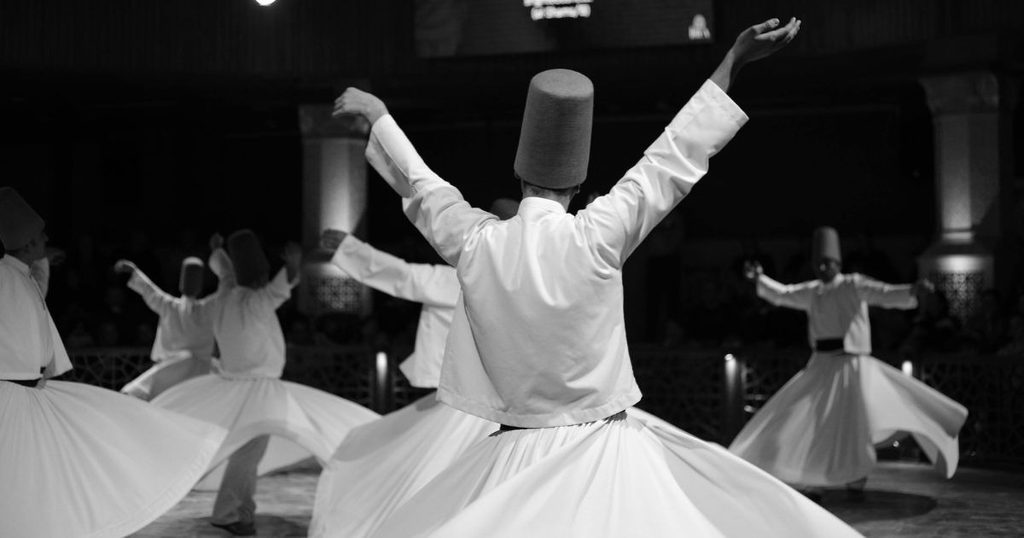
Shams disappeared in about 1247, and the circumstances remain uncertain. Rumi’s grief over this loss shaped much of his work. After his death in 1273, his followers, led by his son Sultan Walad, formalised the Mevlevi Order, whose “whirling dervishes” still turn in meditation. Rumi’s lasting gift was to put ecstatic spiritual experience into language ordinary readers could feel. His verse is closely tied to the ghazal tradition (see types of poems for more on that form).
13 Rumi poems that heal the heart
These thirteen selections are doorways into different rooms of the heart: searching, surrendering, releasing, committing. The short lines are as they commonly appear in popular English versions.
1. First Love Story: stop searching outside yourself.
“Lovers don’t finally meet somewhere. They’re in each other all along.”
This dismantles the myth of the “other half.” Our frantic search through apps, events and fantasies, Rumi suggests, comes from forgetting our own nature. You are not incomplete. When two people who have found love within themselves meet, the connection becomes recognition rather than desperate grasping.
2. Fly Toward the Sky: love dissolves the ego.
“This is love: to fly toward a secret sky, to cause a hundred veils to fall each moment.”
Love, in Rumi’s vision, is dissolution rather than comfort. The “hundred veils” are the defences we build around the heart: cynicism, control, the need to be right. The healing comes from seeing that our struggle in love is often resistance to this change.
3. Not This Hair: you are the soul.
A widely shared verse says we are not the hair or the skin but the soul within. In an age of image anxiety, it shifts attention from the perishable body to the essence, which helps when you are facing ageing, illness or rejection.
4. The Wound: the pain is the portal.
“The wound is the place where the Light enters you.”
Perhaps the most famous line attributed to Rumi, it reframes suffering. In psychological terms it echoes post-traumatic growth: our hardest experiences can become sources of compassion. For someone in fresh grief this may feel like cold comfort, but many later find it true.
5. Lovers Don’t Finally Meet: already connected. A close variant of poem 1, it emphasises eternal connection over temporary separation. It eases the anxiety of new relationships (“Will they call?”) and offers comfort to anyone in a long distance relationship (see long distance love poems) or mourning a partner.
6. Be in Love: love is a practice. The popular line asks you to be in love with your life, every detail of it. It turns love from a destination into a practice, available now in cooking, walking and breathing.
7. Goodbyes: for those who love with their eyes. A widely shared line says goodbyes are only for those who love with their eyes, because for those who love with heart and soul there is no separation. Its exact source in Rumi’s Persian is unclear, but it fits his lifelong grief over Shams. Read it as a framework for loving beyond physical presence. (For related poems, see poems about missing someone.)
8. Dead Leaves: release what no longer serves you. A popular line about letting dead leaves fall like a tree. It is often attributed to Rumi, though we have not found a source in his writings, so treat it as a modern saying in his spirit. Its power is in its gentleness: not dramatic rejection but natural release.
9. More Love Inside: you are already enough. Insecurity in love often feels like scarcity. This verse replies with abundance: there is more love within you than you understand. It does not deny real needs in relationships. It suggests meeting them from fullness rather than emptiness.
10. Blessed Marriage: sacred commitment. Rumi wrote about marriage as spiritual practice, seeing the bond between partners as a mirror for divine fidelity. Read at weddings, this kind of blessing lifts everyday partnership into something sacred.
11. I Want You: vulnerability wins. The circular logic (I want because I know, I know because I love) describes how deep recognition grows only through loving. It eases the fear of being seen.
12. Die Into Love: total surrender. A line often shared as “Die into love.” It speaks to the fear of losing yourself in another person. In the Sufi tradition this is fana, a dissolving of the ego, and the image to hold is the caterpillar in the cocoon: not death, but transformation. We have not traced this exact wording to a Rumi source, so take it as a popular paraphrase of his theme.
13. Ecstatic Motion: you are love itself. A line that circulates widely says we are born of love, and love is our mother. If love is something we are rather than something we acquire, then seeking it outside is like a fish searching for water. It answers the basic loneliness of being human. Again, this wording is popular rather than traceable to a specific poem.
How to use Rumi’s poems for healing
Morning ritual. Read one poem aloud before the day begins. Memorise a single line, such as “The wound is the place where the Light enters you,” and carry it as an anchor. The practice is absorption, not analysis.
During heartbreak. Resist skipping to poems about new love. Dwell with those that honour the pain. Read them as letters from a friend who walked the road. Journal about what the poems make you feel, not what they mean. If your sadness is overwhelming or lasts a long time, please also talk to a doctor or counsellor.
For dating and new love. Use poem 1 and poem 5 as a short meditation before a date or a difficult conversation. They help you tell the difference between attraction based on fantasy (seeking completion) and connection based on recognition (two whole people meeting).
For married couples. Read “Blessed Marriage” together on anniversaries or after conflict. Some couples keep a shared journal and each pick poems that say what they struggle to say directly.
Best English translations of Rumi
The feeling of a Rumi poem depends heavily on the translation. A few places to start:
- Coleman Barks, The Essential Rumi. The most popular and beginner-friendly. Barks worked from existing scholarly translations rather than Persian directly, so his versions are free and emotional rather than literal.
- Jawid Mojaddedi, The Masnavi (Oxford). A reliable, readable translation by a Persian-literature scholar, good for the long spiritual poem.
- Reynold A. Nicholson and A.J. Arberry. Older scholarly translations that stay close to the Persian. Less polished, but a useful check against looser versions.
- Shahram Shiva, Rumi: Thief of Sleep. A devotional take that keeps more of the Islamic context.
FAQs
Are Rumi’s poems romantic or spiritual?
Both, deliberately. Rumi used romantic and sometimes erotic imagery for spiritual experience, following a long mystical tradition. The “Beloved” in his work can mean God, his teacher Shams, and the human capacity for love itself.
Which Rumi poem is best for a wedding?
Readers often choose a “marriage blessing” or the “lovers don’t finally meet somewhere” lines. Both emphasise commitment and lasting connection over fleeting romance.
What does “the Beloved” mean in Rumi’s poetry?
The ultimate object of longing: divine presence, perfect understanding, unconditional acceptance. For modern readers it can mean any source of ultimate meaning, such as a partner, a calling or a spiritual path.
Where should beginners start reading Rumi?
With Barks’s The Essential Rumi for accessibility, then a more literal translation such as Mojaddedi’s Masnavi for contrast. Read slowly and aloud, and favour poems that make you feel something over ones you merely understand.
Final thought
The next time grief arrives, remember that you are not failing at happiness. You are undergoing the widening that Rumi describes so precisely. The crack in your chest is not damage. It is room for a love larger than you imagined. Your heart is not broken. It is preparing to hold more.
Recent Article : Types of Poems for Kids: The Ultimate Guide

Jennifer Aston is a passionate poetry curator and writer with a deep love for the written word. She believes poetry has the power to heal, inspire, and connect people across all walks of life. Through PoemSteric, she brings together timeless and modern verses for every emotion and every moment.