
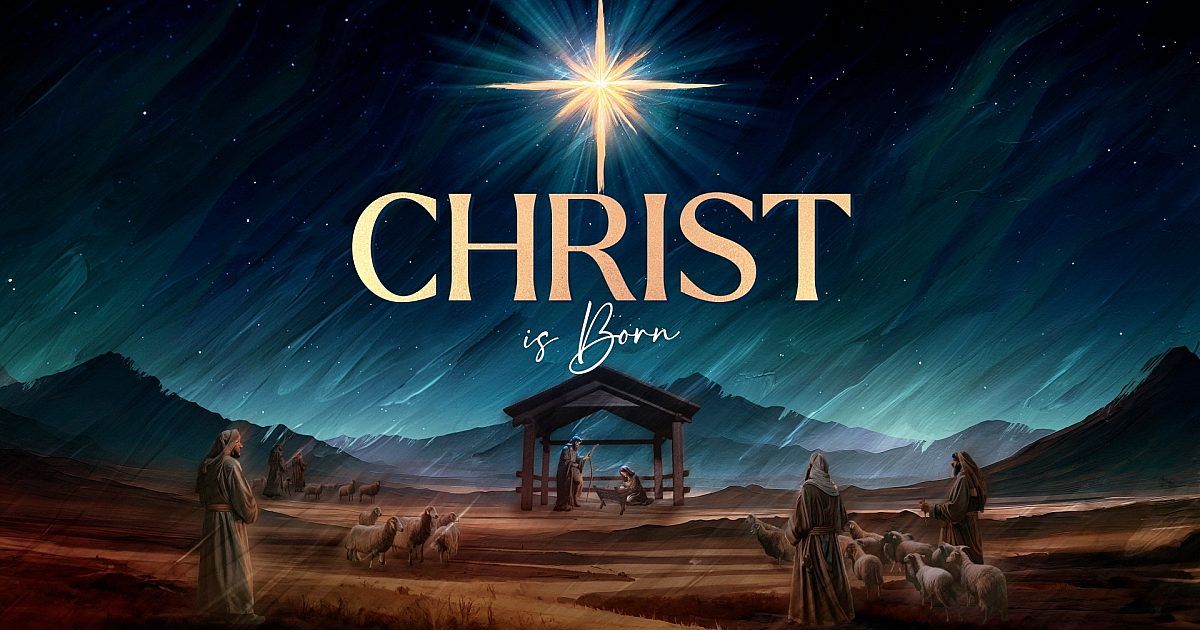
Christmas brings with it a flood of images and sounds that have become familiar to us all. Twinkling lights, decorated trees, gift exchanges, and the ever-present figure of Santa Claus dominate much of our cultural celebration. Yet beneath these traditions lies something far more profound, something that has inspired poets for centuries to put pen to paper and capture the wonder of what really happened in Bethlehem. Christian Christmas poems offer us a way to pause, reflect, and remember that the heart of this season is not found in the wrapping paper or the holiday sales, but in the miraculous birth of Jesus Christ.
For those seeking to reconnect with the spiritual foundation of Christmas, poetry provides a unique pathway. Unlike theological treatises or lengthy sermons, a well-crafted poem can distill deep truth into a few lines that linger in the mind and stir the soul. The best Christian Christmas poems do not merely describe the nativity scene; they invite us to enter it, to feel the cold of the stable, the wonder of the shepherds, and the awe of the Magi as they knelt before the infant King.
In this collection, you will find thirty poems that span centuries and styles. Ten come from the masters of English literature, voices like Longfellow and Rossetti who understood that great poetry and great faith naturally intertwine. Ten more place you directly into the biblical narrative, seeing the Christmas story through the eyes of those who lived it. The final ten are original works, written to speak to contemporary hearts while remaining rooted in eternal truth. Together, they form a treasury of Christian Christmas poems that can enrich your personal devotion, your family gatherings, and your worship throughout this holy season.
What Makes a Christmas Poem Truly Christian?
Not every verse that mentions snowflakes, sleigh bells, or even the word “Christmas” qualifies as Christian poetry. The distinction matters because the market is flooded with seasonal verse that, while pleasant, carries no spiritual weight. A genuinely Christian poem operates on different principles and aims for different effects.
Religious vs Secular Christmas Poetry
Secular Christmas poetry often celebrates the emotions of the season, the warmth of family gatherings, the beauty of winter landscapes, or the generosity of gift-giving. There is nothing wrong with these themes, and many fine poems have been written about them. However, they operate on a horizontal plane, describing human experiences without reference to the divine.
Christian Christmas poems, by contrast, operate vertically. They acknowledge the human elements of the nativity, the poverty of the stable, the exhaustion of the journey, the fear and joy of the participants. But they always point beyond these circumstances to the theological reality that God has entered human history. The manger is not merely a touching scene of a birth in difficult circumstances; it is the moment when the Creator became part of His creation. This distinction transforms everything.
Consider how different poets treat similar imagery. A secular writer might describe the star of Bethlehem as a beautiful astronomical phenomenon that guided travelers. A Christian poet sees it as a sign of divine intervention, a light breaking into darkness that mirrors the greater Light about to be born. The same object, two completely different meanings.
Core Biblical Themes: Incarnation, Salvation, Hope, Peace
Four themes recur throughout the great Christian Christmas poems, and their presence or absence often determines whether a poem truly belongs to this tradition.
Incarnation stands at the center. The shocking claim that God became flesh, that the infinite became an infant, that the omnipresent was wrapped in swaddling clothes, this is the mystery that has drawn poets for two millennia. The best poems do not explain this mystery, which would be impossible, but they help us approach it with wonder.
Salvation provides the context. The manger only makes sense in light of the cross. Christian poets understand that Jesus was born to die, that the infant hands would one day be pierced, that the cooing voice would one day cry “It is finished.” This awareness gives Christian Christmas poetry a depth that purely celebratory verse cannot achieve.
Hope emerges naturally from this narrative. In a world marked by suffering, injustice, and death, the Christmas story announces that God has not abandoned His creation. He has come to rescue it. This hope is not wishful thinking but a confident expectation grounded in what God has already done.
Peace appears in the angelic announcement to the shepherds. Not the mere absence of conflict, but the Hebrew concept of shalom, the flourishing of all things as God intended them. The Prince of Peace has come, and His kingdom will know no end.
Why Christian Poems Center on Jesus Christ
Every genre of Christian poetry ultimately points to Christ, but this is especially true at Christmas. The season offers no alternative center. We cannot speak of Christian Christmas poems without speaking of Jesus, any more than we can speak of the solar system without speaking of the sun. Everything orbits around Him.
This focus does not make the poetry narrow or repetitive. Quite the opposite. The person of Jesus Christ is inexhaustibly rich. One poet may emphasize His humanity, another His divinity. One may contemplate His mother, another the shepherds who received the angelic announcement. One may dwell on the silence of that holy night, another on the cosmic significance of what was occurring. But all true Christian Christmas poems recognize that without Jesus at the center, they are merely describing winter festivals.
10 Classic Christian Christmas Poems from History’s Greatest Poets
The English language has been blessed with poets who took the Christmas story seriously and treated it with the full resources of their art. These ten classics have endured because they combine technical excellence with genuine spiritual insight.
1. “Christmas Bells” by Henry Wadsworth Longfellow
Henry Wadsworth Longfellow wrote “Christmas Bells” in 1863, during the darkest days of the American Civil War. His son had been severely wounded in battle, and the poet himself was struggling with the apparent triumph of hatred and violence. The poem begins with the familiar sounds of Christmas celebration but takes an unexpected turn as Longfellow confronts the reality of suffering.
The famous lines capture this tension: “And in despair I bowed my head / ‘There is no peace on earth,’ I said / ‘For hate is strong and mocks the song / Of peace on earth, good will to men.'” Yet the poem does not end in despair. The bells continue to ring, and Longfellow hears in them a deeper truth: “Then pealed the bells more loud and deep / ‘God is not dead, nor doth He sleep / The Wrong shall fail, the Right prevail / With peace on earth, good will to men.'”
This poem became the basis for the carol “I Heard the Bells on Christmas Day,” and its message remains urgently relevant. It teaches us that Christian hope is not naïve optimism that denies evil, but a settled confidence that God will ultimately set things right.
2. “In the Bleak Midwinter” by Christina Rossetti
Christina Rossetti was a devout Anglican whose faith permeated all her poetry. “In the Bleak Midwinter,” first published in 1872, is widely considered the greatest Christmas poem in the English language. Its power lies in its stark contrasts and its profound final stanza.
Rossetti imagines the nativity occurring in the depths of winter, with “frosty wind made moan” and “earth stood hard as iron, water like a stone.” Into this frozen landscape comes infinite warmth: “Our God, Heaven cannot hold Him, nor earth sustain / Heaven and earth shall flee away when He comes to reign.” The cosmic scope of the Incarnation is set against its humble circumstances.
The poem’s conclusion has moved generations to worship. After considering what gifts the angels, the heavens, and even Mary herself might offer, Rossetti concludes: “What can I give Him, poor as I am? / If I were a shepherd, I would bring a lamb / If I were a Wise Man, I would do my part / Yet what I can I give Him: give my heart.” This is the appropriate response to the gift of Christmas, the offering of ourselves.
3. “The Holy Night” by Elizabeth Barrett Browning
Elizabeth Barrett Browning was a serious student of Scripture, having taught herself Hebrew and Greek specifically to read the Bible in its original languages. “The Holy Night” reflects this deep engagement with the biblical text.
The poem retells the nativity with careful attention to the Gospel accounts while bringing fresh poetic insight to familiar details. Browning captures the paradox of the Creator lying in a manger, the shepherd King attended by actual shepherds, the infinite God contained in infant form. Her learning never overshadows her wonder; the poem remains accessible and moving.
4. “The Three Kings” by Henry Wadsworth Longfellow
Longfellow returns to our list with a dramatic monologue spoken by one of the Magi. The poem captures the exhaustion of the journey, the persistence of hope, and the transformation that occurs when the seekers finally find what they were seeking.
The final stanza expresses the Magi’s recognition that their journey has changed them forever: “The night is freezing, the palace is old / My heart is sad with a longing cold / For the palm-trees of the East, and the gold / And the sunny lands where I was born.” Having seen the Christ child, they cannot simply return to their former lives.
5. “Journey of the Magi” by T.S. Eliot
T.S. Eliot’s modernist masterpiece takes a different approach to the same subject. Written in 1927, shortly after Eliot’s conversion to Christianity, the poem presents the aged Magus looking back on his famous journey.
The tone is unsettling, even disturbing. The Magus describes hardships that seem hardly worth the destination: “The ways deep and the weather sharp / The very dead of winter.” And when they arrive, the scene is underwhelming: “Finding the place; it was (you may say) satisfactory.”
Yet the final lines reveal the true significance of the journey: “We returned to our places, these Kingdoms / But no longer at ease here, in the old dispensation / With an alien people clutching their gods / I should be glad of another death.” The birth of Christ means the death of the old order, and the Magi find themselves caught between two worlds. This is sophisticated theological poetry that rewards careful reading.
6. “A Christmas Carol” by G.K. Chesterton
G.K. Chesterton, the great Catholic apologist, brought his characteristic vigor and paradox to Christmas poetry. “A Christmas Carol” celebrates the explosive, revolutionary quality of the Incarnation.
The poem insists that the gentle Christmas story is actually “the explosive force” that shattered the stable calm and continues to shake the world. Chesterton will not allow us to domesticate nativity into mere sentiment. The birth of God in a stable is an invasion, a turning point in history that demands a response.
7. “Love Came Down at Christmas” by Christina Rossetti
Rossetti’s second entry on our list is simpler than “In the Bleak Midwinter” but equally profound. The poem operates through repetition and variation, each stanza beginning with “Love came down at Christmas” and exploring different dimensions of that love.
The final stanza turns to application: “Love shall be our token / Love be yours and love be mine / Love to God and to all men / Love for plea and gift and sign.” Christmas love is not merely to be received but to be shared, becoming the identifying mark of those who have truly understood the season.
8. “The Oxen” by Thomas Hardy
Thomas Hardy is not typically thought of as a religious poet, and his personal faith was complicated at best. Yet “The Oxen,” written in 1915, captures something essential about the persistence of belief.
The poem recalls a folk tradition that farm animals kneel at midnight on Christmas Eve in honor of the Christ child’s birth. The adult speaker knows this is legend, not fact, yet finds himself drawn to the barn on Christmas Eve: “Hark! I should say the folk do the same / I should go now in the gloom / And kneel with the oxen and pray for peace.” The poem honors the longing for wonder even in an age of skepticism.
9. “Christmas” by John Betjeman
John Betjeman, Poet Laureate of the United Kingdom, wrote “Christmas” in 1954. The poem moves from the commercial chaos of modern Christmas preparation to the eternal reality behind it all.
Betjeman does not dismiss the trappings of the season, the cards, the presents, the decorated tree. But he insists that these are merely the frame for the true picture: “And is it true? And is it true? / This most tremendous tale of all / Seen in a stained-glass window’s hue / A Baby in an ox’s stall?” The poem ends with a direct address to the Christ child, acknowledging that the truth of Christmas is finally a matter of faith.
10. “The Shepherds” by William Blake
William Blake’s mystical vision produced a unique Christmas poem in “The Shepherds.” The poem celebrates the pastoral setting of the nativity while infusing it with Blake’s characteristic spiritual intensity.
The shepherds are not merely background figures but participants in a cosmic drama. Blake sees in their simple occupation a type of the Good Shepherd who has come to seek and save the lost. The poem’s imagery is vivid and strange, unmistakably Blakean, yet it serves the traditional Christian narrative rather than subverting it.
10 Nativity Poems: See Christmas Through Biblical Eyes
The following poems place us directly into the biblical narrative, imagining the thoughts and feelings of those who witnessed the first Christmas. They are designed to help modern readers enter the story with fresh eyes and open hearts.
11. Mary’s Song: A Mother’s Prayer
Before the Magnificat, before the shepherds arrived, there was a young woman alone with her thoughts and the child growing within her. This poem imagines Mary’s private meditation as she journeyed to Bethlehem, carrying both the weight of scandal and the glory of divine purpose.
The poem explores the tension between her knowledge, that this child was the Son of God, and her ignorance, of how this would unfold, how she would watch him die, how she would become mother to the world. It honors her faith while acknowledging her humanity.
12. Joseph’s Silent Night
Joseph speaks no words in the biblical nativity accounts, yet his actions reveal everything. This poem gives voice to the silent guardian, the man who accepted scandal to protect his betrothed, who led the donkey to Bethlehem, who made room in the stable.
The poem contemplates Joseph’s unique position: not the father, yet called to father; not the miracle, yet essential to the miracle. His obedience, his protection, his quiet strength, these are the themes that emerge as we imagine his perspective on that holy night.
13. The Angel’s Announcement
The angelic message to the shepherds is one of the most dramatic moments in the Christmas story. This poem attempts to capture both the terror and the comfort of that encounter, the glory that blinded and the words that healed.
The poem moves from the angel’s appearance to the heavenly host’s song, considering what it meant for the messengers of God’s throne to celebrate with those who kept sheep. The reversal of values, that the first announcement went to shepherds rather than priests or kings, is central to the poem’s meaning.
14. The Shepherds Under the Stars
After the angels departed, the shepherds had a choice. They could dismiss the vision as a strange collective dream, or they could go to Bethlehem and see. This poem follows them on their journey, these working men who became the first evangelists.
The poem captures their haste, their wonder, their recognition of the sign, the baby wrapped in cloth lying in a manger. And it follows them as they left, “glorifying and praising God for all the things they had heard and seen.” Their transformation from night watchmen to witnesses is the poem’s arc.
15. The Star of Bethlehem
The star that guided the Magi has fascinated astronomers and poets alike. This poem treats it not primarily as an astronomical phenomenon but as a sign of cosmic significance, a light that appeared when the True Light entered the world.
The poem considers what the star meant to those who followed it: the hope it represented, the journey it required, the destination it revealed. And it asks what stars we are following, what signs we are reading, in our own search for meaning.
16. The Journey to Bethlehem
Mary and Joseph’s journey was approximately ninety miles, taking three to four days on foot and donkey. For a woman in the final stages of pregnancy, this was an ordeal. This poem enters into the physical reality of that journey, the dust, the discomfort, the fear of childbirth far from home.
Yet the poem also recognizes the spiritual significance of this journey. Like all pilgrimages, it was both external and internal, a making-ready for the miracle that would transform not only their lives but the history of the world.
17. The Manger in the Stable
The manger, a feeding trough for animals, became the cradle of the King of kings. This poem contemplates the irony and the appropriateness of this arrangement. He who would feed the multitudes with bread began His life in a food container.
The poem describes the stable with all its sensory details, the smells, the sounds, the rough wood, the presence of animals. Into this ordinary, even squalid setting comes extraordinary grace. The contrast is the poem’s central tension.
18. The Visit of the Magi
The arrival of the wise men from the East, whether days or months after the birth, marks the recognition that this child is for all nations. This poem follows their journey, their consultation with Herod, their final finding of the child.
The poem emphasizes the gifts, gold for a king, incense for a priest, myrrh for one who would die. Each gift reveals an aspect of Christ’s identity and mission. The Magi came to worship, and their worship was costly in time, effort, and treasure.
19. Simeon’s Prophecy
The aged Simeon, waiting in the temple, represents all of faithful Israel longing for the consolation of Jerusalem. This poem captures his moment of recognition when Mary and Joseph brought the child for dedication.
“This child is destined to cause the falling and rising of many in Israel,” Simeon prophesied, “and to be a sign that will be spoken against.” The poem does not flinch from this darker note, the sword that would pierce Mary’s soul. Christmas leads inevitably to Easter, and Simeon saw both.
20. The Light in the Darkness
The prologue to John’s Gospel, “The light shines in the darkness, and the darkness has not overcome it,” provides the theme for this final nativity poem. It gathers all the images of light from the Christmas story, the star, the angels’ glory, the eyes of the infant Christ, and unites them in a meditation on the enduring power of divine illumination.
The poem moves from the specific lights of the nativity to the general truth that Christ’s coming has forever changed the relationship between light and darkness. The darkness remains real, but it cannot extinguish the light that has come into the world.
10 Original Christian Christmas Poems
The following poems are original works written specifically for this collection. They aim to speak to contemporary hearts while remaining faithful to the eternal truths of the Christmas story.
21. Not Just a Baby
He lies so still, so small, so weak,
A newborn’s helpless cry.
Yet heavens bowed and angels sang
When this child drew His first breath to die.
Not just a baby in the straw,
But Maker of the stars.
Not merely Mary’s precious son,
But everlasting Lord of ours.
The hands that would be pierced with nails
They are tiny, soft, and new.
The feet that walked on water’s waves
Are learning what feet do.
So do not sentimentalize
This mystery of birth.
The infinite has entered time,
The highest came to earth.
22. The Manger and the Cross
The wood that held His infant form
Would find its final frame
In rugged beams on Calvary’s hill,
Where love would know its name.
The swaddling bands that wrapped Him tight
Would loosen with the years,
Until the strips of linen cloth
Would bind Him not with love but fears.
The myrrh the wise men brought to Him,
Embalming spice and sweet,
Would find its purpose on the day
When friends would wash His wounded feet.
So Christmas holds its Easter close,
As joy contains its sorrow.
The manger and the cross are one,
Today and tomorrow.
23. Still He Comes
He came in flesh to Bethlehem,
In poverty and power.
He comes in Word to seeking hearts
At this late hour.
He came to shepherds on the hill,
To Magi from the East.
He comes to those who knock and ask,
To greatest and to least.
He came to die and rise again,
To conquer death and sin.
He comes to make His home in us,
To dwell and reign within.
So let us keep our hearths prepared,
Our spirits are watchful, bright.
For He who came so long ago
Still comes this holy night.
24. Your Heart Is the Manger
No room within the crowded inn,
No space for such as He.
But have you room within your heart,
A place for Him to be?
The stable was not what He chose,
But what was offered to Him.
And what you offer Jesus now
Determines everything.
Your heart is like the manger, rough,
Unlikely for a throne.
Yet He will enter gladly there
And make it like His own.
So clear the beasts of selfishness,
The straw of sin is removed.
And make your heart a fit abode
For everlasting Love.
25. Born for Redemption
Not born for comfort, ease, or fame,
Not born to rule an earthly throne.
He came to bear our sin and shame,
To make our brokenness His own.
The law we could not keep, He kept.
The death we earned, He died.
The life we could not live, He lived,
And lives for us, the crucified.
This is the reason for the star,
The angels and the song.
Redemption’s plan, conceived before
The world was born, comes strong.
So sing with joy, but sing with awe,
Of love that knows no measure.
The babe of Bethlehem is born
To be our dearest treasure.
26. A Crown Beyond the Cradle
They saw a peasant infant born,
The shepherds and the kings.
They could not see the crown of thorns,
The suffering that love brings.
They saw the sweetness of a child,
The wonder of new birth.
They could not see the cross that waited,
The pain to shake the earth.
Yet He who wore the crown of thorns
Now wears the crown of glory.
And all who share His suffering
Will share His triumph-story.
So look beyond the cradle, friend,
To where true greatness lies.
The way of Christmas leads through Lent
To resurrection skies.
27. Heaven in a Stable
What contained the uncontained?
What held the holder of the seas?
What roof could shelter from the rain
The One who made the skies and trees?
A stable rude, a manger bare,
A mother’s loving arms.
The infinite made infant there,
The God who knows no charms.
Heaven came down to earth that night,
Not in its blazing glory,
But hidden in a veil of flesh,
A small and human story.
Yet heaven still breaks through to earth
Wherever love is found.
The stable and the human heart
Are holy, hallowed ground.
28. The Promise Fulfilled
The seed of woman, promised long
To crush the serpent’s head,
Has come at last, the prophets’ song,
The hope of all who dread.
The offspring of Abraham, through whom
All nations would be blessed,
Lies sleeping now in stable gloom,
In human flesh expressed.
The son of David, Israel’s king,
The shepherd of the sheep,
Has come, though no one crowns Him now,
His reign is still to be kept.
All promises find their yes
In this child’s gentle breath.
The long-awaited Savior comes
To conquer sin and death.
29. Peace on Earth Begins in Christ
The angels sang of peace on earth,
Goodwill to all mankind.
Yet Herod raged and wars continued,
Peace seemed hard to find.
For peace is not the absence of
The conflicts that divide.
True peace is presence of the Lord,
In whom all hearts abide.
Peace on earth begins in Christ,
The Prince of Peace revealed.
And where He reigns in human hearts,
His peace is never sealed.
So let Him come and rule in you,
This child of Bethlehem.
And through your life, His peace will spread
To all who welcome Him.
30. Emmanuel | God With Us
They called Him Emmanuel, God with us,
Not God above, remote, supreme,
But God come down to where we are,
To share our life, to share our dreams.
He did not stay in heaven’s height,
But entered our confusion.
He took our flesh, He knew our pain,
He chose this strange infusion.
Emmanuel, the name we need
When loneliness surrounds us.
Emmanuel, the truth we cling
When nothing else confounds us.
For God is with us, even now,
As he was in that stable.
His presence is our Christmas gift,
His love is our greatest ability.
How to Use These 30 Christian Christmas Poems
Having gathered this treasury of verse, the practical question arises: how can these poems enrich your Christmas season? Here are four primary contexts in which Christian Christmas poems can serve you well.
For Church Services and Worship
Many of these poems can be incorporated directly into worship services. The classics work well as responsive readings or as material for dramatic presentation. The nativity poems lend themselves to readers’ theater, with different voices taking the parts of Mary, Joseph, the shepherds, and the Magi. The original poems can be used as sermon illustrations, as calls to worship, or as closing benedictions.
Consider creating a complete service around the poetry, perhaps on Christmas Eve or the Sunday before Christmas. The poems can be interspersed with Scripture readings and carols to create a rich, multi-layered experience of the Christmas story.
For Family Advent Devotions
The four weeks of Advent provide an ideal structure for exploring these poems. You might read one poem each day, perhaps starting with the classics in the first week, moving through the nativity poems in the second and third weeks, and concluding with the original poems in the week before Christmas.
After reading each poem, take time to discuss it. What image struck you most? What truth did the poem reveal that you had not considered before? How does this poem change the way you think about Christmas? These conversations can become treasured family traditions.
For Christmas Cards and Letters
Many of these poems, or excerpts from them, work beautifully in Christmas cards. Rossetti’s “What can I give Him? Give my heart” is a classic choice. The shorter original poems, or single stanzas from longer works, can convey your own sentiments more eloquently than you might manage on your own.
Consider handwriting a favorite poem in your cards this year. In an age of digital communication, the effort and beauty of a handwritten poem speaks volumes about what Christmas means to you.
For Social Media Sharing
The shorter poems and individual stanzas are well-suited for social media sharing. A poem can interrupt the flow of holiday advertising and consumer messages with something of genuine value. You might share a poem each day of Advent, creating a digital Advent calendar of verse.
When sharing poetry on social media, consider pairing the text with an appropriate image. The visual element helps the poem to stand out in crowded feeds and can enhance the emotional impact of the words.
How to Write Your Own Christian Christmas Poem
Perhaps this collection has inspired you to try your own hand at writing. Christian Christmas poems have been composed for nearly two thousand years, and there is always room for one more voice in this great chorus. Here is a simple process to guide your efforts.
Step 1: Choose a Biblical Anchor
Every good Christian poem begins with Scripture. Choose a specific passage from the Christmas narratives in Matthew or Luke, or perhaps from the prophetic anticipations in Isaiah. Read it slowly, repeatedly, aloud and in silence. Let it sink into your imagination until you begin to see scenes, hear voices, feel emotions.
Your poem will be stronger if it grows from a specific textual seed rather than from a general sense of Christmas sentiment. The biblical text will keep your poem grounded in truth even as your imagination soars.
Step 2: Select Your Poetic Structure
You need not be constrained by traditional forms, but working within some kind of structure often liberates creativity rather than restricting it. Consider a simple rhyme scheme, such as AABB or ABAB. Alternatively, you might try a syllable count, such as the 5-7-5-7-7 pattern of the Japanese tanka.
Free verse is also a legitimate choice, but even free verse benefits from attention to rhythm, line breaks, and the music of language. Read your draft aloud to hear how it sounds. Poetry is meant for the ear as much as the eye.
Step 3: Weave Scripture Naturally
Your poem should breathe Scripture without merely quoting it. The biblical imagery should be so integrated into your own vision that readers sense the authority of the text behind your words without feeling preached at.
Avoid the temptation to include too many biblical references. Choose one or two key images and develop them fully. A single well-crafted metaphor is more powerful than a string of disconnected allusions.
Step 4: End with Worship or Invitation
Christian poetry should do more than describe; it should move the reader toward response. As you conclude your poem, consider what you want the reader to feel, to think, to do. The conclusion of Rossetti’s “In the Bleak Midwinter” offers a model: having contemplated the gift of Christ, the poet offers her own gift in return.
Your ending need not be explicit. Sometimes a final image, carefully chosen, can open into worship without naming it. But the movement of the poem should carry the reader from observation to participation, from seeing to believing.
Continue Your Christmas Poetry Journey
This collection of thirty poems represents only a beginning. The tradition of Christian Christmas poems is vast and varied, and there is much more to explore.
Advent Poems: Preparing for Christ’s Coming
The season of Advent, the four weeks before Christmas, has its own poetry, focused on preparation, anticipation, and longing. Poets from every age have captured the sense of waiting that characterizes this season, the ache for deliverance that finds its answer in the nativity.
Christmas Eve Poems: The Night Before the Celebration
Christmas Eve possesses its own atmosphere, a hush of expectation before the joy of the morning. Poems for this night often emphasize silence, darkness, and the hiddenness of the miracle about to break forth.
New Year Christian Poems: Hope for the Year Ahead
As Christmas gives way to the new year, Christian poets have reflected on the passage of time, the faithfulness of God, and the hope that sustains us into an unknown future. These poems can provide meaningful closure to the Christmas season and inspiration for the year to come.
FAQs
What is the most famous Christian Christmas poem?
While several poems contend for this title, Christina Rossetti’s “In the Bleak Midwinter” is probably the most widely recognized and beloved. Its final stanza, offering the heart to Christ, has become a classic expression of Christmas devotion. The poem has been set to music by several composers, most famously by Gustav Holst, and is sung as a carol in churches around the world.
Which Christmas poem became a popular carol?
Several Christmas poems have been adapted into well-known carols. Henry Wadsworth Longfellow’s “Christmas Bells” became “I Heard the Bells on Christmas Day.” Christina Rossetti’s “In the Bleak Midwinter” and “Love Came Down at Christmas” both have musical settings. Isaac Watts’s “Joy to the World” began as a hymn based on Psalm 98 rather than a poem, but it demonstrates the close relationship between Christmas poetry and music.
Are there any Christmas poems actually in the Bible?
The Gospel of Luke contains several poetic passages that function as early Christian hymns. Mary’s Magnificat, the song of Zechariah, and the song of Simeon are all highly poetic expressions of praise and prophecy. These were likely composed in Greek but reflect Hebrew poetic patterns. They represent the first Christian Christmas poems, composed by those who were closest to the events.
How can I use Christmas poems in my church service?
There are many ways to incorporate poetry into worship. Poems can be used as calls to worship, as responses to Scripture readings, as sermon illustrations, or as closing meditations. Several poems can be woven together to create a complete service. Dramatic presentations, with different readers taking different voices, can bring the nativity poems to life. The key is to choose poems that support the overall theme of the service and to allow sufficient time for the congregation to absorb the language.
Where can I find short Christmas poems for cards?
Many of the poems in this collection contain stanzas that work well as standalone verses for cards. Christina Rossetti’s “What can I give Him? Give my heart” is a perennial favorite. The shorter original poems, such as “Not Just a Baby” or “Emmanuel | God With Us,” can also be used in their entirety. When selecting a poem for a card, consider the recipient and choose a verse that speaks to their situation and your relationship with them.
Final Thought
The thirty Christian Christmas poems gathered here represent centuries of faithful witness to the miracle of the Incarnation. From the classic verses of Longfellow and Rossetti to the fresh voices of contemporary poets, these works remind us that Christmas is not merely a cultural holiday but a cosmic event that demands our attention, our wonder, and our worship.
As you read these poems, alone or with others, may they accomplish their purpose. May they slow you down in the rush of the season. May they open your eyes to see past the surface of the familiar story to the depths of divine love it reveals. May they move you from observation to participation, from hearing to believing, from Christmas sentiment to saving faith.
The Word became flesh and dwelt among us. These poems are one small response to that great reality, an attempt to find words worthy of the Word who cannot be fully captured by any human language. Yet the attempt itself is an act of worship, and the poems invite you to join in that worship, to add your own voice to the chorus that has been singing since the angels first announced peace on earth.
May your Christmas be filled with the poetry of praise, and may the Christ child who inspired these verses find a home in your heart, today and always.
Recent Article : Poem of Praise: Meaning, Types, Examples & How to Write One

Jennifer Aston is a passionate poetry curator and writer with a deep love for the written word. She believes poetry has the power to heal, inspire, and connect people across all walks of life. Through PoemSteric, she brings together timeless and modern verses for every emotion and every moment.