

Everyone has a story about who they are. Some stories are simple. Others are complicated, full of contradictions, still being written. The poem gives these stories shape. It is a form of poetry that starts with two small words “I am” and opens into something much larger: a definition of self, a claim of existence, a map of memory and hope.
This guide will show you everything you need to know about I am poems. You will discover where they came from, starting with John Clare’s heart-breaking classic written in an asylum in 1848, and moving to George Ella Lyon’s “I am from” template now used in classrooms worldwide. You will read four complete I am poem examples from a middle school student, a teenager, an adult, and someone writing through trauma showing how this form works for any age and any experience. Most importantly, you will learn how to write your own poem step by step, with practical tips and prompts to get you started.
Whether you are a student working on a class assignment, a teacher looking for lesson ideas, someone exploring identity through writing, or simply curious about poetry, this guide is for you. By the end, you will not just understand I am poems. You will be ready to write one.
What Is an I Am Poem?
An I am poem is a form of poetry that centres on self-definition and identity. It begins with the simple declaration “I am” and expands into a fuller exploration of who the speaker is, what they feel, where they come from, and what they hope to become. This form has become one of the most popular poetry templates in schools, therapy sessions, and creative writing workshops because it offers structure without rigidity, guidance without limitation.
The beauty of an I am poem lies in its accessibility. Anyone can write one. You do not need to study meter or rhyme scheme. You do not need to know the difference between a simile and a metaphor. You simply need to be willing to look inward and put your observations into words. The form invites honesty, celebrates individuality, and creates connection between writer and reader through shared human experience.
Teachers love poems because they help students develop voice and confidence. Therapists value them because they unlock emotions and build self-awareness. Individuals use them for journaling, self-discovery, and creative expression. The form adapts to any age, any background, any purpose.
Meaning and Purpose of an I Am Poem
At its core, an I am poem answers the fundamental question of identity: Who am I? This question has occupied philosophers, psychologists, and artists for millennia. The poem does not demand a final answer. Instead, it invites exploration. It allows the speaker to be contradictory, evolving, mysterious even to themselves.
The purpose varies by context. In educational settings, poems build literacy skills and classroom community. Students share their poems and learn about classmates beyond surface appearances. In therapeutic contexts, the form helps individuals process trauma, build self-esteem, and integrate fragmented experiences. In personal practice, poems serve as snapshots of identity at particular moments, allowing writers to track their growth over time.
The form also democratizes poetry. It removes barriers of technical knowledge and invites everyone to participate in the ancient human practice of self-expression through verse. As the poet William Wordsworth wrote, poetry is “the spontaneous overflow of powerful feelings.” The I am poem template channels that overflow into a shape that feels manageable and meaningful.
Why I Am Poems Are Popular in Schools and Self-Reflection
Schools have embraced I am poems because they work. Students who claim to hate poetry often find themselves engaged by this form. The personal nature of the assignment matters more than the technical requirements. A student who struggles with grammar can still write a powerful I am poem because authenticity transcends correctness.
The form also builds empathy. When students read their poems aloud, they reveal vulnerabilities and strengths that might otherwise remain hidden. Classmates hear about struggles, dreams, family traditions, and personal values. These revelations create understanding and reduce conflict. The classroom becomes a community of known individuals rather than anonymous faces.
In self-reflection practice, poems offer structure for journaling. Many people want to write about themselves but do not know where to start. The template provides prompts and sequences. It removes the blank page anxiety that stops so many potential writers. Once started, the poem often flows naturally, revealing insights the writer did not anticipate.
The popularity of I am poems also reflects broader cultural trends toward authenticity and self-care. Social media encourages constant self-presentation, but often in polished, performative ways. The poem invites deeper, more honest exploration. It is for oneself first, others second. This priority feels refreshing in an age of external validation.
Types of I Am Poems
The Classic I Am Poem (John Clare Style)
The original I am poem comes from John Clare, the nineteenth-century English poet who wrote his famous piece “I Am” in 1848 while confined in a mental asylum. Clare’s poem begins with existential questioning “I am yet what I am none cares or knows” and moves through isolation, longing, and finally a desperate desire for escape into nature and death.
This classic form tends toward philosophical depth and emotional intensity. It does not follow a strict template but rather explores identity through contradiction and metaphor. The speaker defines themselves by what they are not, by what they lack, by their difference from others. The poem becomes a cry of self-assertion in the face of rejection and obscurity.
Clare’s influence persists in contemporary poems that embrace darkness, complexity, and the full range of human emotion. Writers inspired by this style often use the form to process grief, mental health struggles, or existential questioning. The poem becomes a container for feelings that might otherwise overwhelm.
The Modern “I Am From” Poem Template
The most widely used I am poem template today comes from George Ella Lyon, a Kentucky poet and writer who developed her “Where I’m From” poem in 1993. Lyon created the template for a workshop and never expected it to spread. But teachers found it effective, students found it engaging, and the form traveled globally through educational networks.
The “I am from” template uses specific prompts to generate content. Writers fill in blanks about their origins, their memories, their sensory experiences. The result is a poem grounded in concrete detail rather than abstract declaration. It celebrates place, family, and heritage as constitutive elements of identity.
This template has been adapted countless times. Different versions ask about smells, sounds, foods, sayings, and secrets. Some versions focus on emotional inheritance rather than physical place. All maintain the core insight that identity is constructed from accumulated experience, that we are made of where we come from and what we have witnessed.
The popularity of the “I am from” template reflects contemporary interest in roots, heritage, and personal narrative. It allows writers to honor their backgrounds while claiming individuality. It works across cultures because every human has origins, memories, and sensory experiences that shape who they become.
Famous I Am Poem Examples
John Clare “I Am” (1848)
Brief Context: John Clare wrote this poem near the end of his life while confined in Northampton General Lunatic Asylum. He had been institutionalized for mental illness and felt abandoned by friends, family, and the literary world that had once celebrated him as a “peasant poet.” The poem expresses profound isolation while asserting existence against erasure.
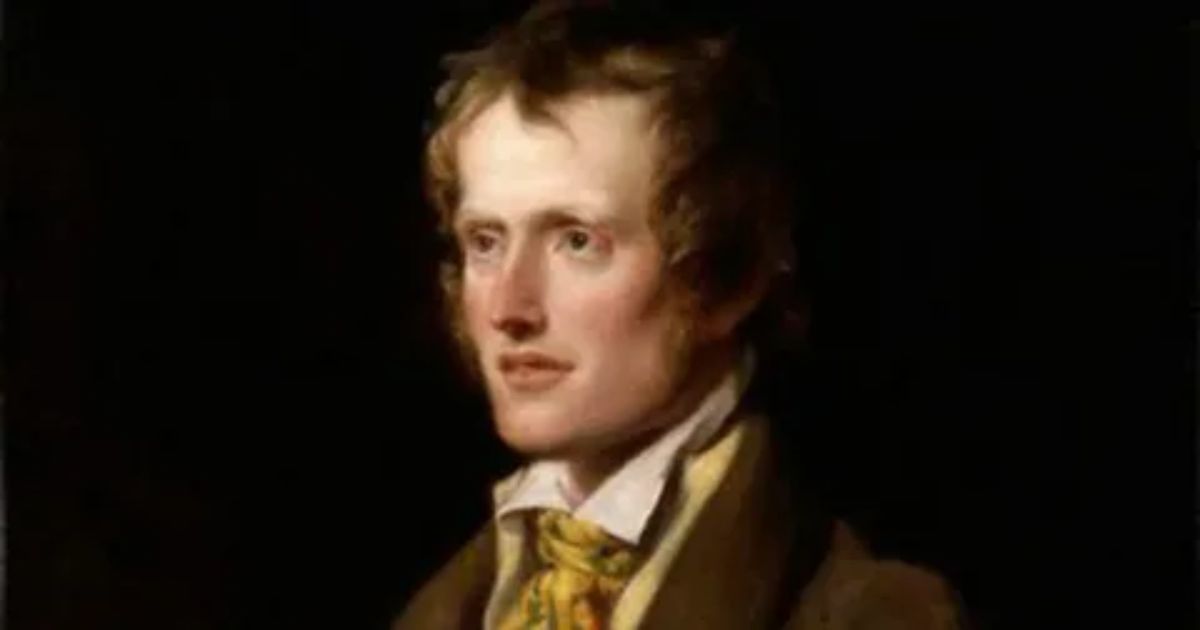
Full Poem Text:
I am yet what I am none cares or knows;
My friends forsake me like a memory lost:
I am the self-consumer of my woes
They rise and vanish in oblivious host,
Like shadows in love’s frenzied stifled throes
And yet I am, and live like vapours tossed
Into the nothingness of scorn and noise,
Into the living sea of waking dreams,
Where there is neither sense of life or joys,
But the vast shipwreck of my life’s esteems;
Even the dearest that I loved the best
Are strange nay, rather, stranger than the rest.
I long for scenes where man hath never trod
A place where women never smiled or wept
There to abide with my Creator God,
And sleep as I in childhood sweetly slept,
Untroubling and untroubled where I lie
The grass below above the vaulted sky.
Clare’s poem moves through three stages: assertion of existence despite neglect, description of psychological suffering, and finally escape into death and nature. The famous opening line “I am yet what I am, none cares or knows” establishes the central tension. The speaker exists but lacks recognition. They have self-awareness without social validation.
The middle stanza intensifies the suffering through powerful metaphors. Life becomes “the living sea of waking dreams,” consciousness itself a form of drowning. Loved ones become strangers, the ultimate alienation. The final stanza turns toward death as release, a return to childhood innocence and natural peace.
This poem has influenced countless writers because it validates dark emotions. It shows that poetry can express despair without resolution, that asserting existence matters even when existence feels unbearable.
George Ella Lyon “Where I’m From”
Template Origin: George Ella Lyon developed this poem for a writing workshop in 1993. She wanted to help participants write about their origins in specific, sensory detail. The poem became the basis for her book Where I’m From: Where Poems Come From (1997) and has been used in classrooms worldwide.
Full Poem Text:
I am from clothespins,
from Clorox and carbon-tetrachloride.
I am from the dirt under the back porch.
(Black, glistening,
it tasted like beets.)
I am from the forsythia bush
the Dutch elm
whose long-gone limbs I remember
as if they were my own.
I’m from fudge and eyeglasses,
from Imogene and Alafair.
I’m from the know-it-alls
and the pass-it-ons,
from Perk up! and Pipe down!
I’m from He restoreth my soul
with a cottonball lamb
and ten verses I can say myself.
I’m from Artemus and Billie’s Branch,
fried corn and strong coffee.
From the finger my grandfather lost
to the auger,
the eye of my father shut to keep his sight.
Under my bed was a dress box
spilling old pictures,
a sift of lost faces
to drift beneath my dreams.
I am from those moments
snapped before I budded
leaf-fall from the family tree.
Lyon’s poem demonstrates the power of specific detail. She does not write “I am from Kentucky” but “I am from clothespins, from Clorox and carbon-tetrachloride.” These concrete items carry emotional weight that abstract labels cannot achieve. The poem becomes a catalog of sensory memories that collectively constitute identity.
The structure moves from physical objects to family names to spoken phrases to religious experience to regional food to family trauma and finally to photographs as preserved memory. Each stanza adds another layer of identity formation. The final lines “I am from those moments snapped before I budded leaf-fall from the family tree” acknowledge that identity includes inheritance, history, and continuity across generations.
This poem template works because it invites writers to notice what they might otherwise overlook. The clothespins, the back porch dirt, the family sayings these ordinary details become extraordinary through attention and articulation.
Full Written I Am Poem Examples
Student I Am Poem Example (Middle School)
I hear the sound of sneakers squeaking on gym floors.
I am from macaroni and cheese on Tuesday nights,
from my grandmother’s laugh that sounds like bells,
from “Be careful” and “have fun” are said at the same time.
I am the smell of rain on hot pavement,
the feeling of almost falling but catching myself.
I wonder if my cat understands me when I talk to her.
I hear my heart beating fast before a test.
I see my future like a blurry photograph
I know I’m in it but I can’t make out the details yet.
I want to be brave enough to stand up for someone else.
I am the girl who reads books during recess,
who knows all the constellations but gets lost in her own neighborhood.
I am from “you’re too quiet” and “you’re so mature for your age.”
I am learning that quiet is not the same as weak,
that watching is a kind of wisdom too.
I dream of places where nobody knows me yet,
where I could try being loud just to see how it feels.
I am becoming someone I don’t fully recognize yet,
but I think I might like her when we finally meet.
This middle school poem demonstrates the form’s accessibility for younger writers. The student uses sensory details, sneakers squeaking, macaroni and cheese, rain on pavement to ground abstract identity in concrete experience. The poem captures developmental themes: the tension between caution and adventure, the discovery that traits seen as deficits (quietness) might be strengths, the anticipation of future selfhood.
The ending acknowledges becoming a process rather than finished state. This insight shows sophisticated self-awareness for any age. The poem works because it balances specific observation with universal feeling. Readers recognize their own uncertainties in this student’s words.
Teenager I Am Poem Example (High School)
I am the space between texts, the ellipsis where meaning hides.
I am from mixed signals and mixed heritage,
from a name nobody can pronounce on the first try,
from “where are you really from?” asked by people who mean well.
I am the playlist I made at 2 AM when I couldn’t sleep,
full of songs in languages I only half understand.
I am the photo filter that makes everything look like 1974,
nostalgic for a time I never knew.
I wonder if my parents were ever this confused,
if they felt like actors in their own lives.
I hear the future rushing toward me like a train
I’m not sure what I bought a ticket for.
I see my friends becoming strangers in real time,
our inside jokes turned into awkward silence.
I want to believe that change means growth,
not just loss dressed up in better clothes.
I am from “you can be anything” and “be realistic”
said in the same breath by the same mouth.
I am learning that contradiction is not hypocrisy,
that I can want safety and adventure,
that I can love my roots and need to transplant myself.
I am the draft of a person still being revised,
the rough cut, the demo version,
the promise that the final track might be worth waiting for.
This teenage poem engages with contemporary identity formation: digital communication, multicultural heritage, the pressure of future planning, and the fear of losing friends to time. The voice feels authentic to adolescent experience without being reduced to stereotype.
The metaphors playlist, photo filter, train, draft document reflect media-saturated consciousness. The poem acknowledges contradictions without resolving them, showing maturity in holding complexity. The ending claims hope without certainty, appropriate to the developmental stage.
Adult I Am Poem Example (Self-Reflection)
I am the accumulation of small choices I thought didn’t matter.
I am from coffee made too strong and left to cool,
from the particular silence of a house after everyone has left for the day,
from “we need to talk” and “it’s not serious” and the space between those statements.
I am the smell of old books and older regrets,
the weight of keys to doors I no longer open.
I am the person who says “let’s get coffee” and means it,
who remembers birthdays without Facebook reminding me,
who keeps a folder of encouraging emails from strangers I’ve helped.
I wonder if the me from ten years ago would recognize this life,
if she would be disappointed or relieved.
I hear my mother’s voice coming out of my own mouth
when I tell the dog to stop barking,
when I fold towels the way she taught me,
when I catch myself hoping for things I pretend not to want.
I see my future narrowing like a funnel,
not in limitation but in focus,
the wide possibility of youth becoming the deep commitment of middle age.
I want to be the kind of person who makes others feel seen,
who leaves places better than I found them,
who knows the difference between settling and choosing.
I am from “you’re too sensitive” and “you’re so strong”
and finally understanding they describe the same trait.
I am learning that healing is not linear,
that I will circle back to old wounds with new tools,
that progress looks like repetition until suddenly it doesn’t.
I am enough. I am still becoming. I am here.
This adult poem engages with integration and acceptance. The speaker has accumulated enough experience to see patterns, to understand that “small choices” compound into identity, to recognize parental influence without resentment. The poem balances honesty about struggle with commitment to growth.
The ending “I am enough. I am still becoming. I am here.” claims present tense existence as achievement. This insight reflects adult developmental tasks: accepting limitations while maintaining hope, acknowledging past while choosing future.
Professional I Am Poem Example (Therapeutic Use)
I am the survivor of things I still cannot name out loud.
I am from held breath and walking on soft carpet so nobody would hear,
from learning to read moods like weather forecasts,
from “it’s your fault” and “you made me” and the terrible power those words gave me.
I am the body that remembers what the mind tried to forget,
the startle response, the insomnia, the inexplicable grief when something good happens.
I am also the hand that reached back for others drowning in similar darkness,
the voice that said “me too” and watched shame dissolve in shared light.
I wonder who I would have been without the damage,
if there is a core self underneath the adaptations,
or if the adaptations are the self, beautifully engineered for survival.
I hear my therapist saying “and where do you feel that in your body?”
and finally being able to answer without dissociating,
finally trusting that sensation won’t destroy me.
I see a future where the past is present but not president,
where memory informs but does not dictate,
where I can say “this happened to me” without saying “this is all I am.”
I want to believe in post-traumatic growth not as pressure to perform wellness,
but as evidence that humans are more resilient than we imagine,
That meaning can be made from any material if we work it long enough.
I am from “you’re too much” and “you’re not enough”
and slowly constructing a self that knows both are lies.
I am learning that boundaries are not walls but doors I can choose to open,
that saying no to others is saying yes to myself,
that the child I was deserved protection and the adult I am can provide it.
I am not who I was. I am not yet who I will be.
I am the work in progress, the proof of concept, the promise that change is possible.
I am here. I am still here. I am choosing to stay.
This therapeutic poem addresses trauma recovery with clinical precision and poetic power. It names symptoms of hypervigilance, dissociation, and complicated grief without reducing the speaker to diagnosis. It acknowledges the double consciousness of survivors who both suffer and grow.
The poem demonstrates how poems function in therapeutic contexts. They externalize internal experience, creating manageable distance from overwhelming emotion. They track progress across time, making growth visible. They claim agency “I am choosing to stay” without denying the struggle.
How to Write Your Own I Am Poem
Step 1: Start with “I am…”
Begin with the simplest possible declaration. Do not overthink. Write “I am” and complete the sentence with whatever comes first to mind. You might write “I am tired” or “I am hopeful” or “I am confused about who I am supposed to be.” All of these are valid starting points.
The key is to avoid censoring yourself. Do not judge whether your opening is poetic enough or profound enough. The I am poem works through accumulation, not perfection. You will have chances to revise, to add complexity, to find better words. But you cannot improve what you have not written.
Some writers find it helpful to generate multiple openings. Write five or ten “I am” statements quickly, without stopping. Then review and select the one that resonates most strongly. Or combine several into a longer opening stanza.
Step 2: Add Contradictions and Emotions
Human identity is contradictory. We contain multitudes, as Walt Whitman wrote. Your I am poem should reflect this complexity. After your opening declaration, add statements that complicate or contradict it.
If you opened with “I am strong,” you might follow with “I am also terrified.” If you wrote “I am lost,” you might add “I am searching.” These contradictions create tension and depth. They prevent the poem from becoming one-dimensional or self-congratulatory.
Emotions should be named specifically. Instead of “I feel bad,” write “I am the heaviness in my chest on Sunday evenings.” Instead of “I am happy,” write “I am the unexpected laugh that surprises me in serious meetings.” Specificity transforms generic emotion into memorable poetry.
Step 3: Include Personal Memories
Identity forms through experience. Your I am poem should ground abstract statements in concrete memories. Think about moments that shaped you: childhood scenes, family rituals, significant conversations, sensory experiences that stay with you.
George Ella Lyon’s template asks specifically about origins: “I am from…” This prompt helps writers locate themselves in place and time. You might write about the house you grew up in, the foods your family ate, the sayings your parents repeated, the music that played in your home.
These memories do not need to be explained or analyzed. Simply presenting them creates meaning through juxtaposition. Readers will understand their significance without being told what to think.
Step 4: Use Sensory Details
Strong poems engage the senses. They let readers smell, taste, hear, see, and touch the writer’s world. Instead of writing “I had a difficult childhood,” you might write “I am the smell of burned toast and the sound of doors slamming.”
Sensory details make abstract identity concrete. They create immediacy and emotional connection. They also demonstrate the writer’s attention to their own experience, which invites readers to pay attention too.
When revising your poem, look for places where you have named emotions or made abstract statements. Replace these with sensory specifics wherever possible. “I am lonely” becomes “I am the extra chair at every table.” “I am loved” becomes “I am the hand on my shoulder when I cannot stop crying.”
Step 5: End with Hope or Identity
Your closing should offer some form of resolution without being false or simplistic. If your poem has explored difficulty, the ending might acknowledge survival or growth. If your poem has celebrated strength, the ending might acknowledge continued vulnerability.
Many effective I am poems close with a return to the opening statement, transformed by what has come between. “I am yet what I am, none cares or knows” becomes, through the poem’s development, a more complex assertion of existence against erasure.
Other poems close with future orientation: “I am becoming…” or “I dream of…” or “I will be…” These endings acknowledge that identity is process, not fixed state. They invite continuation, suggesting that the poem is a snapshot rather than a complete definition.
I Am Poem Writing Tips
Be Specific, Not Vague
The most common weakness in poems is abstraction. Writers declare “I am happy” or “I am sad” without showing what these states look like in their particular lives. Specificity is the difference between poetry and journaling.
Instead of “I am from a big family,” write “I am from the only bathroom shared by six people, from waiting my turn for the phone, from never eating the last piece of anything.” Instead of “I love nature,” write “I am the person who stops walking to watch ants carry leaves across the sidewalk.”
Specificity requires attention. You must notice your own life with the curiosity you might bring to a foreign country. The I am poem is an exercise in self-observation, in treating your own experience as worthy of detailed description.
Show, Don’t Tell
This classic writing advice applies especially to poems. Do not tell readers you are resilient; show them the evidence. Write about the time you continued when continuing seemed impossible. Do not tell readers you are creative; show them your relationship with making things.
Showing creates trust. Readers believe what they witness more than what they are told. It also creates better poetry. Images and scenes stay with readers longer than abstract claims.
Embrace Contradictions
As F. Scott Fitzgerald wrote, “The test of a first-rate intelligence is the ability to hold two opposed ideas in mind at the same time and still retain the ability to function.” Your I am poem should demonstrate this capacity.
Claim your contradictions proudly. “I am brave and afraid. I am generous and selfish. I am certain and confused.” These paradoxes make you human, relatable, real. They prevent the poem from becoming propaganda for a simplified self.
I Am Poem Prompts to Get Started
If you are staring at a blank page, these prompts can spark your I am poem. Use them as starting points or incorporate them directly into your writing.
I am from… (specific places, objects, sensory memories)
I am the one who… (habits, roles, behaviors)
I am because… (causes, influences, origins)
I am waiting for… (hopes, fears, anticipated changes)
I am afraid of… (vulnerabilities, honest fears)
I am hopeful for… (dreams, wishes, future visions)
I am becoming… (process, growth, transformation)
I am not… (negation as definition, what you reject)
I am more than… (expansion beyond labels)
I am enough… (self-acceptance, present tense affirmation)
FAQs
What is an I am poem?
An I am poem is a form of poetry that explores identity through self-declaration. It typically begins with the phrase “I am” and expands into a fuller definition of who the speaker is, what they value, where they come from, and what they hope to become. The form ranges from free verse philosophical exploration (John Clare style) to structured template-based writing (George Ella Lyon “I am from” style). It is widely used in educational and therapeutic contexts because it balances accessibility with depth.
How do you start a poem?
Begin with the simplest possible statement: “I am…” Complete this sentence with whatever comes to mind without censoring yourself. You might describe a feeling, a role, a physical characteristic, or a state of being. The key is to start writing without worrying about quality or significance. You can always revise, but you cannot improve what you have not written. Many writers find it helpful to generate multiple opening lines quickly and then select or combine the most resonant ones.
Can kids write poems?
Absolutely. The I am poem is one of the most popular poetry forms in elementary and middle school classrooms because it requires no prior knowledge of poetic technique. Children naturally think about identity and self-description. The template provides structure that helps young writers organize their thoughts without limiting their creativity. Teachers often use I am poems as get-to-know-you activities at the start of the school year, allowing students to introduce themselves beyond basic facts.
What makes a good poem?
Good poems balance honesty with craft. They reveal something true about the speaker while using specific sensory details and concrete imagery to make that truth vivid for readers. They avoid cliché by finding fresh ways to express common experiences. They embrace contradiction and complexity rather than presenting a simplified self. And they use the form’s structure whether following a template or writing free verse to create momentum and meaning.
How long should a poem be?
Length varies by purpose and style. John Clare’s famous “I Am” has three stanzas of six lines each. George Ella Lyon’s “Where I’m From” has five stanzas of varying length. Student poems might be shorter, perhaps ten to twenty lines. Therapeutic poems might be longer, allowing fuller exploration of experience. There is no required length. The poem should be as long as it needs to be to express what the writer wants to say, and no longer.
Final Thoughts
You have read examples from John Clare’s existential despair to George Ella Lyon’s sensory celebration to contemporary voices exploring identity in all its complexity. You have seen how students, teenagers, adults, and therapy clients use this form to understand themselves and communicate with others. You have learned specific techniques for writing your own I am poem: start simply, embrace contradiction, ground abstraction in memory and sensation, and close with honest resolution.
Now the only remaining step is to write. Open a blank document or pick up a pen. Write “I am” and see what follows. Do not judge your first draft. Do not compare your experience to the examples you have read here. Your I am poem will be yours alone, shaped by your particular life, your specific memories, your unique voice.
The form has survived for centuries because it answers a permanent human need: to say who we are, to be witnessed, to claim existence against the silence. Whether you share your poem or keep it private, the act of writing itself matters. It slows you down enough to notice your own life. It creates a record of who you are at this moment, which future you will read with recognition or surprise.
Start now. Write “I am…” and continue. The poem is waiting for you, and you are more ready than you think.
Recent Article : ERE Crossword Clue: Before in Quaint Poems Answer & 20+ Archaic Terms

Jennifer Aston is a passionate poetry curator and writer with a deep love for the written word. She believes poetry has the power to heal, inspire, and connect people across all walks of life. Through PoemSteric, she brings together timeless and modern verses for every emotion and every moment.