
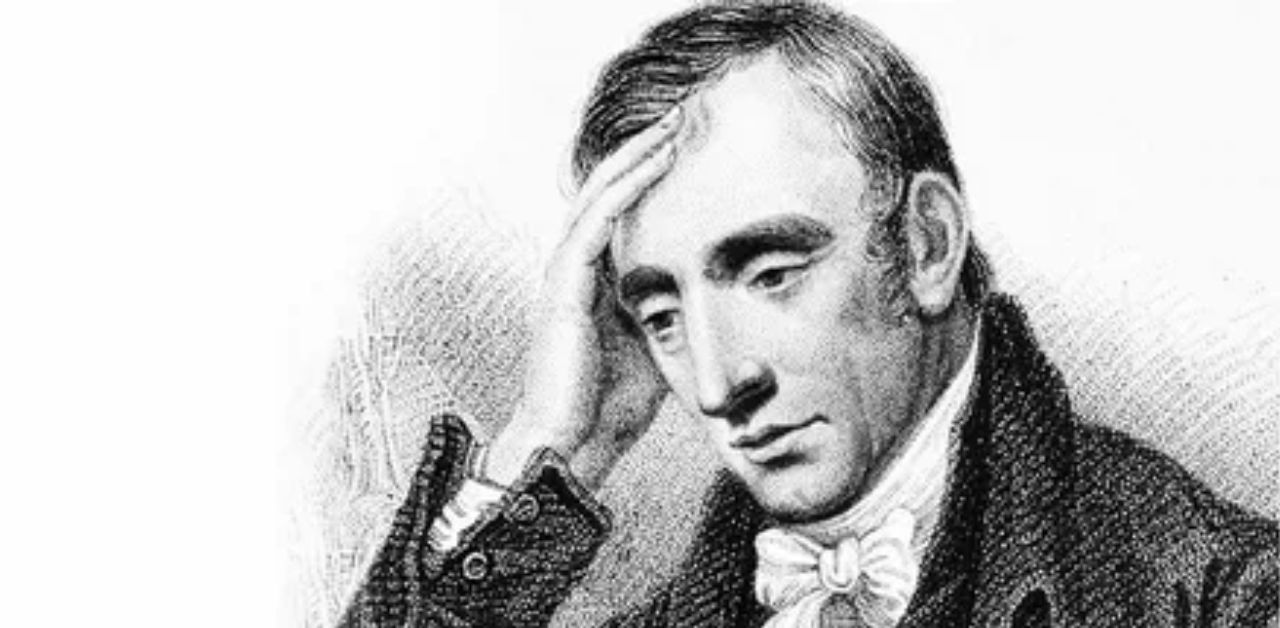
William Wordsworth (1770–1850) was one of the greatest English poets and a central figure of the Romantic Age. Born in the scenic Lake District, he developed a deep love for nature, which became the heart of his poetry. Losing his parents at a young age, Wordsworth’s early experiences of childhood loss and memory greatly influenced his emotional and reflective style.
He studied at Cambridge and travelled to France, where he was inspired by ideas of liberty and equality, though later he focused more on human emotions, morality, and the beauty of nature. Wordsworth believed poetry should express the “spontaneous overflow of powerful feelings” in a language simple enough for ordinary people to understand.
Through works like Lyrical Ballads (1798) and The Prelude, Wordsworth explored themes of nature, imagination, childhood, and humanity, making his poems timeless, relatable, and deeply influential in English literature.
Introduction to William Wordsworth
William Wordsworth transformed poetry by bringing nature and human emotion to the centre of literature. Unlike earlier poets, he wrote in simple language and celebrated ordinary life, childhood, and rural scenes. His poetry focuses on how nature influences human thought, emotion, and morality, making it timeless and deeply relatable.
William Wordsworth as a Romantic Poet
Wordsworth is a pioneer of Romanticism. As a Romantic poet, he emphasized imagination, individual experience, and emotional truth. Nature is central to his work; he often presents it as a teacher and guide. He rejected artificial poetic rules, instead valuing sincerity, reflection, and personal connection with the world. His poetry gives voice to common people and their experiences, highlighting the beauty of simplicity and emotional depth.
Major Themes in William Wordsworth’s Poems
Nature as a Living Power
In William Wordsworth poems, nature is alive, powerful, and spiritual. He shows how rivers, mountains, trees, and flowers shape human character and bring inner peace. Nature serves as a mentor, healer, and guide for personal growth.
Childhood and Innocence
Wordsworth often celebrates childhood as a time of purity and joy. Children are closer to nature and the divine. In poems like Ode: Intimations of Immortality, he reflects on how childhood shapes lifelong perception and emotional depth.
Memory and Imagination
Memory plays a vital role in Wordsworth’s poetry. Reflecting on past experiences of nature or childhood allows the mind to find comfort and meaning. Imagination transforms these memories into creative and moral insight.
Humanity and Common Man
Wordsworth gives dignity to ordinary life. His poems highlight the simplicity and moral strength of common people. He encourages empathy, compassion, and understanding of human experiences, whether joyful or sorrowful.
Poetic Style and Language of William Wordsworth
Wordsworth’s poetry is known for clarity, simplicity, and emotional resonance. He avoided overly decorative language and focused on natural speech, making his poems accessible. His style combines vivid imagery with deep reflection, often drawing on rural life, nature, and human emotion to communicate universal truths.
Importance of Nature in Wordsworth’s Poetry
Nature is at the core of Wordsworth’s work. He believed that spending time in nature nourishes the soul, encourages reflection, and fosters moral growth. Whether describing daffodils, mountains, or quiet rivers, he shows how nature influences human thought and imagination.
Character of the Happy Warrior – Summary & Theme
This poem celebrates the ideal human who is morally strong, courageous, and emotionally balanced. The Happy Warrior derives happiness not from wealth or fame but from virtue, discipline, and self-respect.
A Complaint – Meaning and Analysis
In this poem, Wordsworth expresses personal sorrow and emotional pain caused by lost love. The language is simple but profound, revealing how deeply feelings can shape human experience.
Composed upon Westminster Bridge (1802) – Explanation
Wordsworth admires London in the calm of early morning. The poem combines urban scenery with natural beauty, highlighting harmony, peace, and quiet reflection.
Elegiac Stanzas on Peele Castle – Theme & Background
This poem mourns a friend’s death while connecting sorrow to nature. The stormy sea mirrors grief, while serene landscapes suggest acceptance.
Extempore Effusion on the Death of James Hogg
Wordsworth honours his friend James Hogg in this poem. Friendship, respect, and the value of human connection are central themes.
The French Revolution – Wordsworth’s Political Views
Initially supportive of freedom and equality, Wordsworth later reflected critically on revolution. This poem captures his evolving political and moral perspective.
The Green Linnet – Symbolism of Freedom
The green linnet symbolizes joy, liberty, and natural freedom. Wordsworth encourages humans to live in harmony with nature, free from societal constraints.
I Travelled among Unknown Men – Love for England
In this poem, Wordsworth expresses his deep connection to England, recognizing the emotional bond one has with their homeland.
I Wandered Lonely as a Cloud (Daffodils) – Complete Analysis
One of Wordsworth’s most famous poems, it celebrates the beauty of nature. The daffodils inspire lasting joy through memory and imagination, showing how nature uplifts the human spirit.
Influence of Nature on Imagination – Prelude Extract
This extract emphasizes how nature shaped Wordsworth’s mind and creativity during childhood. Reflection and imagination are central to his poetic philosophy.
Inside King’s College Chapel, Cambridge
Wordsworth contrasts spiritual calm with the noise of the world, highlighting the peace and introspection found in sacred spaces.
It Is a Beauteous Evening – Spiritual Meaning
Nature and spirituality are intertwined. The poem depicts evening calm as a divine presence, inspiring reflection and serenity.
It Is Not to Be Thought Of – Patriotism Theme
This sonnet expresses national pride and the importance of moral strength. Wordsworth celebrates the values of unity and freedom.
Laodamia – Classical Tragedy Explained
Based on Greek myth, it explores love, devotion, and emotional conflict. It reflects on human passions and moral consequences.
Tintern Abbey – Summary, Theme, and Importance
One of Wordsworth’s masterpieces, Tintern Abbey reflects on nature, memory, and personal growth. The poem shows how nature nurtures the human soul over time.
Lines Written in Early Spring – Nature and Humanity
The poem contrasts natural joy with human negligence. Wordsworth asks why humans fail to live harmoniously with nature.
London, 1802 – Sonnet Analysis
This sonnet critiques moral decay in England while praising virtue. Milton symbolizes moral and spiritual ideals Wordsworth wishes to revive.
Mutability – Change and Life
A short reflective poem on life’s constant change. Nothing remains permanent, teaching readers acceptance and awareness.
Nutting – Childhood Experience
Wordsworth recalls collecting nuts as a child. The poem emphasizes respect for nature and the innocence of youth.
Ode: Intimations of Immortality – Central Ideas
A profound meditation on childhood, memory, and spiritual connection. It emphasizes that though childhood vision fades, memory preserves joy and moral understanding.
Ode to Duty – Moral Philosophy
Wordsworth praises duty as a guiding moral principle. Responsibility, discipline, and moral action outweigh transient emotions.
Resolution and Independence – Message of Hope
This poem celebrates resilience and courage. An old man symbolizes human strength, inspiring readers to face challenges with dignity.
The Solitary Reaper – Theme, Imagery, and Music
Wordsworth depicts a woman singing in a field. The song communicates universal emotion beyond words, illustrating the power of music and nature.
The World Is Too Much With Us – Materialism Criticism
Wordsworth criticizes materialism and industrial society for separating humans from nature. The poem urges reconnecting with natural and spiritual life.
We Are Seven – Innocence vs Reality
A child’s innocent understanding of death contrasts with adult logic. Wordsworth celebrates childlike simplicity and faith.
She Dwelt among the Untrodden Ways – Lucy Poems
A quiet, unnoticed girl represents beauty and mortality. The poem emphasizes loss, nature, and human emotion.
Surprised by Joy – Grief and Memory
Sudden grief strikes as Wordsworth recalls his lost daughter. Memory evokes both pain and love, highlighting the depth of human emotion.
The Tables Turned – Nature vs Books
Wordsworth encourages learning from nature rather than relying only on books. Nature teaches moral and emotional wisdom.
Three Years She Grew – Nature as Teacher
Nature educates and nurtures the child, shaping moral and spiritual character. Death intervenes, blending beauty with sorrow.
Yarrow Poems – Memory and Experience
The Yarrow poems explore memory, imagination, and the emotional truth of human experience. They reflect Wordsworth’s fascination with personal reflection.
List of Famous Poems by William Wordsworth
Some of the most celebrated William Wordsworth poems include:
- I Wandered Lonely as a Cloud (Daffodils)
- Tintern Abbey
- The Prelude
- The Solitary Reaper
- Ode: Intimations of Immortality
Why William Wordsworth Is Still Relevant Today
His poetry addresses human emotion, connection with nature, moral reflection, and imagination, making it timeless. Students, readers, and poets continue to study and enjoy his works.
William Wordsworth Poems for Students and Exams
Wordsworth’s poems are widely studied due to their clarity, emotional depth, and moral themes. They are accessible for analysis and essential for understanding Romantic literature.
Final Thoughts
William Wordsworth shaped English poetry by celebrating nature, childhood, imagination, and moral insight. His poems remain inspiring, teaching readers to value simplicity, emotional honesty, and harmony with the natural world.
FAQs
What is William Wordsworth famous for?
He is famous for his poetry, Romantic ideals, and simple language.
What are the main themes in Wordsworth’s poetry?
Nature, childhood, imagination, memory, human emotion, and moral reflection.
Which is the best poem by William Wordsworth?
I Wandered Lonely as a Cloud and Tintern Abbey are widely regarded as his masterpieces.
Related to the article : Rupi Kaur Poems About Love, Self-Love & Healing

Jennifer Aston is a passionate poetry curator and writer with a deep love for the written word. She believes poetry has the power to heal, inspire, and connect people across all walks of life. Through PoemSteric, she brings together timeless and modern verses for every emotion and every moment.